Banff has a funny way of making the exact same mountain view cost completely different amounts depending on when you visit.
Book a hotel in August and you might pay more for one night than you would for an entire weekend in November. The mountains haven’t moved. Lake Louise is still there. Banff Avenue has the same shops and restaurants. So why the enormous price difference?
It’s mostly about timing.
Millions of visitors want to experience the Canadian Rockies during the warmer months, especially when the famous lakes turn turquoise and the hiking trails are open. Hotels know this, and their prices tend to reflect the demand.
Visit when fewer people are travelling, however, and you may find much more affordable accommodation.
November is typically one of the cheapest months to visit Banff. April and early May can also offer good value, while January often has attractive hotel prices after the Christmas and New Year’s holidays.
But there’s something important to understand before booking.
The cheapest time to visit Banff isn’t necessarily the best time to experience everything the national park is famous for.
Those turquoise lakes you see all over Instagram? They might be frozen.
The mountain hiking trails? Many could be buried under snow.
And some of the attractions you’ve been dreaming about might not even be open.
So before choosing the cheapest dates on the calendar, let’s look at what Banff is actually like throughout the year, when you’ll likely save the most money, and which months offer the best balance between price and experience.
November is usually one of the cheapest months to visit Banff
If saving money on accommodation is your main priority, November is where I would start looking.
By November, the busy summer tourism season has ended. Most of the fall colours have disappeared, many seasonal attractions have closed, and the Christmas holiday crowds haven’t arrived yet.
Banff enters an interesting period between autumn and winter.
The ski resorts begin opening as snow conditions allow, but the busiest winter travel periods are still ahead.
That often means lower demand for hotels.
Travel comparison website Trivago has identified November as Banff’s cheapest hotel month in its seasonal pricing analysis, with August among the most expensive.
You can compare current prices and seasonal trends on Trivago’s Banff hotel page.
Of course, not every hotel follows the same pricing pattern. Rates depend on availability, weekends, special events and individual property policies.
Still, November is a very good month to investigate if you’re looking for an affordable mountain getaway.
What is Banff like in November?
November can be beautiful, but it helps to know what you’re getting.
You might arrive to find snow covering the mountains, frozen landscapes and a wonderfully quiet town.
Or you might find an awkward combination of bare pavement, patches of snow, freezing temperatures and muddy walking paths.
It’s that strange period when autumn has mostly disappeared but winter hasn’t completely settled in.
Lake Louise usually begins freezing during late fall, although the exact timing varies each year. Many popular summer hiking trails are no longer suitable for casual visitors, and the regular Moraine Lake shuttle season has ended.
If you’re hoping to see turquoise lakes surrounded by green forests, November will probably disappoint you.
But if your ideal getaway involves mountain scenery, quiet streets, cozy restaurants and a comfortable hotel at a reasonable price, November can be an excellent choice.
There’s something appealing about visiting Banff when the town isn’t overflowing with summer visitors.
You can take your time, explore at a slower pace and enjoy the surroundings without feeling that every attraction needs to be squeezed into a packed itinerary.
April is another excellent month for saving money
April is one of the most underrated times to visit Banff if you’re travelling on a budget.
The Christmas holidays are long gone, the busiest winter travel periods are winding down, and summer tourism is still several weeks away.
Hotels may offer more competitive prices during this quieter period.
Banff & Lake Louise Tourism identifies November and parts of April and May as quieter travel periods. Its official travel information also describes June through September as the main tourism season.
April has another advantage over November.
The days are noticeably longer, and you can sometimes enjoy beautiful spring sunshine while the mountains remain covered in snow.
On a pleasant afternoon, sitting outside with a coffee and looking toward Cascade Mountain can feel surprisingly comfortable.
Skiing may still be excellent at higher elevations, and the town generally feels less crowded than it does during the peak summer months.
But don’t confuse spring in Calgary with spring in Banff.
They’re not always the same thing.
What are the disadvantages of visiting Banff in April?
April is still very much a winter month in the higher parts of the Canadian Rockies.
Lake Louise is generally frozen, alpine hiking trails remain snow covered, and many seasonal roads and campgrounds haven’t opened.
Moraine Lake Road remains closed to regular personal vehicles throughout the year, and seasonal visitor transportation normally doesn’t begin until late spring or early summer.
If you’re visiting specifically to hike through green valleys or photograph turquoise lakes, April isn’t ideal.
But if you want affordable accommodation, winter mountain scenery, spring skiing and a relaxing visit to Banff town, it’s worth considering.
The important thing is to plan your activities around the season rather than expecting summer conditions at spring prices.
Is January cheaper than November?
Sometimes it is.
Different travel websites use different hotel samples, booking periods and pricing methods, so they don’t always agree on which month is the absolute cheapest.
For example, KAYAK has identified January as Banff’s cheapest hotel month in some of its Canadian pricing comparisons, while Trivago’s seasonal analysis has pointed to November.
Both offer useful clues about when demand tends to be lower.
Neither guarantees that your favourite hotel will be cheapest during that month.
The actual week matters.
The first few days of January can remain expensive because visitors are celebrating New Year’s.
Once the holiday period ends and people return to work, accommodation prices can become more attractive.
Weekdays are especially worth checking.
However, Banff remains a major winter sports destination. Busy ski weekends, school holidays and special events can push hotel demand higher.
If you’re flexible, compare several January weekdays with dates in November and April.
You may find a better deal than expected.
Is January a good time to visit Banff?
If you enjoy winter scenery, January can be wonderful.
The mountains are covered in snow, Lake Louise often becomes a spectacular frozen landscape, and there are opportunities for skiing, snowshoeing and other winter activities.
Banff also has a beautiful winter atmosphere.
After spending time outside, there’s something particularly nice about returning to a warm restaurant or hotel while snow falls outside.
But January can be seriously cold.
Temperatures may drop far below freezing, and winter storms can affect highway conditions.
If you don’t own appropriate winter clothing or aren’t comfortable driving on snowy mountain roads, those challenges may add expenses to your trip.
A cheaper hotel room isn’t necessarily a bargain if you need to purchase an entire winter wardrobe or change your travel arrangements because of severe weather.
For visitors who already enjoy Canadian winters, though, January can offer some excellent value.
Early May can be a good compromise
May is an interesting month for budget travellers.
Accommodation prices often begin increasing as summer approaches, but early May can still be noticeably less expensive than July or August.
The days are longer, the weather is generally milder than in November, and the Bow Valley begins turning greener.
Lower elevation walking trails may start drying out, wildlife becomes more active, and the surrounding landscape begins emerging from winter.
For someone who dislikes extreme cold, early May can feel much more appealing than November.
You can explore Banff town, enjoy scenic drives and visit lower elevation attractions without necessarily dealing with the coldest winter temperatures.
But spring arrives slowly in the mountains.
Higher elevation lakes can remain frozen, snow may linger on hiking trails well into June, and some seasonal facilities are still preparing to open.
May can also bring rain, snow and sudden temperature changes.
I would choose early May for a relaxed sightseeing trip rather than a vacation focused on alpine hiking or summer lake activities.
If your expectations match the season, it can be a great time to visit.
What is the most expensive time to visit Banff?
Summer is generally the most expensive season, particularly July and August.
This is when visitors from around the world arrive to experience the landscapes that make Banff famous.
Lake Louise turns turquoise, Moraine Lake becomes accessible through seasonal transportation, and high elevation hiking trails gradually open as snow melts.
Campgrounds, sightseeing attractions, restaurants and outdoor activities are at their busiest.
It’s also when accommodation demand is particularly strong.
Hotels that offer relatively affordable rooms during November may charge considerably more during the height of summer.
You may also encounter heavy traffic, crowded viewpoints and limited availability at popular attractions.
If you’re planning to visit Banff in July or August, I would book accommodation well in advance.
Waiting until the last minute can leave you choosing between expensive rooms or properties far from the places you want to visit.
But despite the higher prices, summer remains popular for a reason.
If your dream vacation involves canoeing on turquoise lakes, hiking alpine trails and spending long days exploring the mountains, this is often the best season to experience those activities.
The trick is deciding whether those experiences justify the additional cost.
September isn’t necessarily cheap anymore
This catches plenty of visitors by surprise.
It’s easy to assume that summer ends in August and hotel prices should immediately drop in September.
Unfortunately, Banff doesn’t work quite that way.
September has become extremely popular, especially among visitors who enjoy hiking and photography.
The weather can still be beautiful, many summer attractions remain accessible, and the mountains begin changing as autumn approaches.
Then larch season arrives.
For a short period, alpine larch trees turn brilliant gold, attracting hikers and photographers from across Alberta and beyond.
Popular trails and nearby accommodation can become very busy during these weeks.
As a result, September isn’t necessarily the quiet budget month some people expect.
You might find slightly better prices on certain dates, but you shouldn’t assume that visiting in September will automatically be inexpensive.
If you’re travelling primarily to save money, compare actual hotel rates before making a decision.
And if your main goal is seeing the golden larches, be prepared for popular trails and accommodation to remain busy.
October can offer better deals, especially after Thanksgiving
October is another month worth investigating.
Early October may still attract visitors enjoying the last autumn colours, but tourism demand often begins easing later in the month.
After the Canadian Thanksgiving holiday, you may find better accommodation prices than during September.
The scenery is also interesting.
Snow begins collecting on the higher peaks while lower elevations may still have patches of autumn colour.
On a clear day, the contrast can be beautiful.
However, October is a transition month.
Moraine Lake shuttle service typically ends around the middle of October, depending on seasonal schedules and weather.
Higher elevation hiking becomes increasingly difficult, and some attractions close for the winter season.
You may experience sunshine and relatively pleasant temperatures one day, followed by snow and freezing weather the next.
If you’re comfortable with unpredictable conditions and don’t need every summer attraction to be open, late October can offer good value.
Just make sure the places you want to visit will still be accessible.
December is affordable until the Christmas holidays arrive
Early December can sometimes offer surprisingly reasonable accommodation prices.
Then Christmas approaches, and Banff becomes a completely different destination.
Snowy mountains, festive decorations, holiday events and visitors celebrating Christmas create a beautiful atmosphere.
They also increase demand.
The period around Christmas and New Year’s can be one of the more expensive parts of winter.
If you want the snowy mountain experience without paying peak holiday prices, compare early December weekdays.
You may enjoy a similar winter atmosphere for considerably less money.
Just remember that snow conditions, ski resort opening dates and winter activities vary from year to year.
If a particular activity is important to you, confirm that it will be available before booking.
The cheapest months aren’t always the cheapest trips
Here’s something worth thinking about before choosing your dates.
Imagine two people visiting Banff.
The first books a discounted hotel room in November but plans to ski, rent winter equipment, eat at restaurants every day and book several paid activities.
The second visits during a more expensive month but spends most of the trip walking easy trails, enjoying scenic viewpoints and preparing simple meals.
Who spends less?
It depends.
Accommodation is usually one of the biggest travel expenses, but the activities you choose can change the entire budget.
A cheap hotel doesn’t automatically mean a cheap vacation.
Before booking, think about what you actually want to do.
If you’re planning a ski vacation, equipment rentals, lift tickets and transportation may be substantial expenses.
If you’re happy exploring Banff town, taking photographs, enjoying scenic drives and visiting accessible viewpoints, an off season trip can be much more affordable.
Sometimes the best way to save money isn’t choosing a different month.
It’s choosing a different kind of vacation.
The best time to visit Banff for every month of the year
If you’re still trying to decide, here’s a simple month by month guide to typical accommodation demand and what each period offers.
These are general seasonal patterns rather than guaranteed hotel prices. Weekends, holidays, special events and weather can make a significant difference.
January
Hotel prices are often lower after the New Year’s holiday, particularly during the week. Busy skiing periods can increase demand.
Best for visitors who enjoy snowy mountains, skiing and winter scenery.
February
Accommodation demand can be moderate to high, especially around holidays and busy ski weekends.
Best for winter sports, snow covered landscapes and people who don’t mind cold temperatures.
March
Prices vary considerably depending on spring skiing conditions, weekends and school holidays.
Best for skiing, snowy mountain views and longer daylight hours.
April
Often one of the more affordable months, especially when winter tourism begins slowing down.
Best for budget travellers who enjoy mountain scenery, spring skiing and a quieter Banff atmosphere.
May
Accommodation prices may remain relatively reasonable early in the month before increasing toward summer.
Best for scenic drives, relaxing town visits and lower elevation sightseeing.
June
Demand increases as summer attractions begin opening and more visitors arrive.
Best for sightseeing, mountain lakes and hiking trails that have become accessible.
July
Usually one of the busiest and most expensive months of the year.
Best for visitors who want the classic summer Rockies experience, including turquoise lakes and outdoor adventures.
August
Accommodation demand remains very high, with popular hotels and attractions often busy.
Best for hiking, mountain lakes, scenic drives and long summer days.
September
Demand often remains strong, particularly during the popular larch viewing season.
Best for hiking, autumn scenery and visitors who want cooler weather than midsummer.
October
Accommodation prices often become more attractive later in the month, particularly after Thanksgiving.
Best for quieter sightseeing, fall atmosphere and visitors comfortable with changing weather.
November
Usually among the cheapest months for hotel accommodation.
Best for budget friendly mountain getaways, peaceful town visits and visitors who enjoy early winter scenery.
December
Prices can be lower early in the month before increasing significantly around Christmas and New Year’s.
Best for snowy mountain scenery, festive atmosphere and winter holiday trips.
How much cheaper is November than August?
Potentially quite a lot.
Seasonal comparisons from hotel booking websites have shown substantial differences between November and peak summer accommodation prices in Banff.
But I would be careful about relying on one advertised average.
Hotel comparison websites may include basic accommodation, luxury resorts, older properties and newer hotels.
The available room selection also changes as properties sell out.
A hotel that looks significantly cheaper in November may be offering a different type of room than the one available in August.
The fairest way to compare prices is to search for the same hotel, the same room type and the same number of nights during different months.
For example, search for a three night stay in August.
Then check the same property for three nights in November.
Finally, compare April and January.
Look at the final total rather than only the advertised nightly rate.
Parking, resort fees, taxes and cancellation conditions can affect the amount you actually pay.
Once you compare the complete prices, you may discover that changing your travel month saves enough money to cover restaurants, park admission and other activities.
Staying during the week can save you even more
You don’t necessarily need to change the month to find better prices.
Sometimes moving your trip by a couple of days is enough.
Banff is extremely popular with people travelling from Calgary and other Alberta communities for a weekend getaway.
That often increases demand on Friday and Saturday nights.
If your schedule allows it, compare stays beginning Sunday or Monday with those beginning Friday.
You may find that a three night weekday visit costs noticeably less than a weekend stay.
This isn’t guaranteed, of course.
Special events, conferences and holiday schedules can affect individual nights.
But it’s worth experimenting with your dates.
Sometimes a simple change in your arrival day produces better savings than switching to a less convenient hotel.
And visiting during the week may have another advantage.
You might encounter fewer people at popular attractions.
That’s a nice bonus when you’re visiting somewhere as busy as Banff.
Is it cheaper to stay in Canmore instead of Banff?
Often, but not always.
Canmore is located approximately 25 kilometres east of Banff and offers a wide range of accommodation, including hotels, condominiums and vacation rentals.
It’s a popular alternative for visitors who want to explore Banff National Park without necessarily staying in the town itself.
You may find more space for your money, particularly when booking larger suites or accommodation with kitchens.
That can be helpful for families or people travelling in groups.
But the calculation depends on how you plan to get around.
If you have a rental vehicle, you’ll need to consider fuel, parking and the additional driving.
If you’re relying on public transportation, check the available connections and fares before booking.
And during busy summer weekends, Canmore accommodation can also become expensive.
I wouldn’t assume it’s automatically the cheaper option.
Instead, search both Banff and Canmore for the same dates and compare the final cost.
Sometimes the difference is substantial.
Other times, staying in Banff may be worth the slightly higher price because of the convenience.
You don’t need to pay for every attraction in Banff
One of the easiest ways to keep your Banff vacation affordable is to stop treating every activity like it needs a ticket.
Some of the best experiences in Banff involve simply being outside.
You can walk around downtown, explore paths beside the Bow River, visit Bow Falls when conditions are suitable and enjoy mountain views from public areas.
Banff Avenue is particularly beautiful with Cascade Mountain rising at the end of the street.
It’s the kind of scenery people travel across the world to photograph, yet you don’t need to book an expensive attraction just to enjoy it.
There are plenty of opportunities for short walks, scenic photography and relaxing outdoors.
You still need the appropriate national park admission, and parking or transportation fees may apply.
But once you’re in the park, many memorable experiences don’t require paying for a gondola, guided excursion or sightseeing package.
If your main goal is enjoying the mountains, it’s entirely possible to create an affordable itinerary.
Save paid attractions for the experiences that genuinely interest you rather than booking everything simply because it’s popular.
Don’t waste money on downtown parking
Parking is one of those expenses that can quietly increase the cost of a Banff visit.
The Town of Banff operates paid visitor parking in its downtown core.
For 2026, the published visitor parking rate is $12 per hour from May through October and $7 per hour from November through April.
Spend several hours downtown and that can become a noticeable expense.
Fortunately, free parking options are available.
The Train Station Public Parking Lot offers approximately 500 spaces and allows parking for up to nine hours during operating hours.
It’s only around an eight minute walk from downtown Banff.
There are also free nine hour parking spaces along Bow Avenue and on designated upper levels of the Bear Street Parkade.
Always check the posted restrictions before leaving your vehicle.
You can find the latest parking locations, rates and regulations on the Town of Banff parking website.
For visitors who don’t mind a short walk, using free parking is one of the simplest ways to avoid unnecessary spending.
And with mountain scenery everywhere you look, that walk isn’t exactly a hardship.
Do national park entrance fees change depending on the season?
Not generally in the same way accommodation prices do.
Regular national park admission is usually the same whether you’re visiting in January, April or August.
As of October 2026, Parks Canada’s regular daily admission is $12.25 per adult or $24.50 for a family or group travelling together in one vehicle.
Youth aged 17 and under enter free.
Parks Canada also offers annual Discovery Passes, which can be worthwhile if you’re planning to visit several national parks during the year.
Temporary government promotions may sometimes waive or reduce certain fees, so it’s worth checking whether any special offers apply during your trip.
You can find the latest information on the Banff National Park fees page.
For most visitors, though, the largest seasonal savings come from accommodation rather than park admission.
A cheap hotel isn’t worth much if your favourite attraction is closed
This is probably the biggest mistake people make when planning a budget trip to Banff.
They find an incredible hotel deal and book it immediately.
Only afterward do they start researching what will actually be open.
Imagine you’ve always wanted to visit Moraine Lake.
You’ve seen the photographs of its incredible turquoise water surrounded by the Valley of the Ten Peaks.
It’s the main reason you’re travelling to Banff.
Then you find an amazing hotel deal for November.
There’s a problem.
Moraine Lake’s regular visitor shuttle season is already over, and the area is generally inaccessible to ordinary sightseeing visitors during winter.
You can’t simply drive there in a rental car either.
Parks Canada has closed Moraine Lake Road to regular personal vehicles throughout the year.
Seasonal visitor transportation usually operates from June into October, depending on weather and operating schedules.
You can confirm current transportation arrangements through the Parks Canada Lake Louise and Moraine Lake information page.
If Moraine Lake is the main attraction on your list, November is probably the wrong month regardless of how inexpensive the hotel might be.
The same applies to many alpine hikes, seasonal campgrounds and summer activities.
Decide what you want to experience first.
Then find the most affordable time to enjoy it.
That’s a much better strategy than choosing the cheapest hotel and hoping everything else works out.
Can you visit Lake Louise during the cheaper months?
Yes.
Unlike Moraine Lake, Lake Louise is accessible throughout the year, subject to road and weather conditions.
But the scenery changes dramatically with the seasons.
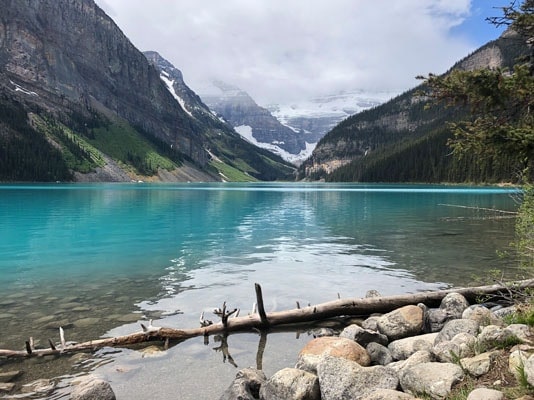
In summer, Lake Louise is famous for its brilliant turquoise water.
In winter, it usually becomes a frozen landscape surrounded by snow covered mountains.
Both are beautiful.
They’re simply different experiences.
If you visit in November or April, don’t expect to see the same lake colour shown in summer travel advertisements.
The timing of freezing and thawing varies each year.
If your main goal is seeing the famous turquoise water, late June through early September generally offers a much better chance than early spring or late autumn.
And if you’re travelling during colder months, remember that nearby hiking trails may remain icy or snow covered even when conditions in Banff town seem mild.
Choose activities suitable for the season and check official trail information before heading out.
Is camping the cheapest way to stay in Banff?
It can be, especially during the warmer months.
Banff National Park has several developed campgrounds offering different facilities and campsite types.
For 2026, Parks Canada lists standard unserviced camping rates at several campgrounds around $26.75 to $34 per night, before applicable reservation fees and additional charges.
That’s considerably cheaper than most hotel rooms during summer.
If you enjoy camping, it’s one of the best ways to reduce accommodation expenses while spending time in the Rockies.
But there are a few things to consider.
Many Banff campgrounds operate seasonally.
Some are not open during November or early spring, when hotel prices may already be lower.
You’ll also need appropriate camping equipment, suitable weather conditions and a reservation when required.
And sleeping inside your vehicle in an ordinary parking lot is not a legal substitute for booking a campsite.
Banff National Park restricts camping to authorized campsites in designated campgrounds.
You can check campground operating dates, facilities and reservations on the official Parks Canada camping page.
Camping can be an excellent budget option.
It’s simply not the most practical choice for everybody, particularly during winter.
How far in advance should you book a Banff hotel?
That depends on the season.
For July and August, I would start comparing accommodation several months before the trip.
The same applies to popular long weekends and busy autumn hiking periods.
During quieter months, you may have more flexibility.
But I wouldn’t assume waiting until the last minute will always produce a cheaper room.
Sometimes hotels reduce prices to fill unsold rooms.
Other times, the most affordable accommodation sells out and only expensive options remain.
If you find a reasonable refundable rate, booking early can provide some peace of mind.
You can then check prices occasionally to see whether better offers appear.
Just make sure you understand the cancellation policy before changing reservations.
Another useful trick is to compare different lengths of stay.
Some hotels offer discounts for longer visits, while others have special rates for particular days.
You might discover that staying three nights costs only slightly more than staying two, depending on the promotion.
The important thing is to compare the total cost rather than focusing entirely on the nightly rate.
Is November actually a good time for a Banff vacation?
Yes, if you’re looking for the right kind of experience.
A quiet Banff feels very different from the busy summer version.
You can enjoy the mountain scenery without constantly dealing with large crowds.
The town often feels more relaxed.
Accommodation may be more affordable.
And if you enjoy snowy landscapes, the surroundings can look incredible.
However, I wouldn’t recommend November to someone whose dream vacation involves canoeing on turquoise lakes and hiking through green alpine meadows.
Those experiences belong to a different season.
The cheaper hotel won’t make them available.
If I were choosing dates for a first visit focused on classic summer scenery, I would consider late June or early September, while understanding that neither period guarantees inexpensive accommodation.
If the goal were simply enjoying a quiet mountain getaway, November would be near the top of the list.
It really depends on what you want from the trip.
How to plan a cheaper Banff vacation without missing the best experiences
Start by choosing the experience you want.
If you’re looking for a relaxing getaway with scenic walks, comfortable accommodation and time to explore town, compare November and April.
If you want winter scenery, look at weekdays in January.
If you prefer somewhat milder temperatures and don’t mind some seasonal attractions being closed, early May or late October may be a better fit.
And if you absolutely want turquoise lakes and summer hiking, accept that accommodation will probably cost more and focus on saving money elsewhere.
Consider staying in Canmore.
Look for accommodation with a kitchen so you can prepare some meals.
Use free parking when possible.
Plan affordable scenic activities rather than booking several expensive attractions.
And compare weekday dates instead of automatically travelling on Friday and Saturday.
None of these ideas will suddenly make Banff an inexpensive destination.
But together, they can make a meaningful difference.
There’s also something to be said for keeping your itinerary simple.
You don’t need to visit every attraction in a single weekend.
Sometimes spending an afternoon walking around Banff, enjoying the mountain views and stopping for a coffee is exactly the kind of getaway you need.
So when is the cheapest time to visit Banff?
November is usually one of the best months to investigate if inexpensive accommodation is your main priority.
April is another strong option, while January weekdays can offer attractive deals after the holiday crowds leave.
Early May, late October and early December may also be worth comparing.
For the lowest prices, try to avoid major holidays, busy ski weekends and the peak summer travel season.
But don’t choose your dates based entirely on hotel prices.
A discounted room isn’t a bargain if you arrive expecting to canoe on Lake Louise and discover that it’s frozen.
On the other hand, if your idea of a wonderful vacation involves waking up surrounded by mountains, walking around a beautiful town and spending a few days away from everyday life, the quieter months can be fantastic.
Banff doesn’t suddenly become less beautiful in November.
It simply becomes a different kind of beautiful.
And sometimes that version comes with a much nicer hotel bill.
