Most people think fishing season ends when the leaves fall off the trees.
They pack away their rods, put the waders in storage and start waiting for spring.
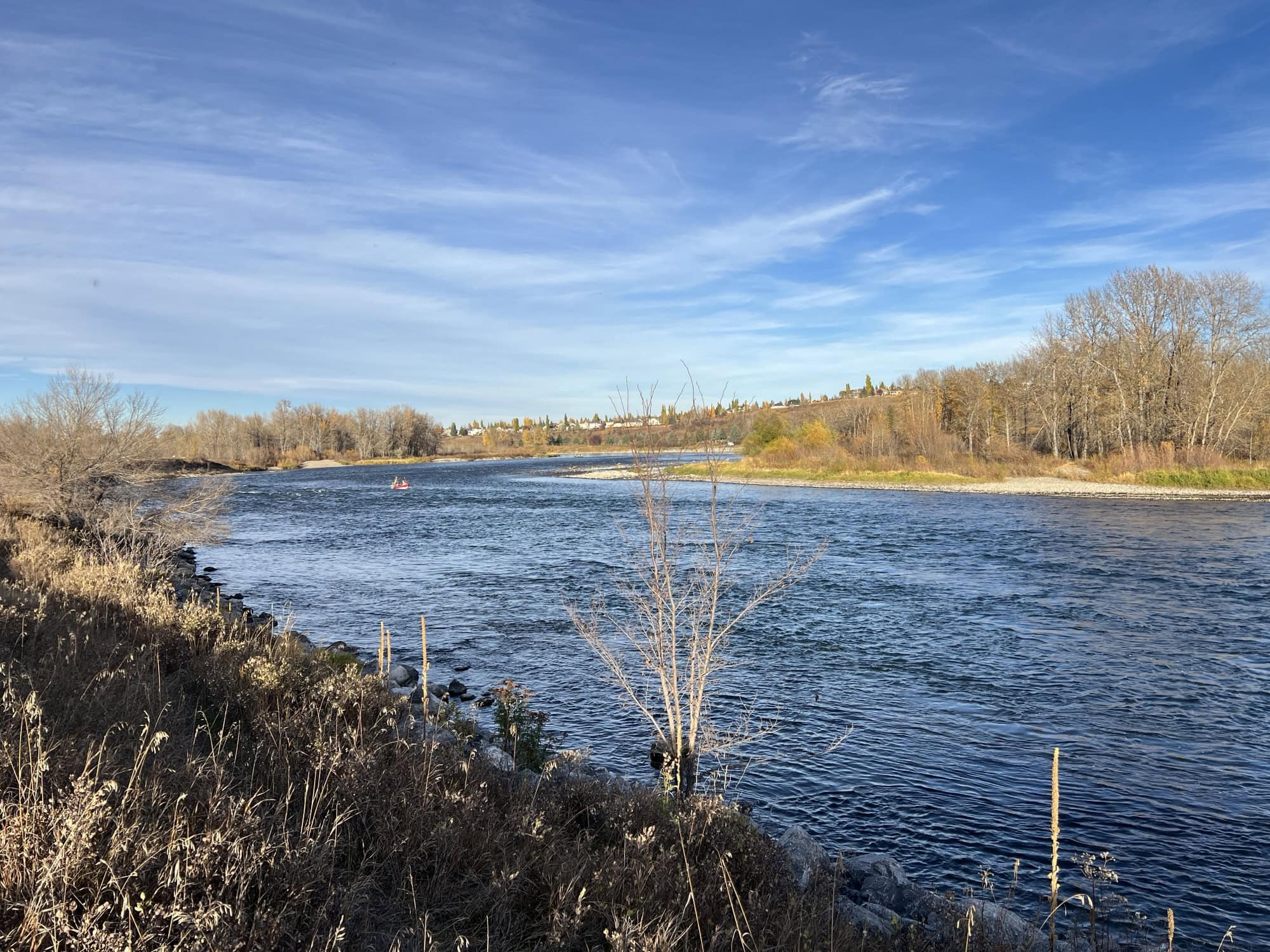
But along Calgary’s Bow River, something interesting happens when autumn arrives.
The river becomes quieter.
Summer crowds begin disappearing.
The surrounding trees turn yellow, the air feels crisp and the water can become wonderfully clear.
And the trout are still there.
Even during winter, open stretches of the Bow River can provide fishing opportunities for anglers willing to dress warmly and adjust their techniques.
But don’t expect the experience to feel like summer.
Cold water changes fish behaviour.
Ice makes the shoreline more dangerous.
And Alberta’s fishing regulations include important restrictions on bait, fish harvest and access.
So is fall or winter a good time to fish the Bow River?
It can be excellent, particularly for anglers who enjoy quieter conditions and aren’t expecting constant action.
Here’s what to know before heading out.
Can you fish the Bow River during winter?
Yes, important sections of the Bow River remain open to angling throughout the year.
Under Alberta’s 2026 to 2027 Sportfishing Regulations, the Bow River from the Banff National Park boundary downstream to Bassano Dam, including the reservoir, is listed as open all year.
That includes the river flowing through Calgary.
However, there are strict rules.
The regulations specify a bait ban and zero harvest for the listed fish species in this section, including trout.
That means you shouldn’t plan a winter fishing trip around taking fish home for dinner.
For anglers fishing this section, it’s primarily a catch and release experience.
The exact boundaries matter because regulations can change farther upstream or downstream, and tributaries may follow completely different seasons.
Always check the specific waterbody listing before fishing.
The official 2026 Alberta Sportfishing Regulations provide the applicable Bow River rules.
Why is fall such a good time to fish the Bow River?
Autumn changes the river in several useful ways.
Summer recreation activity begins slowing down.
Some popular fishing areas become quieter.
Cooler temperatures can also create more comfortable conditions for anglers who don’t enjoy standing outside during hot afternoons.
And as the seasons change, trout feeding patterns change too.
Rainbow trout and brown trout remain active in the Bow River.
But the way they respond to food and water conditions can be different from summer.
Some anglers find fall productive because fish are feeding before the coldest part of the year.
Others appreciate being able to focus on deeper runs and slower water rather than dealing with busy banks and recreational traffic.
However, fall fishing isn’t automatically better every day.
Weather, river flow and insect activity all affect the experience.
The best fishing may happen during relatively stable weather rather than immediately after a major change in river conditions.
What fish can you catch in the Bow River?
The Bow River is particularly famous for its trout.
Rainbow trout and brown trout are among the species most closely associated with fishing around Calgary.
The river is internationally recognized for offering opportunities to catch large wild trout.
Mountain whitefish also live in the system.
Other species may be present depending on the section of river.
But the exact fish you’ll encounter depends on your location, season and fishing technique.
And remember that fish identification matters.
Don’t assume that every fish with a spotted body is subject to identical regulations.
Under the regulations for the Calgary section of the Bow, the harvest limit is zero for trout and the other listed species.
Release your catch carefully.
Fall fishing is different from winter fishing
Although people often group the seasons together, the techniques and conditions can be quite different.
Fishing the Bow River in September
September can be a wonderful time.
Days are generally longer and warmer than later in autumn.
The river may still have active insect hatches.
And walking along the shoreline is usually more comfortable than during winter.
For many anglers, September offers an appealing balance between fishing conditions and enjoyable weather.
However, lower flows and unusually warm conditions can create stress for trout.
Alberta can implement fishing restrictions during periods of warm water and low river flows.
Check advisories even if the general season remains open.
Fishing the Bow River in October
October is when the atmosphere begins changing noticeably.
Trees along the river turn yellow.
Mornings become colder.
And anglers start reaching for warmer layers.
Fish may become increasingly selective depending on temperature and food availability.
Brown trout also enter their spawning season during autumn.
That’s an important reason to avoid disturbing spawning areas.
Look for shallow gravel sections where fish may have created redds, which are spawning nests.
Don’t wade through them.
And don’t target actively spawning fish.
Protecting successful reproduction helps maintain the river’s fishery.
Fishing the Bow River in November
By November, winter can arrive quickly.
You may encounter snow along the banks, freezing temperatures and ice forming in slower sections.
The river can still be fishable where it remains open.
But access becomes more challenging.
Cold weather affects your equipment too.
Water can freeze in rod guides.
Fly line becomes harder to manage.
And exposed hands get cold very quickly.
November fishing can be peaceful, but it’s not a casual summer outing with a hoodie and running shoes.
Can you fly fish the Bow River in December and January?
Yes, where the river is open and conditions are safe.
Winter fly fishing on the Bow River is possible, but it requires patience.
Trout are cold blooded animals.
As water temperatures drop, their metabolism generally slows.
They don’t need to feed as frequently as they do during warmer conditions.
That means you may need to fish more carefully and cover promising water slowly.
Large, fast presentations aren’t always the best choice.
Winter fish often hold in areas where they can conserve energy while still having access to food.
Deep pools, slower runs and transitions between currents can be worth investigating.
But remember that winter wading can be dangerous.
You don’t need to stand in the middle of the river to catch fish.
Fishing from a safe bank can be the better option.
What flies work best on the Bow River in winter?
Small nymphs are a common choice.
Patterns representing midges and other aquatic insects can be productive because these food sources remain available during colder weather.
Some anglers use small beadhead nymphs, midge larvae patterns or simple dark coloured flies.
The exact size depends on the water and what fish are feeding on.
Stonefly nymph patterns may also be useful.
Streamers can produce fish under suitable conditions, although winter trout often require a slower presentation.
The most important thing isn’t owning a hundred different flies.
It’s understanding where fish are likely to be holding.
A carefully presented simple nymph can be more useful than constantly changing flies without thinking about the water.
Do dry flies work in winter?
Sometimes.
Midge activity can create opportunities for surface feeding during suitable weather.
But don’t expect the consistent surface action you may find during certain summer hatches.
Winter dry fly fishing is often about recognizing occasional opportunities rather than depending on them all day.
If you see trout rising, pay attention.
Otherwise, subsurface presentations may be a more practical starting point.
Where should you fish the Bow River in Calgary?
The Bow passes through several Calgary communities and natural areas.
There are public parks and pathways that provide access to portions of the river.
For example, anglers investigate suitable legal access along sections near the Bow River pathway system in southeast Calgary and other publicly accessible areas.
But not every shoreline is safe or open for fishing.
Private property, protected habitats and park restrictions can affect access.
And the water near weirs, outfalls and other structures may be dangerous.
Don’t choose a location merely because somebody online says they caught a large trout there.
Choose somewhere you can reach legally and fish safely.
The Bow is a powerful river, even when the surface appears calm.
Why winter wading on the Bow River can be dangerous
This is one of the most important things to understand.
Cold water is unforgiving.
Falling into a river during freezing temperatures can become a life threatening emergency.
Waders don’t eliminate that risk.
And river ice can create additional hazards.
Some stretches may have open water beside unstable ice shelves.
A bank that looks solid might conceal an undercut edge.
Ice can also break away unexpectedly.
If you aren’t comfortable assessing winter river conditions, remain on stable ground and fish from shore.
Wear footwear suited to the conditions.
Consider a wading staff where appropriate.
Never wade deeper than you can safely manage.
And don’t fish alone in hazardous conditions simply because you want a quiet day.
There’s a difference between enjoying winter solitude and taking unnecessary risks.
Does the Bow River freeze in winter?
Parts of it can freeze, but not necessarily all of it.
The Bow River’s flow, water temperature and surrounding conditions vary along its length.
Some sections may remain open during colder periods.
Other areas develop shore ice and ice shelves.
During severe cold, ice can become more extensive.
Then a Chinook arrives and conditions may change again.
Never assume that a section of river ice is safe to walk on.
And don’t use frozen banks as a shortcut to reach another fishing location.
A river is not a maintained skating rink.
Do you need a fishing licence?
Most adult recreational anglers require a valid Alberta Sportfishing Licence, unless an exemption applies.
Licensing requirements depend on factors such as age and residency status.
Alberta publishes the current requirements through its fishing regulations and licensing information.
Remember that the fishing regulations are updated annually.
The current guide covers April 1, 2026, through March 31, 2027.
If you’re planning a trip after that period, check the next edition.
Don’t assume rules remain identical from year to year.
And don’t confuse the Bow River’s main channel with nearby tributaries.
Some streams have seasonal closures that differ substantially from the year round Bow River listing.
Is bait allowed on the Bow River?
For the section from the Banff National Park boundary to Bassano Dam, the 2026 to 2027 regulations specify a bait ban.
That means anglers need to use permitted artificial presentations rather than prohibited bait.
The ban is particularly important for someone who normally fishes lakes with worms or other bait.
Don’t assume the same techniques are legal on the Bow.
The rules apply whether you’re fishing during summer, fall or winter.
And because regulations use specific definitions of bait, it’s worth checking them before using scented products or unfamiliar tackle.
Can you keep trout from the Bow River?
Not in the listed section covered by the zero harvest regulations.
The 2026 to 2027 rules specify zero trout harvest for the Bow from the Banff National Park boundary downstream to Bassano Dam.
That makes careful catch and release essential.
Use tackle appropriate for releasing fish.
Keep handling time short.
Wet your hands before touching a fish.
Avoid squeezing it or damaging the gills.
Whenever possible, keep the fish in the water while removing the hook.
And during freezing weather, be especially careful about exposing a fish’s eyes and gills to extremely cold air.
A photograph isn’t worth harming the animal.
Alberta’s native trout recovery guidance explains why handling and release practices matter.
What should you wear for winter fishing?
The biggest challenge isn’t always the fishing.
It’s staying comfortable.
Start with warm base layers.
Add insulating clothing that manages moisture.
Wear a wind resistant jacket and suitable winter boots.
Gloves are essential, although you’ll probably want something that still allows you to manage your line.
Some anglers use thin gloves beneath warmer mittens.
A warm hat and neck covering help during windy weather.
And don’t forget traction.
Snow covered riverbanks can hide ice.
You might also want a thermos with a warm drink.
There’s something particularly satisfying about standing beside the Bow on a cold morning, watching the river flow past and knowing there’s hot coffee waiting in your bag.
Is winter fishing better during a Chinook?
A Chinook can make conditions more comfortable for anglers.
Instead of standing beside the river in minus 20 degrees, you might enjoy an afternoon above freezing.
But warmer air doesn’t necessarily mean the fish immediately become more active.
Water temperature and fish behaviour may change more slowly.
Wind can also make fly casting difficult.
And melting snow can create slippery shorelines.
I would treat a Chinook as a potential opportunity for a more comfortable outing, not a guarantee of excellent fishing.
Sometimes the best winter fishing happens during stable weather rather than dramatic changes.
Is fall or winter better for fishing the Bow River?
For most casual anglers, I would choose fall.
September and October often offer more comfortable weather, easier river access and longer daylight hours.
You can spend several hours exploring the shoreline without dealing with severe cold.
Winter is appealing for a different reason.
It’s quiet.
There may be fewer people around.
And the experience can feel particularly peaceful.
But the fishing is generally more demanding, and safety requires additional attention.
If you’re new to the Bow River, I would begin during the milder months.
Then gradually try colder conditions as you gain experience.
Is fall and winter fishing on the Bow River worth it?
Yes, especially if you enjoy fly fishing and don’t need constant action to have a good day.
Autumn offers beautiful scenery, quieter stretches of river and opportunities to target trout using appropriate techniques.
Winter provides a completely different experience.
Snow covered banks.
Cold, clear water.
And the possibility of enjoying a peaceful afternoon beside one of Alberta’s most famous trout rivers.
But it requires preparation.
Understand the fishing regulations.
Respect spawning fish.
Avoid dangerous ice and wading conditions.
And use proper catch and release practices.
The Bow River doesn’t stop being interesting when summer ends.
It simply changes.
And for anglers willing to slow down and adapt, that quieter version of the river can be incredibly rewarding.
