There’s a moment every newcomer to Calgary experiences.
You wake up in January, check the weather and see minus 25 degrees Celsius.
You put on your warmest jacket, winter boots, gloves and a toque. You prepare yourself for another day of freezing temperatures.
Then, sometime in the afternoon, something strange happens.
The temperature starts climbing.
Minus 15.
Minus 5.
Suddenly, it’s plus 8 degrees, snow is melting off the sidewalks and somebody is walking down the street wearing shorts.
And if you ask a local what’s happening, they’ll probably give you a one word explanation.
Chinook.
Calgary’s famous Chinook winds are one of the most unusual things about living in southern Alberta.
They can turn a bitterly cold winter day into something that feels almost like spring.
But they also bring strong winds, rapidly changing road conditions and, for some residents, headaches.
So what exactly causes Chinook winds in Calgary? How often do they happen? And are they really as wonderful as people say?
Let’s look at the science, the benefits and the slightly ridiculous side of Calgary’s most famous weather phenomenon.
What is a Chinook wind?
A Chinook is a warm, dry wind that develops on the sheltered side of a mountain range.
In Calgary’s case, that mountain range is the Canadian Rockies.
According to Environment and Climate Change Canada, Chinooks occur when strong winds carry air across mountains.
As the air rises on the western side, it cools and may release moisture through rain or snow.
After crossing the mountains, the air descends toward the Alberta foothills.
As it sinks, atmospheric pressure increases and the air warms through compression.
By the time the wind reaches Calgary, it can be considerably warmer and drier than the cold air that was previously sitting over the city.
The result is a sudden temperature change that can feel almost unbelievable.
You can find the scientific explanation in Environment Canada’s weather glossary.
And while similar winds occur in other parts of the world, southern Alberta is particularly famous for them.
Why does Calgary get so many Chinooks?
Location.
Calgary sits east of the Rocky Mountains, close enough to be strongly influenced by air moving across the mountain range.
When atmospheric conditions are favourable, winds travelling over the Rockies descend into the foothills and southern Alberta.
Calgary is in a position to experience that warmer, drier air.
It’s one of the reasons winters here can feel different from those in Edmonton or cities farther east.
You can have severe cold throughout much of Alberta while Calgary suddenly enjoys a relatively mild afternoon.
But Chinooks don’t happen every time the wind blows from the west.
The atmospheric conditions need to line up.
And some warm spells are stronger or last longer than others.
How much can the temperature rise during a Chinook?
A lot.
Temperature increases of 10 to 20 degrees Celsius can occur during significant Chinook events.
In some circumstances, the changes are even more dramatic.
Imagine spending several days in temperatures below minus 20.
Then a strong Chinook arrives and the afternoon temperature climbs above freezing.
That’s a difference of more than 20 degrees.
It’s one of the reasons newcomers find Calgary’s winters so difficult to understand.
The temperature listed on your weather app in the morning may not resemble what you experience by lunchtime.
And the change can happen surprisingly quickly.
Of course, not every Chinook brings a dramatic warmup.
Some are more modest.
The biggest temperature increases depend on the strength of the wind, the existing cold air and broader weather conditions.
Still, few things improve a Calgary winter afternoon quite like an unexpected rise above freezing.
What is a Chinook arch?
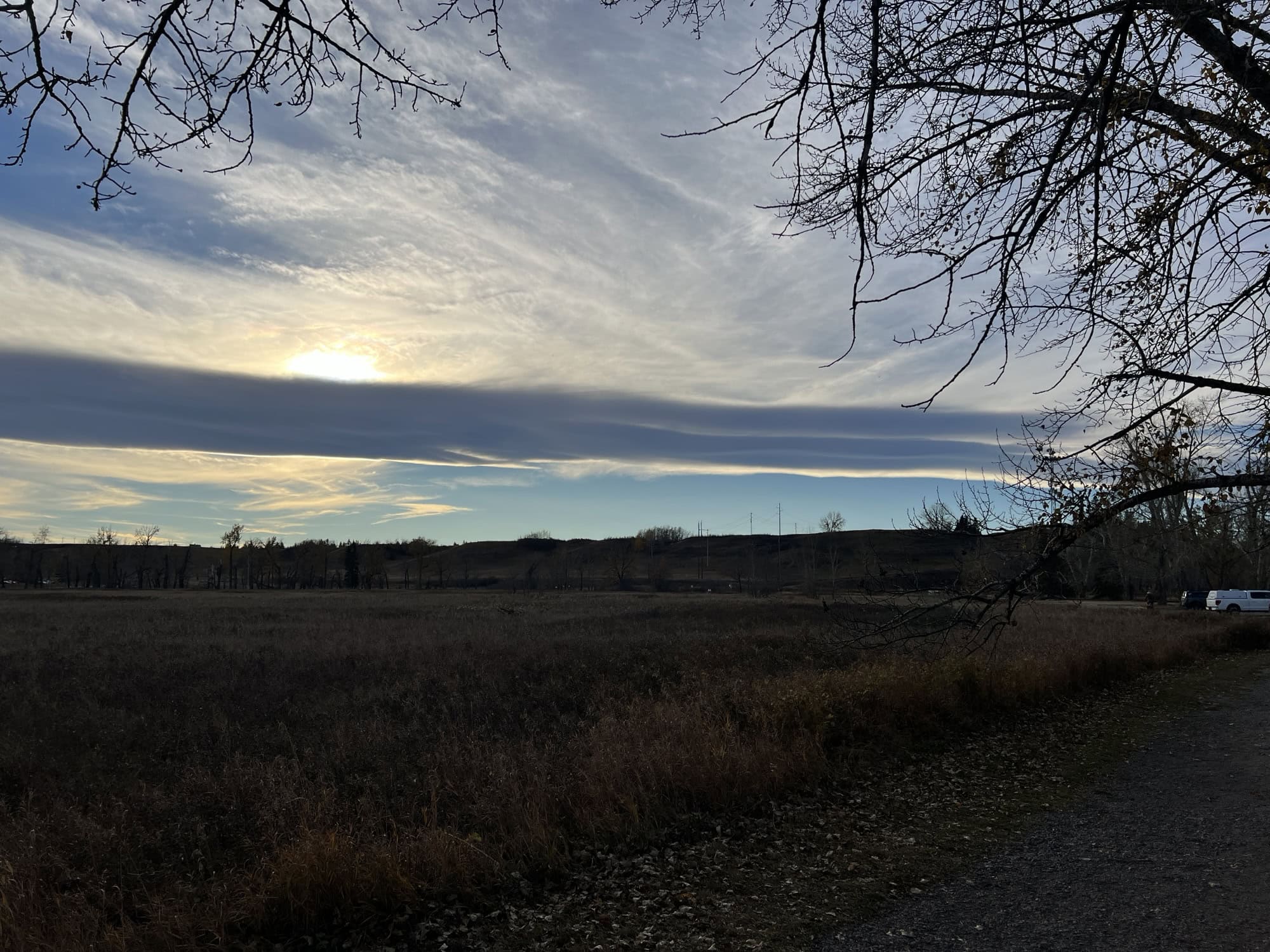
One of the most recognizable signs of an approaching Chinook is the Chinook arch.
This is a distinctive band of cloud that may stretch across the sky near the mountains.
From Calgary, it can look like a long wall of cloud above the western horizon, with clearer sky appearing beneath it.
It’s a remarkable sight, especially around sunrise or sunset.
The cloud formation develops because of atmospheric conditions associated with air flowing across the Rockies.
But don’t assume that every arch shaped cloud guarantees a dramatic warmup.
Weather is more complicated than that.
Still, if you’ve lived in Calgary long enough, you probably know the feeling of looking west, noticing that unusual cloud formation and wondering whether tomorrow might finally be warm enough to wash your car.
Are Chinooks more common in winter?
Yes, Chinooks are especially associated with Calgary’s colder months.
They can occur at different times of year, but their impact is particularly noticeable in winter.
That’s because the temperature contrast can be enormous.
A warm, dry wind arriving during a cold spell may quickly raise temperatures above freezing.
During summer, the same general atmospheric process doesn’t create such a dramatic change in how the weather feels.
Winter is when Chinooks become part of everyday conversation.
People talk about them at work.
They mention them while waiting for buses.
And whenever the temperature rises unexpectedly, someone will inevitably announce that a Chinook must be coming.
Do Chinooks make Calgary winters easier?
For many people, absolutely.
This is one of Calgary’s biggest winter advantages.
Instead of experiencing uninterrupted freezing temperatures for months, the city sometimes gets breaks from the cold.
Those warmer periods can make everyday life considerably more pleasant.
You might enjoy a walk outside without needing your heaviest winter clothing.
Snow may begin melting along sidewalks.
And the sunshine can feel wonderful after several cold days.
If you’re moving to Alberta from a milder climate, Chinooks may make Calgary more appealing than places with consistently colder winter weather.
But I wouldn’t describe them as a complete solution to winter.
Calgary still experiences severe cold snaps.
Snowstorms still happen.
And even during a Chinook, strong wind can make the weather uncomfortable.
A winter warmup is lovely.
A winter warmup accompanied by powerful wind gusts isn’t always quite as enjoyable.
Why do Chinooks sometimes make roads more dangerous?
This is one of their less appreciated effects.
A Chinook can melt snow and ice during the day.
Water runs across sidewalks, parking lots and roads.
Everything starts looking clearer.
Then the temperature drops again.
That water freezes.
And suddenly the sidewalk that was wet yesterday becomes an enormous skating rink.
This repeated freezing and thawing is a common winter frustration in Calgary.
It’s particularly noticeable on residential streets, shaded sidewalks and areas where melted snow collects.
Drivers also need to be careful.
Road surfaces that appear wet may contain black ice when temperatures fall.
Winter tires remain important even during warmer weather because conditions can change again quickly.
And if you’re a homeowner, Chinooks can create a cycle of melting snow, icy walkways and repeated snow removal.
Sometimes living in Calgary feels like winter is having trouble making up its mind.
Do Chinook winds cause headaches?
This is probably one of the most frequently discussed Chinook questions.
Some people in Calgary report headaches or migraines around periods of rapid weather change.
Others notice no symptoms at all.
There has been medical research exploring associations between weather patterns, including Chinooks, and migraine attacks.
Some studies have reported associations in certain groups of people.
However, that doesn’t mean every headache during a Chinook is directly caused by the wind.
Migraine is a complex neurological condition, and possible triggers vary between individuals.
Weather changes may play a role for some people, while factors such as sleep, stress and other personal triggers can also matter.
If you experience recurring headaches, tracking their timing alongside weather conditions may help you identify patterns worth discussing with a health professional.
But I would be cautious about assuming that every time Calgary gets windy, the change in atmospheric pressure is automatically responsible for a migraine.
The experience is real for people who report it, but the relationship isn’t identical for everybody.
Can Chinooks affect your sleep or mood?
Some people say they feel different during sudden weather changes.
They may report trouble sleeping, fatigue or changes in how comfortable they feel.
However, experiences vary considerably.
There isn’t strong evidence that every Chinook has a predictable effect on mood or sleep.
The practical effects of changing temperatures may also contribute.
For example, strong winds can create noise around a building.
Rapid warming may affect indoor temperatures.
And changing weather may alter your daily routine.
If you notice a pattern, consider the broader circumstances rather than assuming one weather event explains everything.
For many Calgarians, though, the mood change associated with a Chinook is quite simple.
The sunshine comes out, the temperature rises and people suddenly feel more interested in leaving the house.
After a stretch of winter cold, that’s understandable.
Are Chinooks dangerous?
They can create hazards, particularly when strong winds accompany rapid temperature changes.
High wind gusts may affect driving, especially for larger vehicles.
Loose outdoor objects can blow around.
Falling branches or debris may become concerns during severe wind events.
And the melting and refreezing of snow can create dangerous ice.
However, an ordinary Chinook isn’t necessarily an emergency.
Most warmups are simply part of life in Calgary.
The important thing is responding to the actual weather conditions.
If Environment and Climate Change Canada issues a wind warning, take it seriously.
Secure loose objects around your property.
Be careful while driving.
And watch for changing road conditions.
Is Calgary warmer than Edmonton because of Chinooks?
Chinooks are one reason Calgary experiences more dramatic winter warmups than Edmonton.
Edmonton is farther from the eastern slopes of the Rockies and doesn’t experience the same frequent direct effects.
That can make Edmonton’s winter cold feel more persistent.
But Calgary isn’t always warmer on every winter day.
Both cities experience severe cold.
And Calgary’s strong winds can sometimes make outdoor conditions less comfortable than the temperature alone suggests.
If you’re comparing the cities, Chinooks are a meaningful climate difference.
But they shouldn’t be the only factor in your decision.
Housing, employment, transportation and your everyday routine matter far more than a handful of warmer afternoons.
Do Chinooks melt all the snow in Calgary?
Not necessarily.
A strong warm spell can melt a surprising amount of snow, especially in sunny areas.
But shaded streets, snowbanks and accumulated ice may remain.
And if there’s a substantial amount of snow on the ground, a brief warmup may only melt the surface.
The bigger issue is what happens afterward.
Meltwater can refreeze, creating hard ice.
Then fresh snow may cover that ice, making the surface even more slippery.
This is why Calgary residents sometimes complain about winter sidewalks long after the latest snowfall has ended.
The snow itself isn’t always the biggest problem.
It’s the ice underneath.
Do Chinooks happen in Banff and Canmore too?
Warm downslope wind patterns also affect parts of the Bow Valley and surrounding foothills.
However, weather in the mountains can differ significantly from conditions in Calgary.
You might experience a warm Chinook afternoon in the city while higher elevation areas remain cold and snowy.
Mountain valleys also have their own wind and temperature patterns.
Don’t assume that warm weather in Calgary guarantees pleasant conditions in Banff.
If you’re planning to hike, ski or drive into the mountains, check the forecast for your specific destination.
Calgary and Lake Louise can feel like completely different seasons on the same day.
What should newcomers know about Calgary’s Chinook weather?
The biggest lesson is to dress in layers.
Don’t assume that the temperature at breakfast will remain the same throughout the afternoon.
Keep appropriate winter clothing available, even when a warm spell arrives.
If you drive, make sure your vehicle remains prepared for snow and ice.
Don’t rush to remove winter tires after a few pleasant days.
If you walk frequently, pay attention to refrozen sidewalks.
And if you own a home, watch where melting snow accumulates around entrances and walkways.
You may also want to check the forecast more frequently than you’re used to.
Calgary winter weather rewards people who can adapt.
Are Chinooks one of the best things about living in Calgary?
For many residents, yes.
There’s something wonderful about getting an unexpected break from freezing temperatures.
You can spend several days complaining about winter.
Then a Chinook arrives, the sun comes out and suddenly Calgary doesn’t seem so bad.
People go walking.
Outdoor patios may become surprisingly tempting.
And someone inevitably appears in shorts.
But Chinooks have their annoyances too.
The wind can be strong.
Roads can become icy afterward.
And some people report feeling unwell during weather changes.
Still, the occasional warmth is a welcome feature of life in southern Alberta.
So, what makes Chinook winds in Calgary so special?
It’s the speed of the change.
You can wake up feeling as though you’re living in the middle of an Arctic winter.
Then finish your afternoon wearing a lighter jacket.
The science involves air crossing the Rocky Mountains, losing moisture and warming as it descends.
But the everyday experience is much simpler.
Calgary gets a break from winter when it least expects one.
And after living here long enough, you learn not to trust a sunny January afternoon too much.
Enjoy the warmth.
Go for a walk.
Let the snow melt.
Just don’t put your winter boots away.
Because Calgary might decide it wants winter back tomorrow.
