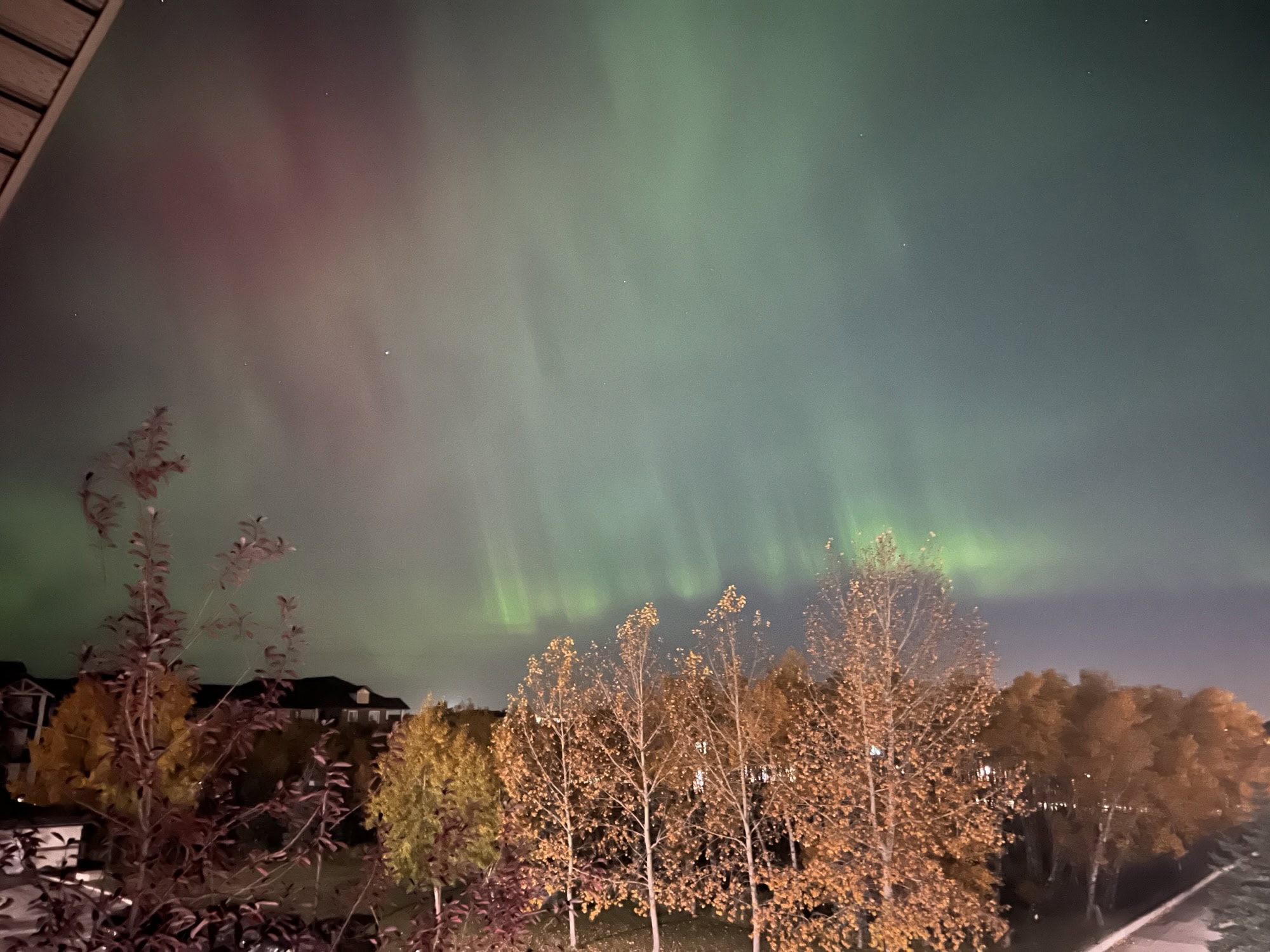
There’s something slightly ridiculous about chasing the northern lights.
You spend half the evening checking forecasts.
You drive away from the city.
You stand outside in the freezing cold, staring at what appears to be a perfectly ordinary dark sky.
Then, just when you’re beginning to wonder whether you should have stayed home, a faint green glow appears above the horizon.
A few minutes later, the sky starts moving.
Bright curtains of green light stretch across the darkness, sometimes accompanied by purple, pink or red.
And suddenly, being cold doesn’t seem particularly important anymore.
Seeing the northern lights is one of the most memorable experiences you can have in Alberta.
But you don’t need to travel all the way to northern Canada to see them.
Alberta has some extraordinary aurora viewing locations, including designated dark sky preserves, remote provincial parks and prairie viewpoints away from city lights.
You can sometimes even see the aurora from Calgary or Edmonton during strong displays.
The trick is choosing the right location, understanding the forecast and being willing to wait.
Here are some of the best places in Alberta to watch for the northern lights.
Can you actually see northern lights in Alberta?
Absolutely.
The northern lights, also called aurora borealis, occur when charged particles associated with solar activity interact with Earth’s magnetic environment and upper atmosphere.
The resulting light displays can be visible across northern regions and sometimes much farther south.
Alberta is well positioned for aurora viewing because it extends across a large range of northern latitudes.
The province also contains enormous areas with relatively little artificial light pollution.
However, seeing the northern lights isn’t guaranteed.
You need appropriate geomagnetic activity, darkness and suitable weather conditions.
A powerful aurora display won’t help much if the sky is covered in clouds.
And a perfectly clear night may produce no visible aurora at all.
That’s part of what makes the experience so exciting.
You never know exactly what you’re going to get.
1. Elk Island National Park: One of the best options near Edmonton
Elk Island National Park is a fantastic starting point for aurora watching.
Located east of Edmonton, the park is part of the Beaver Hills Dark Sky Preserve.
It’s one of the more accessible designated dark sky areas in Alberta.
And unlike some remote northern locations, you don’t need to organize a complicated expedition to get there.
The park is approximately 45 to 60 minutes from much of Edmonton, depending on your starting point.
Where should you watch the sky?
The Astotin Lake area is a popular destination for stargazing.
It provides opportunities to enjoy darker skies away from Edmonton’s brightest urban lighting.
Parks Canada specifically identifies the park as a location for viewing meteor showers, stars and occasional northern lights.
Elk Island is open throughout the day and night.
However, normal national park entry requirements apply.
And there’s something else to remember.
Elk Island is home to bison.
You should never approach wildlife or wander into dark areas without understanding the surroundings.
Use designated public facilities and safe viewpoints.
You can read more on the official Elk Island stargazing page.
2. Jasper National Park: Beautiful mountain scenery and dark skies
Jasper is one of Alberta’s most famous stargazing destinations.
The national park was designated a Dark Sky Preserve in 2011.
Its enormous wilderness areas and efforts to reduce artificial lighting make it an excellent place to enjoy the night sky.
The scenery adds another advantage.
Instead of watching the aurora over a flat horizon, you may be able to photograph it above mountains, forests or lakes.
That can create some incredible images.
Where can you see the northern lights near Jasper?
Accessible public areas around Pyramid Lake and other suitable viewpoints may offer attractive compositions when conditions permit.
However, mountain valleys can limit your view toward parts of the horizon.
And cloud cover can sometimes be very different from one valley to another.
I would choose a location with a clear view of the sky rather than simply heading to the most famous lake.
Parks Canada continues working on areas affected by the 2024 Jasper wildfire, so check current access information before travelling.
You can find local information through Tourism Jasper’s Dark Sky Preserve guide.
Is Jasper worth visiting just for the northern lights?
It can be, particularly if you want to combine aurora watching with a mountain vacation.
But I wouldn’t book an expensive Jasper trip expecting the northern lights to appear on a particular night.
There are no guarantees.
Plan daytime activities as well.
That way, even if the aurora doesn’t cooperate, you’ll still have a memorable visit.
3. Wood Buffalo National Park: One of Alberta’s most extraordinary dark sky destinations
If you’re serious about dark skies, Wood Buffalo National Park is difficult to ignore.
The park extends across northeastern Alberta and the Northwest Territories.
It’s Canada’s largest national park.
And it contains the world’s largest designated Dark Sky Preserve.
That’s an enormous area where natural darkness is actively protected.
Wood Buffalo offers outstanding potential for stargazing and aurora viewing.
But reaching it isn’t as simple as driving an hour outside Calgary.
Is Wood Buffalo worth visiting for the aurora?
For a dedicated northern Alberta trip, it can be.
The park’s remote location reduces light pollution.
And its northern latitude is favourable for aurora viewing.
However, travel planning matters.
Some areas are extremely remote.
Services are limited.
And road conditions, seasonal access and wildlife considerations can affect your plans.
The Pine Lake area is one location associated with visitor activities and dark sky experiences.
Travel Alberta also identifies a designated viewing platform.
Before travelling, confirm which roads and facilities are accessible during your dates.
You can find information through Wood Buffalo National Park.
This is not a destination I’d recommend casually driving into after dark without preparation.
4. Cypress Hills: A beautiful dark sky destination in southeastern Alberta
Cypress Hills is one of the most interesting aurora viewing destinations in southern Alberta.
The area extends across the Alberta and Saskatchewan border.
It’s known for its elevated landscape, forests and relatively dark skies.
Cypress Hills was Alberta’s first designated Dark Sky Preserve.
That makes it an attractive place for astronomy and night sky photography.
The surrounding landscape is also beautiful during the day.
You can explore forested hills, scenic viewpoints and recreational areas.
Can you see the northern lights this far south?
Yes, when geomagnetic activity is strong enough.
But displays visible in northern Alberta may not always be visible at Cypress Hills.
The farther south you travel, the more dependent you generally become on stronger auroral activity.
Still, the relatively low light pollution improves your ability to see faint displays.
If you’re travelling from Calgary, Cypress Hills is a long drive.
I would treat it as a weekend destination rather than a spontaneous midnight outing.
You can find visitor information through Cypress Hills Interprovincial Park.
5. Waterton Lakes National Park: Aurora watching with dramatic mountains
Waterton Lakes National Park is another remarkable dark sky destination.
Located in southwestern Alberta near the Montana border, it combines prairie and mountain landscapes.
Waterton and neighbouring Glacier National Park in the United States form an internationally recognized dark sky area.
That’s part of what makes the region so attractive.
You have protected landscapes and relatively dark skies.
And the mountain scenery can make the experience especially memorable.
Is Waterton good for northern lights photography?
It can be.
But the surrounding mountains may block sections of the horizon.
Choosing a viewpoint with open sky is important.
Weather can also be unpredictable, especially because the region is known for strong winds.
If you’re visiting during autumn or winter, dress warmly and check road access carefully.
Some park roads and facilities operate seasonally.
For most people travelling from Calgary, Waterton is better suited to an overnight trip than an attempt to chase a forecast at the last minute.
You can review park information through Parks Canada.
6. Peace River: An excellent northern Alberta area to investigate
The Peace River region is another attractive destination for aurora watching.
It’s located considerably farther north than Calgary or Edmonton.
That geographical advantage can make aurora viewing more promising during certain levels of geomagnetic activity.
The region also has wide open areas with relatively little light pollution outside communities.
But choosing a safe viewpoint is important.
Don’t stop on an isolated highway shoulder simply because you see green lights beginning to appear.
Find a legal public area where parking is permitted and where you won’t interfere with traffic.
Is Peace River better than Calgary for northern lights?
From a geographical standpoint, Peace River is farther north and closer to the region where auroral activity is commonly visible.
That can be advantageous.
However, weather still matters enormously.
A clear night near Calgary during a strong geomagnetic storm can be much better than a completely cloudy night in northern Alberta.
I wouldn’t drive all the way to Peace River based solely on a vague aurora forecast.
But if you’re already visiting the region, watching the night sky is well worth considering.
7. Cold Lake: A northern Alberta destination with beautiful water views
Cold Lake is another interesting option.
The area has darker surroundings than major metropolitan centres, particularly outside the city.
The large lake can create beautiful opportunities for night sky photography.
And its northern Alberta location can be favourable for aurora viewing.
Where should you go?
Look for a designated public access area with a clear sky view.
Cold Lake Provincial Park is a beautiful natural destination, but not every beach or trail is suitable for nighttime exploration.
Check access rules and current conditions.
Avoid walking onto frozen lake ice simply because it looks solid.
And be mindful of wildlife in forested areas.
The park itself has beautiful camping and recreational facilities during its operating season.
If you’re planning a longer trip to northeastern Alberta, aurora watching can be a wonderful addition.
8. Ghost Lake: One of the better northern lights spots near Calgary
If you’re based in Calgary, Ghost Lake is worth investigating.
Located west of Cochrane, the reservoir offers open views of the surrounding landscape.
It’s also farther from central Calgary’s brightest lights.
Travel Alberta identifies the Ghost Lake parking area among locations used by Alberta aurora enthusiasts.
That makes it appealing for people looking for a relatively convenient night sky outing.
Can you see northern lights at Ghost Lake?
Yes, during suitable aurora activity and clear conditions.
But it isn’t guaranteed.
You may also notice light pollution from surrounding communities and traffic.
And because Ghost Lake is a reservoir, you need to be cautious near the water.
Don’t wander onto ice at night.
Avoid shoreline areas with uncertain footing.
Use legal public parking and don’t block access roads.
If the weather is cold, you may spend far longer waiting than you expected.
Bring warm clothing and keep your vehicle prepared.
9. Aspen Beach Provincial Park: A central Alberta option
Aspen Beach Provincial Park is located on Gull Lake, near Lacombe.
It’s an attractive location for people living around Red Deer and central Alberta.
The open landscape provides opportunities to observe the night sky, and Travel Alberta has identified the area as a place used by northern lights enthusiasts.
It’s also a beautiful destination during summer.
What should you know before visiting at night?
Not every park facility remains open throughout the year.
Some day use areas may have seasonal restrictions.
Camping facilities may also operate according to specific dates.
Check current park access before driving out.
And remember that the lake and shoreline can be hazardous after dark.
For aurora photography, choose safe public locations rather than trying to get as close to the water as possible.
A good photograph isn’t worth falling through ice or getting stranded on an unfamiliar road.
10. Fort McMurray and surrounding northern Alberta
Fort McMurray is another location where northern lights can be visible during suitable conditions.
Its northern latitude makes it more favourable for aurora viewing than southern Alberta during some events.
However, the town itself has artificial lighting.
For darker skies, observers often need to travel away from developed areas.
That creates additional planning considerations.
Northern highways can be remote.
Wildlife encounters are possible.
And winter weather can be severe.
If you’re unfamiliar with the region, research safe legal viewing locations beforehand.
Don’t simply drive into an industrial or remote area hoping to find darkness.
For residents and visitors already in Fort McMurray, aurora watching can be a fantastic outdoor experience.
Where is the best place to see northern lights near Calgary?
For Calgary residents, Ghost Lake is one of the more practical options.
You can reach the area without committing to a full weekend away.
Other rural viewpoints outside the city’s brightest light pollution may also work well.
But the direction of the aurora matters.
When activity is relatively weak, displays may remain low on the northern horizon.
A location with an unobstructed northern view can help.
During particularly strong geomagnetic storms, the lights may extend much farther across the sky.
That’s when people sometimes manage to photograph aurora from inside Calgary.
However, city lighting can make faint displays difficult to see.
If you want the best experience, get away from urban lights when conditions permit.
Where is the best place near Edmonton?
Elk Island National Park is one of the strongest choices.
It’s relatively accessible, has protected dark skies and is well known for astronomy.
The Astotin Lake area can provide attractive night sky views.
Just remember that national park regulations and wildlife safety rules apply.
Another option is exploring safe public locations farther from Edmonton’s artificial lighting.
But don’t assume you need to travel hundreds of kilometres.
On a strong aurora night, the difference between staying downtown and visiting a suitable dark location outside the city can be substantial.
When is the best time to see northern lights in Alberta?
Northern lights can occur throughout the year.
But you need darkness to see them.
That’s why autumn, winter and early spring are particularly attractive.
Travel Alberta identifies October through March as a favourable period because of the longer nights.
September can also be excellent.
During June, the nights are very short in northern Alberta.
That reduces the window for observing aurora, even when solar activity is present.
The season isn’t the only factor, though.
You still need the right geomagnetic conditions.
And ideally, a clear sky.
What time do northern lights appear?
There isn’t a fixed schedule.
Aurora can appear at different times during darkness.
Some displays occur in the evening.
Others become more active closer to midnight.
And some continue into the early morning.
The best strategy is to monitor forecasts and remain flexible.
You don’t necessarily need to wait until 2 AM every time.
If a strong display begins shortly after dark, you may be able to see it much earlier.
How can you predict northern lights?
You can’t predict every display perfectly, but forecasting tools are useful.
The University of Alberta operates AuroraWatch, which provides aurora alerts and information relevant to Edmonton and surrounding areas.
You can visit AuroraWatch.
The United States National Oceanic and Atmospheric Administration also provides space weather forecasts.
Its Space Weather Prediction Center includes aurora information and near term forecasts.
You can check NOAA’s aurora forecast.
What does the Kp index mean?
The Kp index measures global geomagnetic activity.
It runs from 0 to 9.
Higher numbers generally indicate stronger geomagnetic disturbances.
But there isn’t one Kp number that guarantees visible northern lights at every location in Alberta.
Your latitude, local conditions, cloud cover and the aurora’s actual position all matter.
A relatively modest display may be visible in northern Alberta while Calgary sees nothing.
And during a strong storm, aurora can appear much farther south.
Use the Kp index as one piece of information rather than a guarantee.
Can you see northern lights with your eyes or only with a camera?
You can absolutely see them with your eyes.
But there’s a catch.
Cameras can sometimes capture colour and detail that isn’t obvious to human vision, especially during faint displays.
A weak aurora may appear as a pale grey or greenish glow.
Take a long exposure photograph, and suddenly the image looks much greener.
Strong displays are different.
Bright moving curtains and colourful structures can be clearly visible without a camera.
That’s the experience people hope for.
But don’t be disappointed if your first aurora looks more subtle than the photographs you see online.
How do you photograph northern lights?
You don’t necessarily need expensive equipment.
Modern smartphones can capture impressive results using night photography modes.
For a dedicated camera, a tripod is especially useful.
You’ll generally want a wide lens, a relatively open aperture and an exposure long enough to collect light without turning the moving aurora into an indistinct blur.
The ideal settings depend on brightness.
A faint display may require a longer exposure.
A bright, rapidly moving display may look better with a shorter one.
Take a few test photographs and adjust.
And remember to include some scenery.
Mountains, trees or a lake can help create a much more interesting image than an empty sky.
So, where are the best places to see northern lights in Alberta?
For an accessible dark sky destination near Edmonton, Elk Island National Park is an excellent choice.
Jasper offers spectacular mountain scenery and protected dark skies.
Wood Buffalo National Park is extraordinary for remote northern stargazing.
Cypress Hills and Waterton are attractive options in southern Alberta when aurora activity is strong.
Peace River, Cold Lake and Fort McMurray are worth investigating for their northern locations.
And for Calgary residents, Ghost Lake is one of the more convenient places to begin.
But no location guarantees the lights.
Sometimes the forecast looks promising and nothing happens.
Other times, you glance outside on an ordinary evening and realize the entire sky is glowing.
That’s part of the appeal.
The northern lights aren’t something you can book or control.
They’re something you wait for.
And when they finally appear, dancing across the Alberta sky while everybody around you stops talking and simply looks up, you’ll understand why people are willing to lose a little sleep chasing them.
