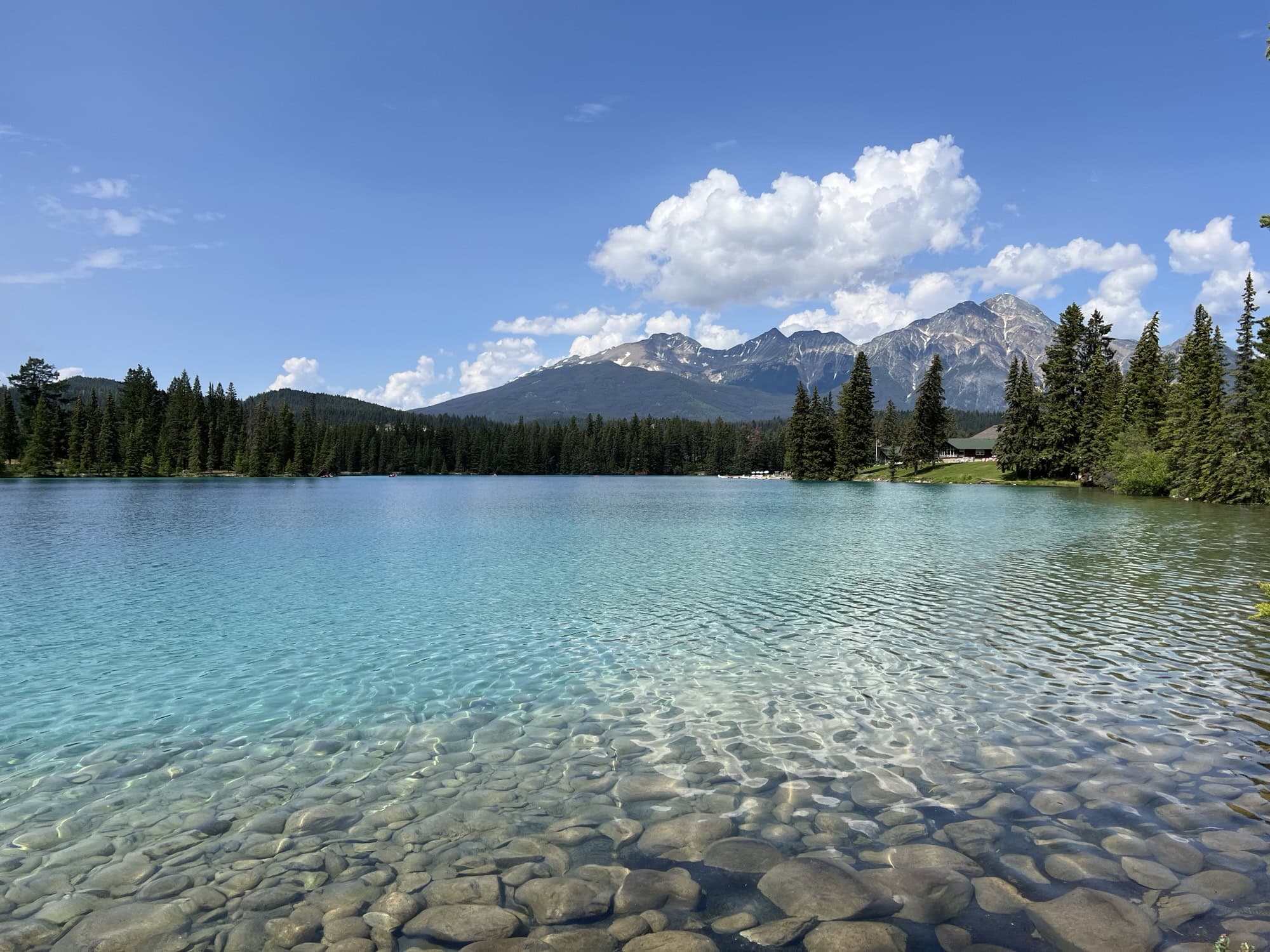
For years, Alberta has been the province people move to when they’re looking for something better.
A higher paying job.
A more affordable house.
Lower taxes.
Or perhaps just the opportunity to live closer to the Rocky Mountains.
And when you look at photographs of turquoise lakes, sunny Calgary streets and enormous Alberta houses, it’s easy to understand the appeal.
But moving to Alberta in 2026 isn’t quite the same as moving here ten or fifteen years ago.
Housing has become more expensive.
The job market is competitive in some industries.
Utilities and insurance can be surprisingly costly.
And while Alberta’s winters are often beautifully sunny, they can also be brutally cold.
So is moving to Alberta still worth it?
For many people, yes.
But the biggest mistake is assuming that moving west will automatically solve financial problems.
Alberta has some genuine advantages, including no provincial sales tax, relatively accessible housing in several cities and excellent outdoor recreation.
But whether the move improves your life depends on your employment prospects, housing choices and expectations.
Let’s look at what living in Alberta is actually like in 2026.
Are people still moving to Alberta in 2026?
Yes.
Alberta continues attracting people from other Canadian provinces.
According to data reported by the Alberta Real Estate Association, approximately 26,777 people moved to Alberta from other provinces during the second quarter of 2026.
During the same period, 20,884 people moved away to other parts of Canada.
That resulted in a net gain of 5,893 people through interprovincial migration.
The net gain was higher than during the same quarter in 2025.
Alberta also continued experiencing population growth, although the pace and sources of growth have changed.
You can review the provincial population information through Alberta’s demographic statistics.
Of course, migration numbers don’t prove that everybody who moved is happier.
People relocate for many reasons.
Employment, family connections, housing and lifestyle all play a role.
But the figures show that Alberta continues to attract new residents.
The question is whether it’s the right move for you.
1. Housing can still be more affordable than in other major Canadian cities
This is one of the strongest reasons people consider Alberta.
If you’re moving from Toronto or Vancouver, housing prices in Calgary or Edmonton may look much more manageable.
But Alberta’s housing market isn’t uniformly inexpensive.
Calgary has experienced substantial price increases in recent years.
Some detached homes in desirable neighbourhoods are expensive.
And Canmore, despite being smaller, can be exceptionally costly because of its location and housing supply constraints.
Edmonton generally offers more accessible housing.
Smaller communities such as Lethbridge and Medicine Hat may be even more attractive for certain buyers.
What do the 2026 numbers show?
Royal LePage’s third quarter 2026 house price survey reported an aggregate home price of approximately $690,400 in Calgary.
Edmonton’s figure was approximately $479,500.
Red Deer was around $427,700.
Lethbridge was approximately $318,000.
These are composite market estimates rather than prices for identical homes.
But they show just how much housing affordability can vary across Alberta.
If your goal is buying a house, choosing the right city may matter more than choosing Alberta itself.
2. Alberta has no provincial sales tax
This is one financial advantage that applies throughout the province.
Alberta charges the federal 5% GST on applicable purchases.
It does not impose a general provincial sales tax.
By comparison, Ontario has a 13% HST.
British Columbia generally charges 5% GST plus 7% provincial sales tax on many taxable purchases.
That difference can make an impact over time.
Particularly when you’re furnishing a home, buying appliances or making other large purchases.
However, remember that some goods and services have different tax treatment.
The savings depend on what you buy.
And avoiding provincial sales tax doesn’t automatically make all other living expenses cheaper.
You still need to account for housing, utilities, transportation and insurance.
3. Alberta’s job market has opportunities, but competition is real
One of the biggest mistakes newcomers make is assuming Alberta is still a place where anyone can arrive and immediately find a high paying job.
That may have been the impression created during certain economic booms.
But the labour market in 2026 is more complicated.
According to Statistics Canada, Alberta’s unemployment rate was 6.4% in September 2026.
That was down from August and also lower than a year earlier.
Employment increased by approximately 23,000 during September.
On an annual basis, Alberta employment was approximately 76,000 higher than in September 2025.
Those are encouraging figures.
But they don’t mean every newcomer will find work quickly.
Which industries offer opportunities?
Alberta has major employment activity in energy, construction, healthcare, education, transportation, professional services and technology.
Calgary has a substantial corporate employment market.
Edmonton has major public administration, healthcare, education and industrial sectors.
Northern and central Alberta also have opportunities related to resource industries, agriculture and regional services.
But demand varies by occupation.
Some positions are highly competitive.
Others require Alberta licensing or certification.
If you’re moving from another province or country, investigate whether your qualifications will be recognized.
Don’t assume your previous credentials automatically authorize you to work in a regulated occupation.
Should you move before finding a job?
I would be cautious.
If you have sufficient savings and a realistic employment plan, relocating first might work.
But moving without a job can be expensive.
You’ll need to pay rent, food, transportation and other expenses while searching.
And the process may take longer than expected.
If possible, secure employment before moving.
At minimum, investigate actual job postings, salary ranges and licensing requirements.
A plan based on real opportunities is much stronger than simply assuming Alberta has plenty of jobs.
4. Calgary and Edmonton offer very different lifestyles
This is important because many people researching Alberta focus almost entirely on Calgary.
But Edmonton may be a better choice depending on your priorities.
Calgary offers convenient access to the Rocky Mountains.
If hiking, skiing and mountain road trips are part of your lifestyle, that’s a major advantage.
The city also has a strong corporate employment market and an extensive CTrain network.
Edmonton has a beautiful river valley, major festivals, universities and a large metropolitan economy.
Housing is generally more affordable.
And for some households, that may make a much bigger difference than being closer to Banff.
Which city is better for newcomers?
If your main priority is affordability, I would investigate Edmonton first.
If you’re especially interested in mountain recreation or have a strong job opportunity in Calgary, Calgary may be worth the higher cost.
But don’t choose based only on social media photographs.
The best city is the one where you can find suitable employment, afford housing and enjoy ordinary daily life.
5. Alberta winters can be difficult
Let’s talk about the weather.
Because this is where some newcomers experience a fairly rude awakening.
Alberta winters can be extremely cold.
Temperatures below minus 25 degrees Celsius are possible, and severe cold snaps can push conditions even lower.
Snow and ice affect roads and sidewalks.
Vehicles may require winter maintenance.
And outdoor activities need more preparation.
Calgary has an unusual advantage in its Chinook winds.
These warm, dry winds can bring sudden temperature increases during winter.
One day may be bitterly cold.
Then temperatures rise dramatically and the snow begins melting.
But Chinooks can also create icy conditions when melted snow refreezes.
Edmonton generally experiences more persistent winter cold without the same frequent Chinook influence.
Northern Alberta can be colder still.
Is winter really that bad?
It depends on your expectations.
If you’re moving from a mild coastal climate, the adjustment can be significant.
You may need winter tires, insulated boots, a proper coat and more experience driving on snow.
But Alberta winters also have advantages.
Calgary is known for sunshine.
There are opportunities for skiing, skating, snowshoeing and winter photography.
And many people genuinely enjoy having four distinct seasons.
Just don’t move here assuming every winter day will look like a sunny photograph from Banff.
6. Utilities can cost more than you expect
This is one of the less glamorous parts of living in Alberta.
Electricity and natural gas bills can surprise people who move here expecting everything to be inexpensive.
Alberta’s energy market includes different retail plans and regulated delivery charges.
The advertised electricity rate is only one component of your final bill.
You may also pay distribution, transmission and other charges.
Natural gas heating can become expensive during prolonged cold weather.
And larger detached houses generally cost more to maintain than small apartments.
Before renting or buying, ask about typical utility bills for that property.
Don’t rely on a generic estimate.
An older poorly insulated house may be cheap to purchase but expensive to heat.
That matters when winter lasts several months.
7. Owning a car can become almost essential
Calgary and Edmonton both have public transit systems.
But Alberta is a large province, and many communities are designed around driving.
If you’re moving to a newer suburban neighbourhood, you may need a vehicle for groceries, employment and recreation.
Outside major cities, a car is often essential.
This adds expenses.
Insurance.
Fuel.
Maintenance.
Tires.
Registration.
Parking.
And possibly a monthly vehicle payment.
For someone moving from a walkable neighbourhood in Toronto or Vancouver, the change can be significant.
A lower rent payment may not translate into savings if you suddenly need to purchase a vehicle.
Before moving, investigate the transportation options near your workplace.
Sometimes paying a little more to live near reliable transit can reduce total expenses considerably.
8. Alberta offers extraordinary outdoor recreation
This is one area where Alberta really does stand out.
The Rocky Mountains are incredible.
Banff National Park and Jasper National Park attract visitors from around the world.
Kananaskis Country offers beautiful hiking, camping and outdoor recreation.
And the province has much more than mountains.
There are prairie lakes, badlands, forests, historic sites and enormous natural landscapes.
If you enjoy spending time outdoors, Alberta provides countless opportunities.
Is living near Banff worth paying more for?
That depends on how often you’ll actually go.
If you hike every weekend, enjoy skiing and regularly explore Kananaskis, living in Calgary can be wonderful.
But if you’re not particularly interested in outdoor recreation, being close to the mountains may not improve your everyday life very much.
There’s no point paying substantially more for a location advantage you rarely use.
Choose the lifestyle that suits you.
Not the one that looks best on Instagram.
9. Healthcare access deserves serious attention
Alberta has a publicly funded provincial healthcare system.
But finding a family doctor or accessing certain specialist services can be challenging.
Availability varies by community.
If you’re relocating with ongoing healthcare needs, don’t assume you’ll immediately find equivalent providers.
Alberta introduced an expanded Find a Provider service in February 2026.
It allows people to search for participating clinics and primary care providers.
You can use Alberta Find a Provider.
You can also contact Health Link at 811.
If you’re moving from another province, investigate healthcare registration and continuity of care before relocating.
And if you have children or elderly family members, consider the location of hospitals and other services when choosing a neighbourhood.
10. Wildfire smoke can affect summer life
When people imagine Alberta summer, they usually picture blue skies and mountain lakes.
But recent wildfire seasons have shown how quickly conditions can change.
Smoke from wildfires in Alberta, British Columbia or other regions can affect air quality.
Sometimes the smoke remains for only a short period.
Other times, it can linger and disrupt outdoor activities.
That may mean cancelling a hike or keeping windows closed during poor air quality conditions.
People with respiratory concerns may be particularly affected.
This doesn’t mean Alberta summers are always smoky.
But it’s a genuine consideration when planning outdoor recreation.
You can check current conditions through Environment and Climate Change Canada’s Air Quality Health Index.
11. Small Alberta towns can be affordable, but job choices are limited
If housing affordability is your main priority, you may be tempted to move somewhere outside Calgary or Edmonton.
That can work very well.
Medicine Hat, Lethbridge, Camrose and other communities may offer accessible housing.
But the employment market becomes more important.
A small town might have a beautiful house at a reasonable price.
But if you can’t find suitable work nearby, the savings won’t matter.
Remote work can make these communities more attractive.
So can having a confirmed job offer.
However, also consider healthcare, shopping and transportation.
Moving somewhere inexpensive is only worthwhile if the community meets your needs.
12. Is Alberta a good place to raise children?
It can be.
Many Alberta communities offer parks, schools, recreation facilities and access to outdoor activities.
Families can choose between urban neighbourhoods, suburbs and smaller towns.
Housing costs may also be more manageable than in some expensive Canadian metropolitan areas.
But there are challenges.
Childcare availability varies.
School capacity can be an issue in growing neighbourhoods.
And suburban transportation may require two vehicles.
Before moving with children, check actual school designations and childcare availability.
Don’t assume that a new school building near a subdivision means your child will automatically attend it.
Family life depends on practical details.
A neighbourhood that’s wonderful for outdoor recreation may be less convenient for daily school and work routines.
How much money should you save before moving to Alberta?
That depends on whether you already have employment and accommodation arranged.
But I would prepare for more than the moving truck.
You may need a rental deposit, first month’s rent, utility setup costs and transportation.
You might need winter clothing or different vehicle equipment.
If you’re arriving without a job, you’ll need enough savings to cover several months of living expenses.
For example, someone expecting to spend $3,000 per month would need $9,000 just to cover three months of normal expenses.
That doesn’t include moving costs or unexpected bills.
This is only an illustrative calculation.
Your actual budget may be much higher or lower.
But it shows why arriving with limited savings and no employment can be risky.
If possible, arrange a job and housing before moving.
And keep an emergency fund separate from your relocation budget.
Is it better to rent or buy when moving to Alberta?
If you’re unfamiliar with the city, renting first may be the safer choice.
That gives you time to learn about neighbourhoods and commuting patterns.
You can discover which areas you enjoy and which ones are inconvenient.
It also provides flexibility if your job situation changes.
Buying immediately can make sense if you know the community well and have stable employment.
But don’t rush into a purchase because a house seems cheap compared with Ontario or British Columbia.
Evaluate the property on its own merits.
Check maintenance, neighbourhood amenities and resale considerations.
A good price isn’t a bargain if you discover six months later that the location doesn’t suit you.
Who should seriously consider moving to Alberta in 2026?
I would put people with confirmed job opportunities near the top of the list.
If you can maintain or increase your income while reducing housing costs, the move could improve your finances.
People who love outdoor recreation may also find Alberta especially attractive.
And families looking for more affordable homeownership may discover useful options in Edmonton or smaller regional cities.
Remote workers with stable employment have additional flexibility.
They may be able to choose a community based on lifestyle and housing rather than proximity to a large employer.
But Alberta isn’t automatically the right choice for everybody.
Who might regret moving to Alberta?
People who arrive without researching the job market may struggle.
Someone who dislikes cold weather could find winter more difficult than expected.
And people who rely on extensive public transportation may be disappointed by car dependent neighbourhoods.
Others may miss family, friends and the social connections they left behind.
That’s an important cost that doesn’t appear in any housing comparison.
A cheaper apartment doesn’t necessarily compensate for feeling isolated.
Before moving, think carefully about what you’ll be leaving.
Sometimes the strongest reason to stay isn’t financial.
It’s the people and routines that already make your life good.
Is Calgary still worth moving to in 2026?
Yes, for people whose work and lifestyle fit the city.
Calgary offers employment opportunities, cultural amenities and excellent access to the Rocky Mountains.
The city has a large suburban housing market, established neighbourhoods and growing rental supply.
But housing costs can be substantial.
And commuting across Calgary can take longer than newcomers expect.
If you’re moving for a job, compare the salary with local housing and transportation costs.
If you’re moving primarily for mountain access, think about whether you’ll actually use that advantage regularly.
Calgary can be an excellent place to live.
But it isn’t automatically affordable.
Is Edmonton a better financial choice?
For many households, Edmonton deserves serious consideration.
Housing is generally cheaper than in Calgary.
The city has universities, major healthcare facilities, public transit and a diversified employment market.
It also has an enormous river valley and numerous recreational opportunities.
The main difference is location.
Edmonton is farther from Banff and the Rocky Mountains.
And its winter climate can feel more consistently cold.
But if your priorities are affordable housing and city amenities, Edmonton may provide better financial flexibility.
I wouldn’t choose Calgary automatically simply because it’s more famous among people moving to Alberta.
Compare both cities.
So, is moving to Alberta worth it in 2026?
Yes, it can be.
But the opportunity is more nuanced than the old promise of cheap houses and endless jobs.
Alberta still has important advantages.
No provincial sales tax.
Housing options that can be more affordable than in several other major Canadian markets.
A diverse range of communities.
And some of the most beautiful natural scenery in Canada.
The job market also showed improvement in September 2026, although opportunities vary by industry.
But there are real disadvantages.
Housing in Calgary isn’t cheap anymore.
Utilities and insurance can be expensive.
Winter requires preparation.
Wildfire smoke can affect summer activities.
And the need for vehicle ownership may increase household expenses.
If you’re moving with secure employment, realistic financial expectations and a clear idea of where you want to live, Alberta can offer an excellent quality of life.
If you’re moving simply because somebody online promised that everything is cheaper, I’d do more research first.
The best reason to move isn’t that Alberta appears affordable compared with where you currently live.
It’s that you’ve found a community, a job and a lifestyle that genuinely work better for you.
Because starting over in a new province is a big decision.
And the real reward isn’t just having more money left at the end of the month.
It’s building a life you’re happy to wake up to every morning.
Preferably with some of that famous Alberta sunshine coming through the window.
