There’s a common misconception about visiting Banff in winter.
People assume that if you don’t ski or snowboard, you’re going to spend your vacation sitting inside a hotel watching everybody else have fun.
Fortunately, that’s not even close to true.
Banff is one of the most beautiful winter destinations in Canada, and you don’t need to strap anything to your feet and throw yourself down a mountain to enjoy it.
You can skate on a frozen lake, ride a gondola above snowy mountains, relax in natural hot springs, explore winter walking trails or simply enjoy the atmosphere of a mountain town covered in snow.
And sometimes, the best part of visiting Banff in winter is doing absolutely nothing ambitious.
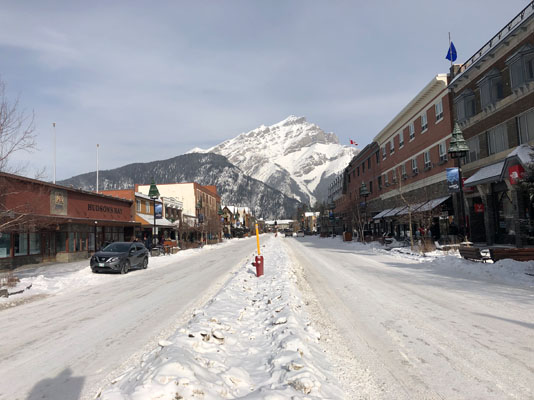
A warm coffee, a beautiful view of Cascade Mountain and an afternoon wandering around town can be surprisingly satisfying.
If you’re planning a winter trip to Banff but skiing isn’t on your itinerary, here are some of the best activities worth considering.
1. Take the Banff Gondola to the top of Sulphur Mountain
If you want spectacular mountain views without hiking uphill for several hours, the Banff Gondola is one of the easiest options.
The gondola takes visitors from the base of Sulphur Mountain to a summit complex overlooking the Bow Valley.
The journey takes approximately eight minutes.
And during winter, the scenery can be incredible.
Snow covers the surrounding mountains, the forests stretch across the valley and the town of Banff looks surprisingly small from above.
At the summit, there are indoor viewing areas, restaurants and an outdoor boardwalk leading toward Sanson Peak.
The boardwalk is particularly beautiful when the mountains are covered in snow.
However, it can be cold and windy at the top.
Even if the weather feels relatively comfortable in Banff town, conditions may be much colder on the summit.
Dress warmly and wear footwear with good traction.
The gondola generally operates throughout winter, apart from scheduled maintenance closures.
For the upcoming winter season, the operator has published regular operations in November and December, with some individual facility closures.
You can check tickets and operating hours on the official Banff Gondola website.
Is the Banff Gondola worth the price in winter?
If you enjoy mountain photography and panoramic views, it can be.
But it isn’t necessarily a budget activity.
Ticket prices vary by date, demand and booking arrangements.
For visitors trying to save money, I would compare the cost with the other activities on your itinerary.
You can enjoy beautiful mountain views from many free public viewpoints around Banff.
The gondola offers a different perspective, but it isn’t essential to having a wonderful winter vacation.
2. Relax at the Banff Upper Hot Springs
There’s something particularly enjoyable about sitting in steaming hot water while surrounded by snowy mountains.
Especially when the air temperature is well below freezing.
The Banff Upper Hot Springs is one of the town’s classic attractions.
The outdoor pool contains naturally heated mineral water, with temperatures generally maintained between 37 and 40 degrees Celsius.
It’s an excellent way to relax after spending time outside.
And unlike skiing or snowboarding, you don’t need lessons, special equipment or much physical effort.
You just need a swimsuit and a willingness to leave the warm water when it’s time to go.
The Upper Hot Springs are located on Mountain Avenue, near the base of the Banff Gondola.
That makes combining the two attractions during one afternoon relatively convenient.
There is one scheduling detail worth knowing.
Parks Canada has announced that the facility will close from October 13 until early November 2026 for annual maintenance.
Visitors travelling around that period should confirm the reopening before making plans.
You can find current hours and prices on the Parks Canada Banff Upper Hot Springs page.
3. Go ice skating at Lake Louise
This is probably one of the most memorable things you can do in Banff National Park during winter.
Imagine skating across a frozen lake with enormous mountains surrounding you.
The Victoria Glacier rises at the far end of Lake Louise, and the Fairmont Chateau Lake Louise overlooks the shoreline.
It’s an extraordinary setting.
And the good news is that you don’t need to be an experienced skater to enjoy it.
Lake Louise usually has a maintained skating area during the main winter season when ice conditions permit.
The maintained rink typically becomes available after the lake has frozen sufficiently, often during December.
Exact timing varies every year.
If you’re visiting in November, don’t assume skating will already be possible.
And even later in winter, conditions may occasionally affect the skating surface.
Skate rentals are available in the Lake Louise area through local providers.
Is skating on Lake Louise safe?
The maintained skating area is the practical choice for most visitors.
Banff & Lake Louise Tourism identifies Lake Louise as the only lake in Banff National Park that is regularly monitored and maintained for skating.
That doesn’t mean the entire frozen lake is safe.
Ice conditions can vary significantly, especially near flowing water and during periods of changing temperatures.
Stay within the maintained area and respect posted notices.
If you’ve always dreamed about experiencing a Canadian winter, skating at Lake Louise is about as classic as it gets.
4. Try snow tubing at Mount Norquay
Maybe you don’t want to ski because you’re not interested in spending hours learning how to turn and stop.
Fair enough.
Snow tubing might be more your speed.
Mount Norquay, located a short drive from Banff town, operates a dedicated snow tubing area during its winter season.
Instead of standing on skis, you sit in an inflatable tube and slide down a prepared lane.
It’s simple, exciting and doesn’t require previous skiing experience.
And one of the nicest things is that you don’t need to hike back uphill after each run.
The tubing operation has a lift system to bring participants back toward the top.
It’s a popular activity for families, couples and groups of friends.
However, there are age and height requirements, and tubing availability depends on weather and operations.
You’ll also need appropriate winter clothing.
A pair of jeans and ordinary sneakers probably won’t make for a particularly comfortable afternoon.
Check session times and tickets on the Mount Norquay website.
5. Explore Banff Avenue in the snow
Not every winter activity needs to cost money.
Sometimes the simplest thing to do is walk around Banff town.
Banff Avenue is lined with restaurants, shops, cafes and hotels.
And at the end of the street, Cascade Mountain creates one of the most recognizable views in Alberta.
During winter, the town can be especially beautiful.
Snow covers the rooftops.
The mountains rise behind the buildings.
And the surrounding scenery feels almost unreal on a clear morning.
You can spend time exploring shops, trying a local restaurant or warming up with coffee.
The atmosphere becomes particularly festive around the Christmas holidays.
But even during January or February, when the decorations have disappeared, Banff remains a lovely place to wander.
If you’re travelling on a budget, walking around town is a good way to enjoy the scenery without constantly purchasing attraction tickets.
And if the temperature becomes uncomfortable, you’re never very far from somewhere warm.
6. Take a winter walk through Fenland Trail
Banff has several designated winter walking routes suitable for visitors who don’t want a demanding mountain hike.
One of the easiest options is Fenland Trail.
The trail is approximately 2.1 kilometres long and follows a loop through a beautiful forest near the edge of Banff town.
There is very little elevation gain.
That makes it appealing for families, casual walkers and people who simply want to spend some time outdoors.
During winter, the spruce forest can be particularly peaceful.
Snow settles on the branches, and the surrounding mountains occasionally appear through the trees.
It’s also a pleasant alternative to spending the entire day around the busiest tourist attractions.
However, the trail may be slippery.
Parks Canada recommends carrying traction devices for winter walking, especially when surfaces become icy.
You can find Fenland and other suitable routes on the official Banff winter walking trails page.
7. Visit Bow Falls in winter
Bow Falls is one of the easiest natural attractions to visit near downtown Banff.
The waterfall is located along the Bow River, close to the Fairmont Banff Springs Hotel.
In summer, water rushes through the rocky channel.
During winter, snow and ice create a completely different appearance.
Depending on temperatures, sections of the river may remain open while ice forms around the edges.
It’s a beautiful scene, particularly when the surrounding trees are covered in snow.
You don’t need a long hike to appreciate the waterfall.
There are public viewing areas near the falls, although access and surfaces can be affected by winter weather.
The Town of Banff notes that the clifftop section of the Bow Falls Trail closes during winter.
So don’t assume every summer walking route will remain available.
Stick to maintained and permitted viewpoints.
And never venture onto river ice or climb down toward the water for a photograph.
You can check the Town of Banff Bow Falls Trail information.
8. Try snowshoeing for the first time
If you can walk, you can probably learn the basics of snowshoeing without too much trouble.
That’s part of what makes it such a popular winter activity.
Snowshoes distribute your weight across a larger surface, helping you travel over snow that would otherwise be difficult to walk through.
They’re particularly useful when conditions are soft and powdery.
Banff National Park has designated winter snowshoe routes, including options suitable for beginners.
The Marsh Loop near the Cave and Basin National Historic Site is one possibility, depending on the snow and trail conditions.
It’s approximately 2.8 kilometres long and has minimal elevation gain.
You may also find guided snowshoe experiences offered by local operators.
Those can be helpful if you’re unfamiliar with winter trails.
But don’t assume that every summer hiking route is suitable for snowshoeing.
Some trails enter avalanche terrain.
Others are restricted to protect wildlife.
Before heading out, check the current conditions and choose a designated route.
A gentle forest walk is a much better first experience than discovering halfway through your trip that you’ve entered dangerous mountain terrain.
9. Visit the Cave and Basin National Historic Site
If the weather is extremely cold, an indoor attraction can be a welcome change.
The Cave and Basin National Historic Site is one of Banff’s most historically significant destinations.
It’s closely connected to the creation of Canada’s national park system.
Visitors can learn about the natural hot springs, the area’s history and the development of national parks in Canada.
The site also provides opportunities to learn about Indigenous connections to the landscape.
This is a good activity if you’re interested in something more educational than another viewpoint.
And because it doesn’t require spending hours outdoors, it can work well during a particularly cold afternoon.
Opening hours vary seasonally.
Check the official Cave and Basin information before visiting.
10. Enjoy a winter sleigh ride
If you’re looking for a romantic or family friendly winter activity, consider a horse drawn sleigh ride.
Banff and Lake Louise have operators offering seasonal sleigh experiences when snow conditions allow.
It’s a completely different way to enjoy the mountain surroundings.
Instead of hiking or skiing, you can sit back and take in the scenery.
The experience can be particularly enjoyable during colder weather when you want to spend time outdoors without being especially active.
However, sleigh rides are weather dependent.
Early winter conditions may not provide enough snow for regular operations.
And popular dates around Christmas and New Year’s may fill quickly.
Check current availability and the operator’s location before booking.
Some activities marketed as Banff experiences actually depart from areas outside downtown Banff.
You don’t want to discover that when your reservation starts in twenty minutes.
11. Visit Lake Minnewanka for winter scenery
Lake Minnewanka is another impressive destination near Banff town.
It’s one of the largest lakes in the national park, surrounded by mountains and forested slopes.
During summer, it’s popular for boat cruises and lakeside sightseeing.
In winter, the scenery becomes much quieter.
The lake may gradually freeze, and snow begins covering the surrounding landscape.
It’s a beautiful place for photography on a clear day.
However, the summer boat cruise doesn’t operate throughout winter.
And part of the Minnewanka Loop Road closes seasonally to reduce disturbance within an important wildlife corridor.
The road toward the main Lake Minnewanka day use area may remain accessible when conditions allow, but you should check the current road status.
For a short winter walk, Parks Canada identifies the Stewart Canyon route as approximately 1.5 kilometres each way.
The trail can be icy, so suitable footwear is important.
If you’re travelling with young children or don’t enjoy winter hiking, simply enjoying the scenery from accessible public areas may be enough.
12. Photograph the Vermilion Lakes at sunrise
Some of the best winter experiences in Banff don’t require a ticket.
Vermilion Lakes is one of those places.
Located near the town of Banff, the lakes provide beautiful views toward Mount Rundle and the surrounding mountains.
During winter, the combination of snow, ice and soft morning light can create excellent photography opportunities.
On calm mornings, the scenery may feel wonderfully peaceful.
And you don’t need to be a professional photographer to appreciate it.
A phone camera can capture beautiful images when the weather cooperates.
Just remember that the lake ice is not maintained for public skating.
Don’t walk onto frozen water simply because it looks solid.
Enjoy the scenery from designated public areas and roadside viewpoints.
13. Try dog sledding in the Canadian Rockies
Dog sledding is one of the more unusual winter experiences available around Banff and Canmore.
Instead of riding a chairlift, you’re travelling across a snowy landscape behind a team of sled dogs.
Guided operators provide the equipment and instruction.
Tours vary in length, location and physical requirements.
Some experiences are designed for beginners, while others involve more participation.
It’s a memorable activity for people who want to try something distinctly Canadian.
But it isn’t cheap.
And availability depends on conditions, bookings and the operator.
If you’re interested, research the specific company and its animal welfare practices before making a reservation.
Also remember that many dog sledding tours take place outside Banff town.
You may need a vehicle or arranged transportation to reach the meeting point.
14. Spend an afternoon at a mountain hotel or spa
Not everybody wants their winter vacation to feel like an outdoor survival exercise.
Sometimes you want to enjoy the scenery from somewhere comfortable.
Banff has hotels and spas offering everything from treatments and pools to mountain view dining.
You could spend the morning exploring the town and the afternoon relaxing indoors.
For couples, this can be a particularly appealing option.
For families, a hotel with a pool may also provide a welcome break from outdoor activities.
But compare prices carefully.
Luxury mountain hotel experiences can become expensive, especially around holidays.
You don’t need to book the most expensive resort in Banff to enjoy a relaxing winter weekend.
Even a comfortable hotel, a good restaurant and a scenic walk can make for a satisfying getaway.
15. Enjoy Banff after dark
Winter brings shorter days, but that doesn’t mean your sightseeing has to end in the afternoon.
In fact, Banff can be particularly beautiful during the evening.
Snow covered streets, illuminated buildings and the surrounding mountain silhouettes create a wonderful atmosphere.
You can enjoy dinner, walk through the town centre or relax in a cafe.
Depending on the season, there may also be winter festivals, light displays and special events.
Banff’s SnowDays celebration typically takes place during winter and features seasonal activities and attractions.
But dates and programming can change from year to year.
Check the Banff & Lake Louise Tourism website for current events.
If you’re hoping to photograph stars, remember that cloud cover and artificial lighting affect visibility.
You may need to travel beyond the brightest parts of town to enjoy darker skies.
And always choose safe, legal locations that are accessible during winter.
What about the Johnston Canyon ice walk?
Johnston Canyon is normally one of Banff’s most famous winter attractions.
Its suspended walkways lead through a narrow canyon toward impressive frozen waterfalls.
But there’s an important change for the 2026 winter season.
Parks Canada has announced a temporary closure of the main Johnston Canyon Trail beginning October 13, 2026, to complete essential rock slope repairs.
The closure includes the trail to both the Lower and Upper Falls viewpoints, along with the main parking facilities.
At the time of writing, a reopening date for normal access had not been confirmed.
The Upper Falls area can still be approached by a more demanding alternative route from Moose Meadows when permitted, but that is not a substitute for an easy family ice walk.
For most visitors, I would choose another winter activity rather than attempting the alternative without suitable winter hiking experience.
You can follow the latest information on the Parks Canada winter trail page.
What are the best free things to do in Banff in winter?
If you’re trying to keep expenses down, you have several good options.
Walking around Banff Avenue costs nothing.
Enjoying Mount Rundle from Vermilion Lakes doesn’t require an attraction ticket.
You can visit permitted Bow Falls viewpoints, walk suitable public trails and take photographs of the mountain scenery.
You still need the appropriate national park admission, and transportation or parking charges may apply.
But you don’t need to purchase several expensive experiences every day.
I would choose one paid activity that genuinely interests you.
Then spend the rest of the day enjoying the beautiful surroundings.
Sometimes that’s more enjoyable than racing between reservations.
Can you visit Banff in winter without a car?
Yes.
Banff is one of the easier mountain destinations in Alberta to visit without driving.
There are scheduled transportation options connecting Calgary with Banff, as well as local buses operated by Roam Transit.
Roam services can help visitors reach selected attractions such as the Banff Gondola and Lake Minnewanka, subject to current routes and seasonal schedules.
You can explore the network through Roam Transit.
If you stay in downtown Banff, you can also walk to restaurants, shops and several nearby attractions.
That makes a car free winter vacation quite realistic.
However, remote trailheads and certain mountain excursions may still require organized transportation.
Before booking accommodation, think about where your planned activities are located.
A hotel within walking distance of downtown can make winter travel much easier.
What should you pack for Banff in winter?
You don’t need expensive ski equipment if you’re not skiing.
But you do need proper winter clothing.
A warm insulated jacket, winter boots, gloves and a hat are essential.
Thermal layers can make a big difference, particularly if you’re spending several hours outside.
I would also bring traction cleats for icy walking paths.
Many winter trails become packed and slippery, even when they aren’t particularly steep.
Sunglasses are useful because sunlight reflecting off snow can be surprisingly bright.
And don’t forget a swimsuit if you’re planning to visit the Upper Hot Springs or your hotel’s pool.
If you’re driving from Calgary, make sure your vehicle is suitable for winter highway conditions.
The weather can change quickly between the city and the mountains.
Is Banff worth visiting in winter if you don’t ski?
Absolutely.
In fact, some visitors may enjoy Banff more when they aren’t trying to fit skiing into every day.
You can wake up slowly, enjoy breakfast and head outside when the weather looks good.
Take the gondola.
Visit Lake Louise.
Explore Banff Avenue.
Go snowshoeing on a suitable trail.
Or simply sit beside a window with a warm drink while watching snow fall over the mountains.
Winter in Banff doesn’t have to be about how many activities you complete.
It can be about enjoying a completely different atmosphere from the busy summer season.
And if you’re someone who loves beautiful scenery but has absolutely no interest in sliding downhill at high speed, there’s no reason to feel that you’re missing out.
The mountains are just as spectacular when you’re standing still.
Sometimes even more so.
