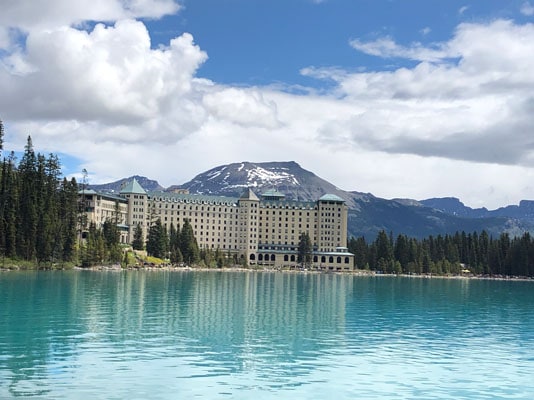
Three days in Banff is not enough to see everything.
That is actually a good thing.
Trying to see everything is one of the easiest ways to ruin a short trip to the Canadian Rockies.
Banff National Park is much bigger than the town of Banff, and many of its most famous places are separated by significant driving time. Lake Louise and Moraine Lake deserve several hours. Lake Minnewanka can easily consume half a day. The Icefields Parkway could fill an entire day without reaching Jasper.
With only three days, the goal should not be collecting as many locations as possible.
The goal should be experiencing Banff without constantly checking the clock.
For a first visit, I would divide the trip into three completely different days.
Day one is Banff town and the surrounding area.
Day two is Lake Louise and Moraine Lake.
Day three is Lake Minnewanka, viewpoints and whatever you enjoyed enough to want more of.
This itinerary works best from late June through September, when Moraine Lake is accessible and summer transportation is operating. Moraine Lake Road is scheduled to remain open through October 12 in 2026, weather permitting. (Banff & Lake Louise Tourism)
Here is how I would spend three days.
3 Days in Banff at a Glance
Day 1
Banff town
Bow River
Bow Falls
Surprise Corner
Banff Gondola or Sulphur Mountain area
Dinner in Banff
Day 2
Lake Louise
Moraine Lake
Optional short hike
Evening back in Banff
Day 3
Lake Minnewanka
Two Jack Lake
Johnson Lake or Cascade Ponds
Optional scenic drive or hike
Final evening in Banff
That might look surprisingly simple.
It is supposed to.
Banff rewards people who leave enough time to stop.
Where Should You Stay for a 3 Day Banff Trip?
For only three days, I would stay in Banff if the accommodation works for your budget.
Normally I like Canmore as a base for longer Canadian Rockies trips because it gives you easy access to both Banff and Kananaskis.
A three day first visit is different.
You are probably going to spend most of your time inside Banff National Park anyway.
Staying in Banff allows you to walk to restaurants in the evening, use public transportation more easily, and start each morning without first commuting into the park.
If Banff accommodation is much more expensive for your dates, staying in Canmore is still completely reasonable.
The drive between the towns is short under normal conditions, and Roam Transit also connects Canmore and Banff.
For a short first trip, though, convenience matters more than it would during a week long road trip.
Do You Need a Car for This Banff Itinerary?
No.
This entire itinerary can be adapted for someone without a rental car.
That surprises many first time visitors.
Banff has public transportation connecting the town with several major attractions, including Lake Louise and Lake Minnewanka. (Roam Transit)
Moraine Lake cannot be reached in a personal vehicle anyway.
Personal vehicle traffic remains restricted on Moraine Lake Road in 2026, so every visitor needs to arrange approved transportation such as a shuttle, bus or eligible commercial service. (Parks Canada)
A car gives you more freedom for scenic stops and hiking trailheads.
It is not required for a good first visit.
Day 1: Banff Town and the Surrounding Area
Do not drive directly from Calgary to Lake Louise on your first morning.
Start with Banff itself.
After arriving, park the car or leave your luggage at the hotel and spend some time walking.
Banff is compact enough that you can explore much of the central area without transportation.
Walk down Banff Avenue.
Then leave Banff Avenue.
The town becomes much more interesting once you reach the Bow River.
Walk Along the Bow River
The Bow River is one of the easiest places to slow down after travelling.
You do not need a reservation.
You do not need a shuttle.
You do not need to wait in line.
Just walk.
The river also gives you a very different perspective on Banff from the busy commercial centre.
If you arrived after a long flight or drive, this is a much better introduction to the Rockies than immediately committing yourself to a major hike.
Continue to Bow Falls
Bow Falls sits close to town and works naturally with a first day walking itinerary.
The falls are not enormous compared with some Canadian waterfalls.
That is not really the point.
The location beneath the surrounding mountains makes the stop worthwhile, and you can visit without devoting half the day to it.
During the summer season, local transit also serves the Bow Falls area, so you do not have to drive there if you prefer using public transportation.
I would spend perhaps 30 minutes here unless you decide to walk farther along the river.
Then continue.
Visit Surprise Corner
Surprise Corner gives you one of the classic views toward the Fairmont Banff Springs Hotel.
It is a quick stop.
That makes it perfect for the first day.
You have probably already spent money getting to Banff.
Not every memorable view needs an admission ticket or a three hour commitment.
Take in the view, get a photograph, then move on.
Should You Visit the Banff Gondola?
For a first trip, I think the Banff Gondola can be worth doing if your budget allows.
You get a much higher perspective over the Bow Valley without committing to a major climb.
This makes it particularly useful if someone in your group wants mountain views but does not want a difficult hike.
The gondola can also consume several hours once you include transportation, waiting, the ride and time at the top.
Do not treat it like a 30 minute attraction.
If you book it, let it become one of the main activities of the afternoon.
Could You Hike Sulphur Mountain Instead?
Yes.
If you are fit, have appropriate footwear and want to earn the view, hiking is another option.
Just remember that a mountain hike on the first afternoon is very different from riding the gondola.
If you landed in Calgary that morning after a long flight, this probably is not the day I would test everybody’s fitness.
Save your energy.
You still have two full days ahead.
What I Would Do on the First Evening
Have dinner in Banff and walk around afterward.
This sounds almost too obvious to include in an itinerary.
It matters.
One advantage of staying in Banff is being able to enjoy the town after many day visitors have started driving elsewhere.
There is no need to schedule another attraction after dinner.
Walk toward the river.
Get ice cream.
Sit somewhere.
Go back to the hotel early if you are tired.
Tomorrow is the day that needs the most planning.
Day 2: Lake Louise and Moraine Lake
Day two is the iconic Banff day.
Lake Louise.
Moraine Lake.
Do not add another four attractions.
These two places deserve enough time that you are not simply taking a photograph and immediately checking your watch.
The transportation also requires advance planning in 2026.
Moraine Lake Road is not open to personal vehicles. Visitors need approved shuttle, bus or commercial transportation. (Banff & Lake Louise Tourism)
Parks Canada shuttle reservations for the 2026 season opened in April. (Parks Canada)
If this day matters to you, organize it before arriving in Banff.
Start With Lake Louise
Lake Louise is famous enough that people sometimes arrive expecting to be disappointed.
Then the mountains appear behind the lake.
It is still impressive.
The mistake is standing at the main viewpoint for ten minutes, deciding you have seen it, and leaving.
Walk.
Even a short distance along the shoreline changes the perspective and begins separating you from the busiest arrival area.
If you are not hiking, I would still give Lake Louise at least an hour.
If you want to hike, give it much more.
Should You Canoe on Lake Louise?
This depends almost entirely on your budget.
Paddling Lake Louise is undeniably beautiful.
It is also the type of activity where you are paying for the location rather than simply renting a canoe.
If this is a once in a lifetime trip and you have always wanted to paddle the lake, do it.
If you are trying to keep the trip affordable, walking along the shoreline gives you exceptional scenery for free.
I would not stretch the travel budget just because every photograph seems to contain a red canoe.
Hiking From Lake Louise
Lake Louise can be much more than a sightseeing stop.
Several hiking options begin from the area.
If hiking is important to you, this is where you need to make a decision.
Do you want day two to be primarily about seeing both famous lakes?
Or do you want it to become a hiking day?
Trying to fit a substantial hike, Lake Louise, Moraine Lake and several other destinations into one day usually creates unnecessary pressure.
For a first three day visit, I would keep hiking relatively moderate unless it is one of your main reasons for coming.
Continue to Moraine Lake
Moraine Lake is the place that causes the most transportation confusion.
Here is the only rule you really need to remember.
Do not plan to drive there.
Personal vehicles remain restricted on Moraine Lake Road in 2026. (Parks Canada)
The road is scheduled to be open from June 1 through October 12, 2026, weather permitting, with access through shuttle, bus or guided transportation. (Banff & Lake Louise Tourism)
Reserve your transportation before the trip if Moraine Lake is essential.
Do not wait until breakfast on day two to figure it out.
What Should You Do at Moraine Lake?
Walk to the famous viewpoint.
Then keep exploring.
A lot of visitors arrive, photograph the view from the Rockpile area and leave.
There is nothing wrong with that if time is limited.
But if you went through the effort of arranging transportation, give yourself time to actually experience the place.
Walk around the lakeshore.
Sit down.
Watch the light change across the peaks.
Moraine Lake becomes much more enjoyable when you stop treating the viewpoint as something that needs to be completed.
Lake Louise or Moraine Lake: Which Is Better?
If you have travelled all the way to Banff, see both.
They are close enough geographically and different enough visually that choosing between them makes little sense on a first trip.
If you forced me to choose based purely on dramatic scenery, I would choose Moraine Lake.
If you want more hiking options and more ways to spend several hours, Lake Louise is probably easier to build a day around.
But for this three day itinerary, the entire point is that you do not need to choose.
Can You Visit Both Without a Car?
Yes.
Roam Route 8X provides service between Banff and Lake Louise, and reservations are available for the summer 2026 season. (Roam Transit)
A regular 8X reservation alone does not provide Moraine Lake access, so make sure the transportation option you choose actually includes the connection you need. (Roam Transit)
This is exactly why you should research the whole journey rather than simply buying a bus ticket to Lake Louise and assuming the rest will work itself out.
Return to Banff for the Evening
After Lake Louise and Moraine Lake, I would go back to Banff.
Do not add Johnston Canyon because it looks nearby on the map.
Do not add Lake Minnewanka.
Do not decide this is somehow also the perfect evening for a two hour hike.
Eat.
Walk.
Have a drink.
Look through the 300 almost identical photographs you took of Moraine Lake.
You had a full day.
Let it be enough.
Day 3: Lake Minnewanka and a Slower Banff Day
The third day should feel different.
You already saw the famous lakes.
Now explore the area around Banff itself.
Lake Minnewanka is where I would start.
It is close to town, easy to combine with several nearby stops and accessible by seasonal public transit.
Roam Route 6 operates to Lake Minnewanka from May 13 through October 4 in 2026, with a typical trip from downtown Banff taking about 25 minutes. (Roam Transit)
Lake Minnewanka
Lake Minnewanka is enormous compared with the small mountain lakes people often imagine when thinking about Banff.
You can spend the morning walking near the shoreline, taking a boat cruise, picnicking or simply enjoying the scenery.
This is also a good place to keep the schedule flexible.
If the weather is beautiful, stay longer.
If clouds are hiding most of the mountains, continue to the next stop.
By day three, you should feel comfortable enough with Banff to stop following the itinerary perfectly.
Should You Take the Lake Minnewanka Cruise?
If you enjoy boat trips and want to see more of the lake without hiking, it can be a good addition.
I would treat it as optional rather than essential.
You can still have a worthwhile visit without taking the cruise.
If you do purchase a same day Lake Minnewanka Cruise ticket, Roam currently allows ticket holders to ride Route 6 free by showing the prepaid ticket. (Roam Transit)
That can make the activity particularly convenient for visitors without a car.
Stop at Two Jack Lake
Two Jack Lake is nearby and easy to combine with Lake Minnewanka.
This is a place where I would resist the urge to plan an activity.
Stop.
Walk toward the water.
Have something to eat.
Enjoy the view.
Some of the best moments in Banff happen when there is nothing specific you are supposed to be doing.
Johnson Lake or Cascade Ponds
If you still want another stop, choose one.
Not both just because they exist.
Johnson Lake can work well if you want a walk.
Cascade Ponds is useful for a picnic and a more relaxed final afternoon.
The specific choice matters less than preserving some flexibility.
By the third day, weather and energy levels should have more influence over the itinerary than an article you read before the trip.
What If You Want More Hiking?
Then use day three as your hiking day.
This is where I would personalize the itinerary.
You already saw Banff town.
You already visited Lake Louise and Moraine Lake.
If you wake up on day three with perfect weather and strong legs, go hiking.
Choose the trail based on your fitness, current conditions and how much time you have.
Do not choose purely because a photograph looked impressive online.
Mountain hiking becomes much more enjoyable when your ambition matches your ability.
What If It Rains?
This is why I do not like booking every hour of a Banff trip.
Weather can change the value of an activity dramatically.
If the mountain views disappear completely, use some of the day for Banff itself.
Visit cafés.
Explore the town.
Visit indoor attractions.
Have a long lunch.
Watch the forecast.
Clouds can move surprisingly quickly in the mountains.
A wet morning does not automatically mean a ruined day.
Should You Add Johnston Canyon?
If Johnston Canyon is high on your list, day three is where I would place it.
But I would probably choose between Johnston Canyon and Lake Minnewanka rather than rushing through both.
Johnston Canyon is popular because the trail gives relatively easy access to a dramatic canyon and waterfalls.
That also means it attracts a lot of visitors.
Go earlier if possible.
If you do not have a car, seasonal Roam service makes Johnston Canyon accessible from Banff.
The important thing is deciding whether you want day three to be a waterfall day or a lake day.
Either works.
Should You Drive the Icefields Parkway on Day 3?
Only if the Icefields Parkway is one of the main reasons you came to Alberta.
The road deserves more than being squeezed into the final afternoon.
You could drive north from the Lake Louise area, stop at Bow Lake and Peyto Lake, continue toward the Columbia Icefield and turn around.
But that becomes a long day.
For a three day first visit, I would rather save the Icefields Parkway for a longer Canadian Rockies itinerary where you can continue toward Jasper or dedicate an entire day to the drive.
Banff has enough to fill three days without it.
Should You Add Kananaskis?
Not during these three days.
Kananaskis deserves its own day.
If you have four days, adding Kananaskis becomes much more interesting.
With only three, you would be skipping Banff experiences merely to spend more time driving.
For a first trip, stay focused.
You can always come back.
How Much Driving Does This Itinerary Require?
Not much if you stay in Banff.
Day one can be mostly walking and local transportation.
Day two requires the journey toward Lake Louise and Moraine Lake.
Day three stays relatively close to Banff.
This is deliberate.
Many Canadian Rockies itineraries look impressive because they include enormous numbers of places.
Then you calculate the actual driving and realize you are spending most of the vacation inside a vehicle.
I would rather see fewer places properly.
What Time Should You Start Each Day?
Earlier than you normally would on vacation.
You do not need to wake up at 4 every morning.
But Banff is not somewhere I would routinely start sightseeing at 11.
Early mornings provide more flexibility.
They also give you the ability to spend longer somewhere without sacrificing the entire afternoon.
For Lake Louise and Moraine Lake, transportation reservations may dictate your schedule.
For the other days, I would aim to be moving by around 8 in the morning.
Then you can slow down once you are actually somewhere worth slowing down.
Is 3 Days Enough for Banff?
Yes.
Three days is enough for an excellent first visit.
It is not enough to see Banff National Park comprehensively.
Those are different things.
In three days you can experience the town, visit Lake Louise and Moraine Lake, see another major lake, enjoy several viewpoints and add some hiking.
That is a lot.
The official Banff and Lake Louise destination organization also treats three days as a reasonable length for a short Banff getaway. (Banff & Lake Louise Tourism)
You will leave with places you did not see.
That gives you a reason to return.
Is 4 Days Better?
Absolutely.
The fourth day removes pressure from the first three.
You could add Johnston Canyon.
You could spend a full day hiking.
You could explore Kananaskis.
You could begin driving the Icefields Parkway.
Or you could simply spread this itinerary across four days and stop treating every afternoon like valuable inventory that needs to be filled.
If you can afford the extra hotel night, I think four days creates a noticeably more relaxed first trip.
What About 5 Days?
Five days gives you enough room to start exploring beyond the obvious Banff attractions.
At that point, I would strongly consider adding Kananaskis or dedicating a full day to the Icefields Parkway.
You could also stay in Canmore instead of Banff and use it as a broader base.
The longer your trip becomes, the less important it is to sleep directly in Banff every night.
Is Banff Free in Summer 2026?
Banff National Park admission is temporarily free from June 19 through September 7, 2026 through the Canada Strong Pass program.
Parks Canada is also offering a 25 percent discount on eligible camping and overnight accommodation fees during the same period. (Parks Canada)
This does not mean transportation, hotels, attractions or commercial activities are free.
It only removes the normal Parks Canada admission charge during the promotion.
If your trip falls outside those dates, check current national park admission requirements before travelling.
When Is the Best Time for This 3 Day Banff Itinerary?
For this exact itinerary, I would choose late June through September.
You get long days.
Moraine Lake access is operating.
Summer transit is available.
More hiking terrain becomes accessible.
July and August provide the most predictable summer experience but also bring heavy visitor demand.
September is particularly attractive if you prefer cooler temperatures and the beginning of fall conditions.
Mountain weather can still change dramatically at any point.
There is no month where you can leave every warm layer at home simply because the forecast in Calgary looks nice.
What Should You Pack?
For a summer trip, bring more than shorts and a phone.
I would pack:
- Comfortable walking shoes
- A warm layer
- Rain protection
- Water
- Sunscreen
- Sunglasses
- A small backpack
- Snacks
- A portable phone battery
- Bear spray if you are hiking in areas where carrying it is appropriate
- Offline maps for hiking
- A reusable water bottle
You can leave Banff in warm sunshine and find very different conditions at higher elevation.
Dress for the mountains rather than the hotel parking lot.
Do You Need Restaurant Reservations?
For a specific restaurant at a specific time, I would reserve it.
For every meal during the trip, no.
Overplanning dinner creates another schedule you have to obey.
I would reserve one or two places you genuinely care about and remain flexible for everything else.
You may return from Moraine Lake later than expected.
You may be exhausted after hiking.
You may simply decide that pizza sounds better than the restaurant you researched three months ago.
Vacations improve when there is room for changing your mind.
How Much Should You Budget for 3 Days in Banff?
The answer depends heavily on accommodation.
That will usually be the biggest expense.
The same three day itinerary could be relatively affordable for someone staying in a basic room and using public transportation, or extremely expensive for someone choosing a luxury hotel, rental car, gondola tickets, cruises, tours and restaurant meals.
Instead of asking what Banff costs, decide what matters enough to pay for.
I would spend money on location and experiences I genuinely want.
I would save money on things that do not improve the trip.
A mountain view does not become more beautiful because lunch cost $70.
The Biggest Mistake to Avoid
Do not turn Banff into a checklist.
You will see itineraries promising Lake Louise, Moraine Lake, Johnston Canyon, Banff Gondola, Lake Minnewanka, Bow Lake, Peyto Lake and the Columbia Icefield in three days.
Technically, you could probably drive past all of them.
That is not the same as experiencing them.
Banff is a place where efficiency can work against you.
If the weather is perfect at Lake Louise, stay.
If you find somewhere beside the Bow River you love, sit there.
If everybody is tired after Moraine Lake, go back to the hotel.
You did not travel to the Canadian Rockies to maximize the number of pins you can save on a map.
My Ideal 3 Days in Banff
If I were taking someone to Banff for the first time, I would keep it simple.
On the first day, I would explore Banff, walk beside the Bow River, visit Bow Falls and get a higher mountain view in the afternoon.
On the second day, I would devote almost everything to Lake Louise and Moraine Lake.
On the third day, I would visit Lake Minnewanka and let the rest of the day depend on weather and energy.
No racing to Jasper.
No trying to fit Kananaskis into the same trip.
No seven attraction afternoons.
Three days is short.
That is exactly why every hour should not be scheduled.
See the places you came to see.
Leave enough time to enjoy them.
And accept that the Canadian Rockies will give you plenty of reasons to come back.
