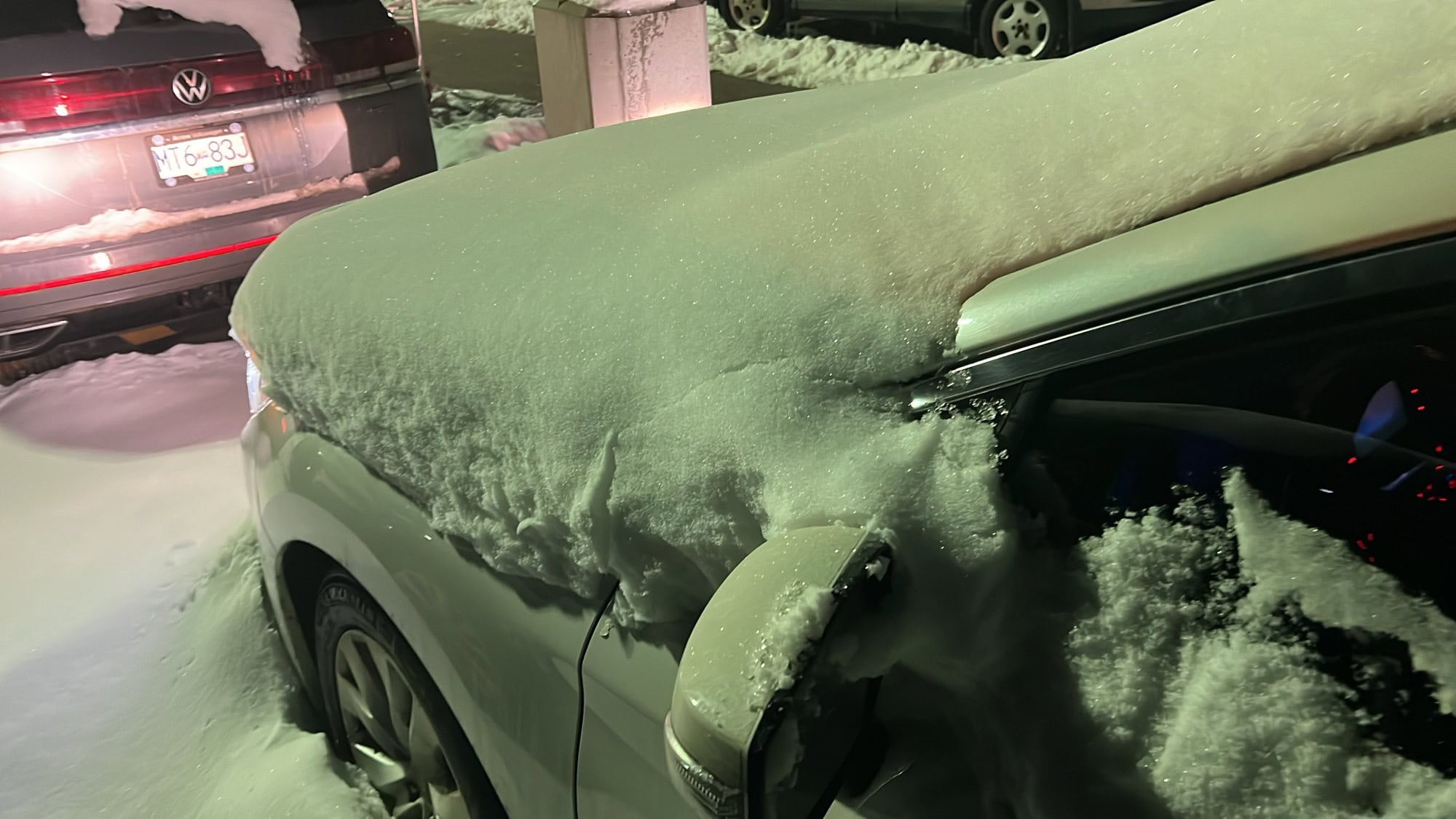
Calgary has a special talent for making drivers regret their decisions.
One afternoon, you’re enjoying sunshine and temperatures around 20 degrees. The next morning, you’re scraping snow off your windshield and wondering why you didn’t book that tire appointment last week.
That’s Calgary weather.
And it’s exactly why choosing the right time to install winter tires can be confusing.
Should you switch in September? Wait until October? Or keep your summer tires on until the first major snowfall?
The answer has less to do with the calendar and more to do with temperature.
For most Calgary drivers, late September through October is a sensible time to arrange a winter tire change. Ideally, your winter tires should be installed once temperatures begin staying around or below 7 degrees Celsius.
You don’t need to wait for snow.
In fact, waiting for the first big snowstorm is one of the most common mistakes drivers make.
Here’s when to make the switch, whether winter tires are legally required in Alberta and why Calgary’s unpredictable weather makes the decision particularly important.
What month should you put winter tires on in Calgary?
October is generally the best month to plan your winter tire installation.
By October, Calgary is experiencing colder mornings, occasional freezing temperatures and an increasing possibility of snowfall.
But there’s no single date that works perfectly every year.
Some years, September brings an early snowstorm.
Other years, October includes beautiful afternoons that feel more like late summer.
The important thing is to watch the temperature trend rather than waiting for a particular day on the calendar.
Transport Canada recommends winter tires when temperatures fall below approximately 7 degrees Celsius.
That’s because the rubber compounds used in ordinary summer and many all season tires become less flexible in cold weather.
As the rubber stiffens, traction decreases.
Winter tires are designed to remain more flexible during freezing conditions.
That helps improve their grip on cold roads, snow and ice.
You can read more about the difference on Transport Canada’s winter tire information page.
Should you install winter tires in September?
Sometimes.
If the forecast shows a prolonged stretch of cold weather, installing them toward the end of September may be reasonable.
This is especially true if you regularly drive early in the morning, when temperatures can be considerably colder than during the afternoon.
Mountain trips are another consideration.
If you frequently travel toward Canmore, Banff or Kananaskis, you may encounter winter driving conditions earlier than you would in Calgary.
But if the weather remains consistently warm, you don’t necessarily need to install winter tires at the beginning of September.
The goal is to be prepared before cold conditions become common.
Not to drive on specialized winter rubber throughout the hottest part of autumn.
Why the 7 degree rule matters
Many people assume winter tires are useful only when roads are covered in snow.
That’s not true.
Winter tires are also designed to perform better in cold temperatures.
Imagine driving to work on a dry October morning.
There’s no snow.
The roads look perfectly normal.
But the temperature is minus 4 degrees.
Your summer tires may already have lost some of their flexibility, even though the pavement is dry.
That’s one reason tire manufacturers and road safety organizations focus on temperature rather than snowfall.
Winter tires also have tread patterns designed to improve traction in snow and slush.
They can provide better control during conditions that ordinary all season tires struggle with.
However, winter tires aren’t magic.
They don’t eliminate the need to drive carefully.
And they cannot prevent every skid or collision.
You still need to reduce speed, leave more space between vehicles and adjust your driving to road conditions.
Are winter tires mandatory in Calgary?
No.
Alberta does not have a general provincial law requiring every passenger vehicle to use winter tires during the winter months.
That means you’re not automatically breaking provincial law simply because you’re driving through Calgary in December with all season tires.
But legal and safe aren’t always the same thing.
The Government of Alberta recommends using four winter or suitable all weather tires during severe winter conditions.
And considering how unpredictable Calgary’s weather can be, that recommendation is worth taking seriously.
You can read the province’s winter tire guidance.
Are winter tires mandatory when driving to Banff?
Some mountain roads have specific requirements.
For example, Parks Canada requires snow tires or chains on the Icefields Parkway and the Banff section of Highway 93 South from November 1 through March 31, as well as during other periods when those roads are covered with snow or ice.
Certain roads in neighbouring British Columbia have requirements that begin October 1 and continue through April 30.
That matters if you travel from Calgary into the national parks.
A vehicle that meets Alberta’s general road requirements may not necessarily meet the rules for every mountain highway.
Parks Canada recognizes qualifying tires with the mountain snowflake or M+S marking for these particular road requirements.
However, an M+S marking by itself doesn’t mean an ordinary all season tire will perform as well as a dedicated winter tire in severe winter conditions.
Check the official Parks Canada driving rules before travelling.
Are all season tires good enough for Calgary winters?
For some situations, people manage with all season tires.
But I wouldn’t treat them as equivalent to dedicated winter tires.
The name all season sounds reassuring.
It suggests the tire should work perfectly in every season.
Unfortunately, Calgary winter can be a little more demanding than the marketing department had in mind.
Many traditional all season tires are designed primarily for moderate weather, with some capability in light snow.
During extreme cold, heavy snowfall and icy conditions, dedicated winter tires generally offer better traction.
This can make a noticeable difference when braking, accelerating and steering.
And remember that the most challenging winter conditions often occur when roads look relatively harmless.
A thin layer of black ice can be difficult to see.
A road that was wet in the afternoon may be frozen by morning.
Winter tires can’t eliminate those hazards, but they can improve your vehicle’s ability to handle them.
What about all weather tires?
All weather tires are different from ordinary all season tires.
They are designed for year round use, including winter conditions, and qualifying models carry the mountain snowflake symbol.
For Calgary residents who don’t want to change tires twice every year, they can be an appealing compromise.
You may avoid seasonal storage costs and appointment scheduling.
However, dedicated winter tires often provide an advantage during particularly severe ice and snow conditions.
The best choice depends on your driving habits.
Someone who mainly drives short distances within Calgary may have different needs from someone who commutes long distances or visits mountain ski resorts every weekend.
If you regularly travel through Kananaskis, Banff or other areas with challenging winter roads, I would strongly consider dedicated winter tires.
For someone who drives relatively little and can stay home during severe weather, good quality all weather tires may be worth investigating.
Do you need winter tires on an SUV or all wheel drive vehicle?
Yes, winter tires are still beneficial.
This is one of the biggest misunderstandings about winter driving.
All wheel drive can help a vehicle accelerate on slippery surfaces.
But it doesn’t magically improve braking.
When you need to stop on an icy road, the condition and grip of your tires matter enormously.
An all wheel drive SUV with poor tires can still slide through an intersection.
Meanwhile, a front wheel drive vehicle with suitable winter tires may have better grip under the same conditions.
Vehicle weight, road conditions, speed and driver behaviour also affect stopping distances.
The important point is that all wheel drive is not a replacement for appropriate tires.
You need both traction and sensible driving habits.
Should you install two winter tires or four?
Install four.
Transport Canada recommends using matching winter tires on all four wheels.
Mixing winter and nonwinter tires can create differences in grip between the front and rear axles.
That can affect stability and vehicle handling.
Even if your vehicle is front wheel drive, installing only two winter tires isn’t a good strategy.
The rear tires still need adequate grip to help keep the vehicle stable.
The same applies to rear wheel drive vehicles.
If you’re investing in winter tires, purchase a suitable set of four.
And make sure the size, load rating and other specifications match your vehicle manufacturer’s requirements.
How much does changing winter tires cost in Calgary?
The price depends on how your tires are mounted.
If your winter tires already have their own set of wheels, the shop may only need to remove one set and install the other.
That is generally quicker and less expensive.
If the winter tires need to be mounted onto your existing wheels, the process involves additional labour.
Balancing and tire pressure monitoring equipment may also affect the price.
As an illustrative range, some Calgary tire shops charge several dozen dollars for a simple seasonal wheel change, while tire mounting and balancing can cost more than $100 for a full set.
Actual pricing varies by shop, vehicle and service.
I would contact a few local tire shops before booking.
Ask whether the quoted amount includes balancing, applicable fees and any required tire pressure sensor work.
And don’t forget to ask about storage if you don’t have room to keep an extra set of tires at home.
Why you should book your tire appointment early
Here’s what happens every year.
The forecast announces Calgary’s first significant snowfall.
Suddenly, thousands of people remember that their winter tires are still sitting in the garage.
Everybody starts calling tire shops.
Appointments become difficult to find.
And some drivers end up waiting longer than they expected.
Avoid that situation by booking before the rush.
Even if you don’t want the tires installed immediately, reserving an October appointment can make life easier.
If you regularly drive into the mountains, I would consider arranging the change earlier.
You don’t want to discover that your first October ski trip is scheduled for the same weekend as Calgary’s first snowstorm.
When should you remove winter tires in Calgary?
Spring is almost as confusing as autumn.
Calgary might experience a week of beautiful weather in March.
Then April arrives with another heavy snowfall.
That’s why I wouldn’t rush to remove winter tires after the first warm afternoon.
Wait until temperatures are consistently above approximately 7 degrees Celsius and winter driving conditions are becoming less likely.
For many Calgary drivers, late April or May is a reasonable time to consider the change.
But again, the weather matters more than the calendar.
If you regularly visit Banff or drive into higher mountain areas, you may need winter suitable tires longer.
And remember that certain mountain highways maintain seasonal tire requirements even when Calgary itself feels like spring.
How long do winter tires last?
That depends on the tires, driving habits, storage conditions and how many kilometres you travel each winter.
Some drivers get several seasons from a set.
Others wear them out more quickly.
Tread depth is important because worn tires lose traction.
Transport Canada advises against using tires with tread worn close to 4 millimetres on snow covered roads.
You should also inspect tires for cracking, damage and uneven wear.
Even a tire with acceptable tread may need replacement if it is old or damaged.
A qualified tire professional can help assess whether the set is still suitable.
If you’re storing tires between seasons, keep them in a clean, dry location away from excessive heat, sunlight and harmful chemicals.
Proper storage can help preserve their condition.
What if Calgary gets snow before your tire appointment?
It happens.
If the roads are snow covered or icy and your vehicle isn’t equipped for those conditions, consider avoiding unnecessary driving.
If you can work from home or delay an errand, that may be the safest option.
If travel is essential, check road conditions, reduce speed and leave extra space.
But don’t assume careful driving can fully compensate for inadequate traction.
You should also avoid creating unnecessary risks simply to reach a tire shop during a major storm.
Sometimes it’s better to wait until conditions improve.
You can check current highway reports through 511 Alberta.
So, when should you put winter tires on in Calgary?
For most drivers, October is the month to make the switch.
Late September can also be reasonable if cold weather arrives early or you frequently drive into the mountains.
Rather than waiting for snow, pay attention to temperatures approaching 7 degrees Celsius and below.
Book your appointment before tire shops become overwhelmed.
Use four matching winter tires.
And don’t assume that having an SUV or all wheel drive makes winter tires unnecessary.
Calgary weather will always be unpredictable.
You can’t control whether snow arrives in September, October or November.
But you can make sure your vehicle is ready when it does.
Because scraping snow off your windshield at 7 AM is annoying enough.
Discovering that your tires aren’t ready for the roads makes that morning considerably worse.
