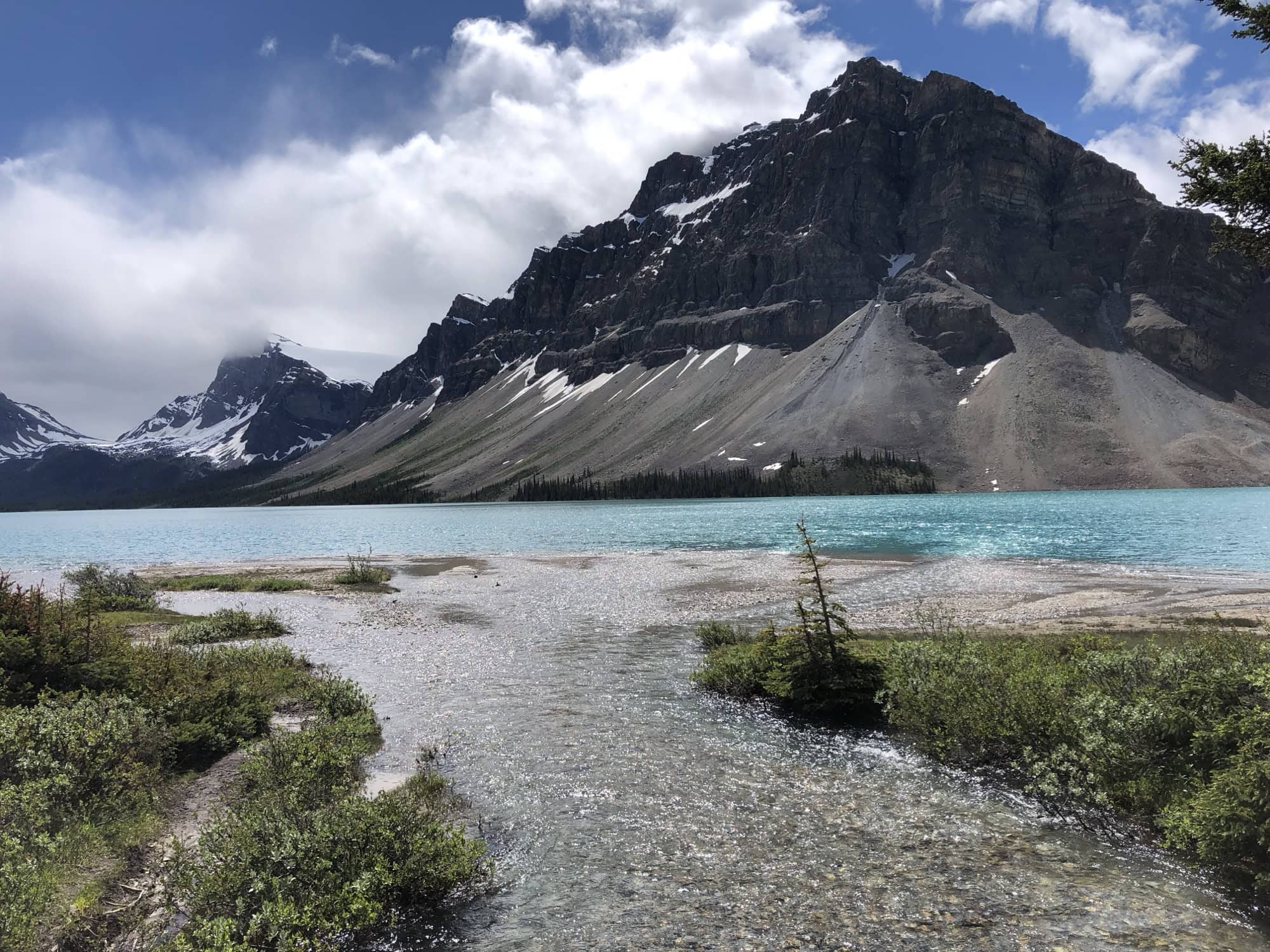
Some days, you want to enjoy the mountains without spending three hours hiking uphill.
Maybe you’re travelling with someone who doesn’t enjoy long walks.
Maybe the weather is unpredictable.
Or perhaps you simply feel like getting in the car, playing some music and seeing where the road takes you.
Fortunately, Calgary is in a fantastic location for scenic driving.
Within a couple of hours, you can find mountain valleys, beautiful rivers, rolling foothills, prairie landscapes and some of Alberta’s most impressive viewpoints.
And you don’t need to complete a challenging hike to appreciate them.
Some destinations have roadside viewpoints.
Others have picnic areas or parking lots close to the scenery.
There are even drives where the road itself is the main attraction.
So if you’re looking for a beautiful day trip from Calgary without hiking, here are some routes worth exploring.
1. Highway 40 through Kananaskis is one of the most beautiful scenic drives
If I had to recommend one scenic drive near Calgary for someone who loves mountain scenery, Highway 40 would be near the top of the list.
The road travels through Kananaskis Country, passing forested valleys, beautiful rivers and impressive mountain peaks.
The scenery becomes increasingly dramatic as you travel farther into the mountains.
And one of the best things is that you don’t need to hike to enjoy it.
You can appreciate enormous mountain views directly from the road.
There are also designated day use areas where you can stop, stretch your legs and take photographs.
How do you get there from Calgary?
Travel west on the Trans Canada Highway toward Kananaskis.
Take the Highway 40 exit and follow the road south into the mountains.
Depending on your destination, you can continue toward Kananaskis Village, Barrier Lake and the Kananaskis Lakes area.
The drive is beautiful throughout much of the year.
But there is one major detail that visitors need to understand.
Is Highway 40 open all year?
Not the entire highway.
The section through Highwood Pass has an annual winter closure.
Alberta Parks normally closes the highway south of Kananaskis Lakes Trail toward Highwood House beginning December 1.
The reopening generally occurs in June, depending on the applicable closure schedule and conditions.
That means you cannot simply drive across Highwood Pass during winter.
However, the northern part of Highway 40 remains accessible when road conditions permit.
You can still reach several popular Kananaskis destinations without driving through the seasonal closure.
For updated road access information, check 511 Alberta and Alberta Parks.
Is Highway 40 worth driving without stopping?
Absolutely.
The mountain scenery is impressive from the vehicle.
But I would still allow time for designated viewpoints.
Even a five minute stop beside a beautiful mountain lake can make the drive more enjoyable.
For visitors who don’t want to hike, Highway 40 is one of the strongest choices around Calgary.
2. The Cowboy Trail offers beautiful Alberta foothills scenery
Not every spectacular drive needs to lead into the Rocky Mountains.
Highway 22, commonly known as the Cowboy Trail, offers a completely different experience.
The road travels through Alberta’s western foothills, with rolling hills, ranchland and distant mountain views.
It’s particularly beautiful on clear days when the Rockies appear along the western horizon.
Instead of driving through steep mountain valleys, you’ll see open countryside.
Fields stretch toward the foothills.
Cattle graze on surrounding ranches.
And the road winds through scenery that feels distinctly Albertan.
Where should you drive?
One appealing option is to travel south from the Calgary area toward Diamond Valley and Longview.
The route passes through beautiful foothills scenery and smaller communities.
You can stop for coffee, enjoy a meal or simply take your time driving.
It’s particularly appealing if you enjoy countryside road trips.
When is the best time?
Late spring through autumn can be beautiful.
During summer, the hills may be green and the surrounding landscape feels open and peaceful.
In fall, golden grasslands and changing trees create a different atmosphere.
Winter can also be scenic, particularly when the mountains are covered in snow.
But Highway 22 is exposed to strong winds in some areas.
Blowing snow and icy conditions can make driving challenging.
Check the forecast before heading out.
For a relaxing trip that doesn’t involve entering a national park, the Cowboy Trail is a wonderful option.
3. Drive Highway 66 to Elbow Falls
Elbow Falls is one of the most convenient natural attractions west of Calgary.
The drive takes you through Bragg Creek and into the Elbow River valley.
The surrounding scenery includes forested hills, rocky slopes and views of the Elbow River.
It’s not as dramatic as the high mountain scenery along Highway 40.
But it’s beautiful in a quieter way.
And because Elbow Falls is relatively close to Calgary, it’s easy to enjoy as a half day outing.
How far is Elbow Falls from Calgary?
Depending on where you’re starting, the drive usually takes around one hour under favourable conditions.
Travel west toward Bragg Creek and then follow Highway 66.
There are designated viewpoints near Elbow Falls.
You don’t need a demanding hike to enjoy the river scenery.
However, walking paths can be uneven or icy depending on the weather.
Can you visit Elbow Falls in winter?
The road to Elbow Falls can remain accessible, subject to conditions.
But Highway 66 closes seasonally farther west.
The section beyond Elbow Falls normally closes from December 1 through May 14.
That means you shouldn’t assume every viewpoint or recreation area along the road can be reached throughout winter.
For an easy scenic outing, drive to the permitted public areas around Elbow Falls and enjoy the surroundings.
It’s especially appealing if you want mountain and foothills scenery without travelling all the way to Banff.
4. The Bow Valley Parkway is a beautiful alternative to the Trans Canada Highway
If you’re visiting Banff National Park, the Bow Valley Parkway is worth considering.
Also known as Highway 1A, this scenic route runs between the Banff area and Lake Louise.
Unlike the faster Trans Canada Highway, the parkway is designed around slower travel through the mountain environment.
It passes forests, mountain slopes and areas of important wildlife habitat.
There are scenic stops along the way.
And because traffic speeds are lower, the drive can feel more relaxed.
However, the road has seasonal restrictions that visitors need to understand.
Is the Bow Valley Parkway open to cars?
It depends on the section and the date.
Parks Canada operates a cycling initiative that restricts personal vehicle access to a section of the eastern parkway during selected spring and autumn dates.
In 2026, the eastern section was closed to personal vehicles from April 30 through June 25 and again from September 1 through October 6.
The program affects approximately 17 kilometres of roadway.
Johnston Canyon remains accessible from the Castle Junction side during the cycling restrictions when its visitor access is otherwise open.
There is also an annual wildlife protection restriction from March 1 through June 25, when all travel is prohibited on a designated eastern section between 8 PM and 8 AM.
That means you must plan the route carefully.
You can’t assume the entire parkway is available for driving every day of the year.
You can find current restrictions on the Parks Canada Bow Valley Parkway page.
Is the scenery worth it?
Absolutely.
The Bow Valley Parkway is particularly appealing if you enjoy forested mountain landscapes.
You don’t need to stop at every viewpoint.
Sometimes the best part is simply travelling through the valley at a relaxed pace.
But wildlife protection is a major reason for the road’s restrictions.
Never stop unsafely to photograph animals.
And respect all posted closures.
5. Lake Minnewanka Scenic Drive is perfect for a shorter Banff outing
Lake Minnewanka is one of the most impressive lakes near Banff town.
It’s surrounded by enormous mountains, and the drive toward the lake offers beautiful scenery.
The surrounding area includes Cascade Ponds, Johnson Lake and other attractive destinations.
For someone who wants to enjoy Banff without completing a long hike, it’s a great place to explore.
How far is Lake Minnewanka from Calgary?
Allow roughly an hour and a half to two hours to reach the area under normal conditions, depending on your starting point.
You can combine the visit with time in Banff town.
That makes it a convenient day trip.
Do you need to walk to see the lake?
No.
There are public day use areas close to the shoreline.
You can enjoy impressive views without walking several kilometres.
Some short walks are available, but they’re optional.
If your main goal is sightseeing, you can still have a wonderful visit.
Is the whole road open in winter?
No.
The western section of the Minnewanka Loop Road normally closes between November and May to protect an important wildlife corridor.
However, access to the main Lake Minnewanka area may remain available by the permitted route when road conditions allow.
Don’t rely on a navigation app to take you through a closed section.
Check official road information before travelling.
6. The drive to Drumheller offers completely different scenery
Most scenic drives from Calgary seem to head west.
Mountains are wonderful, but Alberta has much more to offer.
If you head northeast toward Drumheller, you’ll discover a landscape that looks completely different.
The drive begins with open prairie.
Then the terrain drops into the badlands.
Suddenly, you’ll see eroded hills, exposed layers of sediment and unusual rock formations.
It’s a dramatic change from the grassy farmland surrounding Calgary.
And the best part is that many of the views are accessible without long hikes.
How far is Drumheller?
Drumheller is approximately 135 kilometres northeast of Calgary, with a typical driving time of around an hour and a half under favourable conditions.
That makes it one of the easiest longer day trips from the city.
Where should you drive in the area?
The roads around Drumheller offer beautiful badlands scenery.
Hoodoo Trail, along Highway 10, is a popular drive.
You can stop at the Hoodoo Trail viewpoint area and appreciate the unusual sandstone formations.
Other roads in the Drumheller valley pass through dramatic landscapes.
Horse Thief Canyon is another impressive viewpoint accessible by road.
You don’t need to descend into the canyon to enjoy the view.
Just remain behind barriers and avoid unstable edges.
For a completely different Alberta road trip, Drumheller is an excellent choice.
7. Highway 1A from Cochrane toward Canmore offers beautiful foothills views
If you want a scenic alternative to the Trans Canada Highway, consider exploring parts of Highway 1A.
The route travels through Cochrane and west toward the Bow Valley.
The surrounding scenery includes foothills, open countryside and mountain views.
It’s a pleasant option for visitors who want to enjoy the drive rather than simply reach their destination as quickly as possible.
Why choose Highway 1A?
The road offers a different perspective from the main highway.
You pass through smaller communities and countryside rather than spending the entire journey on a major divided highway.
On clear days, the mountains become increasingly impressive as you head west.
You can stop in Cochrane before continuing toward the Bow Valley.
The town has cafes, restaurants and shops, making it a convenient place to take a break.
Is Highway 1A suitable in winter?
It is a normal public highway, but winter weather can still create difficult conditions.
Snow, ice and reduced visibility are possible.
The road is also not necessarily the fastest route to Canmore or Banff.
If your main goal is reaching a destination quickly, Highway 1 may be more practical.
But if you enjoy taking the scenic route and have enough time, Highway 1A can be a pleasant alternative.
8. Spray Lakes Road offers spectacular mountain scenery for prepared drivers
This is one of the more adventurous drives near Calgary.
Spray Lakes Road, also known as Highway 742, travels through beautiful mountain scenery south of Canmore.
You’ll see rugged peaks, forested slopes and views near the Spray Lakes Reservoir.
It’s a dramatic landscape.
And because the area feels more remote than downtown Canmore, the experience can be especially memorable.
But there’s an important reason I wouldn’t recommend this drive to everybody.
Is Spray Lakes Road paved?
Much of the route is gravel.
Conditions can include washboard surfaces, potholes, loose gravel and dust.
Some sections are narrow, and vehicle traffic may include large trucks.
Winter conditions can be especially challenging.
This isn’t the kind of route I would recommend to someone who is uncomfortable driving on rough mountain roads.
And it may not be suitable for every rental vehicle, depending on the rental agreement.
Is it worth driving?
If you have a suitable vehicle, understand the road conditions and feel comfortable with gravel mountain driving, the scenery can be spectacular.
But if you simply want an easy sightseeing trip, I would choose Highway 40 or the paved roads around Banff instead.
A scenic drive should be enjoyable.
Not a stressful test of your suspension and driving confidence.
Which scenic drive near Calgary has the best mountain views?
Highway 40 is one of the strongest choices.
The road travels directly into Kananaskis, surrounded by beautiful peaks and valleys.
The Bow Valley Parkway is another excellent option if you’re visiting Banff National Park during a period when vehicle access is permitted.
Lake Minnewanka provides beautiful lake scenery and is convenient to combine with time in Banff town.
Spray Lakes Road offers more remote mountain scenery, but the rougher road makes it better suited to prepared drivers.
For people who want a relaxed outing without entering difficult mountain roads, I would choose Highway 40’s accessible northern section.
You get spectacular views without needing to complete a hike.
Which scenic drive is best for seniors or people with limited mobility?
The best option depends on the facilities available at your chosen stops.
Highway 40 has impressive scenery visible directly from the vehicle.
The Cowboy Trail is another attractive choice because much of the experience involves driving through open foothills countryside.
Lake Minnewanka has public day use areas, although accessibility varies by parking location and walking surface.
Drumheller also has viewpoints that can be enjoyed without completing long trails.
However, don’t assume every viewpoint is fully accessible.
Some parking areas have gravel surfaces.
Others involve stairs, uneven paths or limited accessible parking.
If accessibility is particularly important, check the facilities at individual stops before leaving.
And remember that even if you don’t plan to hike, walking a short distance from the car may still be necessary at some locations.
Are scenic drives near Calgary worth doing in winter?
Absolutely, provided you choose roads that remain open and conditions are suitable.
Some of Alberta’s most beautiful mountain scenery appears during winter.
Snow covers the peaks.
Frozen lakes reflect the surrounding landscape.
And the forests can look incredible after fresh snowfall.
But the roads deserve respect.
Highway 40 through Highwood Pass closes seasonally.
Sections of Highway 66 and the Minnewanka Loop also have winter closures.
The Bow Valley Parkway has its own seasonal wildlife and cycling restrictions.
And unpaved mountain roads can become especially challenging.
Before leaving, check the forecast and 511 Alberta.
If you’re uncomfortable driving on snow or ice, choose a different day.
The mountains will still be there when the weather improves.
Do you need a park pass for scenic drives?
That depends on where you’re travelling and what you’re doing.
In Banff National Park, visitors generally need the appropriate national park admission when stopping for sightseeing or recreation.
If you’re travelling to Kananaskis Country and parking in a designated Kananaskis Conservation Pass area, the provincial vehicle pass may be required.
Simply driving through an area isn’t necessarily treated the same as parking for recreation.
Check the applicable rules for your destination.
For places such as Drumheller or Cochrane, there is no general Banff National Park admission requirement.
However, individual attractions, parking areas or activities may have separate charges.
It’s worth checking before leaving rather than being surprised when you arrive.
How to plan a scenic drive without spending too much money
One of the nicest things about scenic drives is that you don’t need to purchase expensive activity tickets.
The views are the attraction.
Bring snacks and a picnic lunch.
Fill your fuel tank before heading into remote areas.
Choose a route with a few stops rather than trying to drive everywhere in one day.
And avoid booking unnecessary paid attractions if your main goal is simply enjoying the scenery.
For example, a relaxed drive through Kananaskis with a picnic at a permitted day use area can be a wonderful afternoon.
You don’t need to add an expensive gondola or organized tour to make the trip worthwhile.
Sometimes the combination of beautiful weather, quiet roads and mountain scenery is enough.
What should you bring on a scenic drive near Calgary?
Even if you don’t plan to hike, I would pack a few essentials.
Bring water and snacks.
Keep warm clothing in the vehicle, particularly during winter.
Make sure your phone is charged and download maps for areas with limited reception.
If you’re travelling into the mountains, carry basic emergency supplies.
And don’t assume every route has a gas station nearby.
Highway 40 and some other Kananaskis roads pass through relatively remote areas.
It’s much better to fill up before leaving than to start calculating whether your remaining fuel will get you back to Calgary.
Also, allow more time than your navigation app suggests.
Scenic drives are supposed to include stops.
That’s the whole point.
What is the best scenic drive near Calgary without hiking?
For dramatic mountain scenery, Highway 40 through Kananaskis is my top choice.
For rolling foothills and Alberta ranch country, take the Cowboy Trail.
For a short outing, drive to Elbow Falls.
For beautiful scenery within Banff National Park, consider the Bow Valley Parkway when vehicle access is allowed or the Lake Minnewanka area.
If you want something completely different from the mountains, head toward Drumheller and explore the badlands.
And if you enjoy less travelled roads, Highway 1A toward Canmore offers a pleasant alternative to the main highway.
The wonderful thing about living near Calgary is that you don’t always need an elaborate plan.
Sometimes you can simply choose a direction, pack some food and spend the day exploring.
You don’t have to climb a mountain.
You don’t have to follow a long hiking trail.
And you certainly don’t need to arrive home with aching legs to feel that you’ve had a proper adventure.
Sometimes the best view of the Rockies is the one you discover through your windshield, just before deciding it’s worth pulling over for a few minutes to enjoy it properly.
