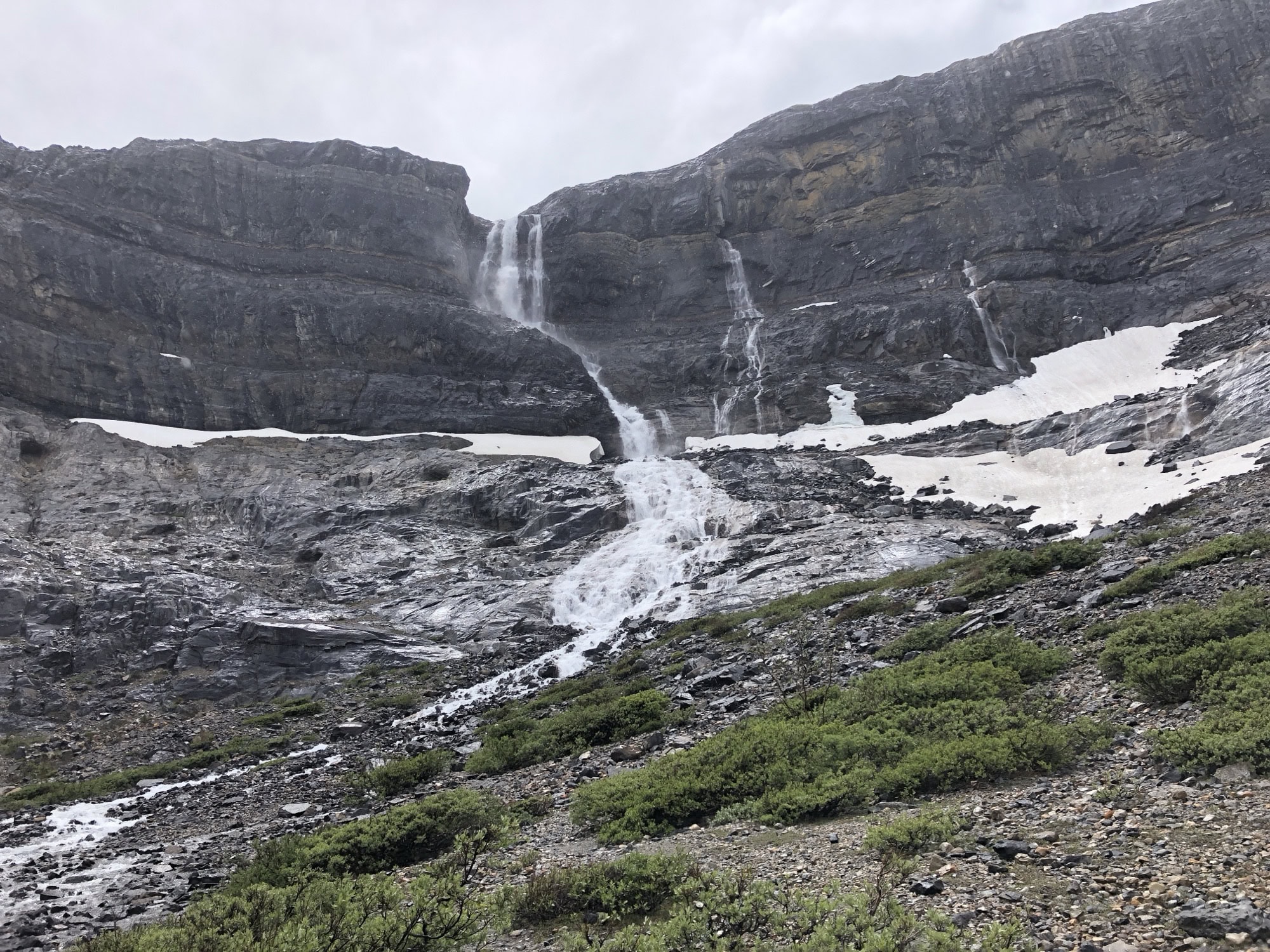
There’s something strange about watching a waterfall in the middle of an Alberta winter.
During summer, water rushes over rocks, filling the surrounding forest with noise.
Then winter arrives.
Temperatures drop.
And that same waterfall slowly transforms into an enormous wall of ice.
Some waterfalls freeze into beautiful blue formations. Others develop long icicles, frozen curtains and strange shapes that look almost unreal.
And underneath all that ice, water may still be flowing.
It’s one of the most beautiful winter sights you can experience around Calgary.
The good news is that you don’t need to be an experienced mountain climber to enjoy it.
Several waterfalls can be reached through relatively short winter walks, and some are visible from accessible viewpoints near parking areas.
But there’s an important catch.
Winter waterfall trips require more planning than ordinary summer sightseeing.
Trails become icy, roads close seasonally and frozen waterfalls can be dangerous if you approach too closely.
So before heading into the mountains, here’s where to find some of the best winter waterfalls near Calgary and what you should know about visiting them.
1. Troll Falls in Kananaskis is one of the best winter waterfall hikes
If you’re looking for a beautiful frozen waterfall without committing to an exhausting hike, Troll Falls is an excellent place to start.
Located in Kananaskis Country near Nakiska Ski Area, Troll Falls is approximately one hour to an hour and a half from Calgary, depending on your starting point and road conditions.
The trail begins near the Troll Falls parking area in the Kananaskis Valley.
From there, you follow a relatively gentle route through forest toward the waterfall.
Alberta Parks lists the main Troll Falls Trail at approximately 1.4 kilometres.
That makes the return distance roughly three kilometres, depending on your exact route.
During summer, Troll Falls is a lovely forest waterfall.
During winter, it becomes something completely different.
Ice builds up around the waterfall, creating impressive formations against the surrounding rock.
On a cold day, the frozen waterfall can look like a giant wall of sculpted ice.
It’s particularly beautiful when fresh snow covers the surrounding trees.
Is Troll Falls difficult in winter?
The main trail is relatively short and doesn’t involve major elevation gain.
But winter conditions can make it much more slippery than people expect.
Packed snow often becomes polished ice after many visitors walk over the same sections.
I would bring traction cleats, even if the trail looks manageable near the parking lot.
Hiking poles can also help.
You don’t necessarily need snowshoes if the trail is packed down, although conditions vary.
One more important thing.
Don’t walk underneath the frozen waterfall.
Large sections of ice can break away unexpectedly.
Enjoy the formations from a safe distance.
Can you visit Upper Troll Falls too?
There’s also an Upper Troll Falls route in the area.
Alberta Parks identifies it as a separate winter walking option.
It provides an opportunity to see more waterfall scenery, but the terrain and conditions may be more challenging than the main Troll Falls walk.
I wouldn’t automatically add it to a family outing with young children or inexperienced hikers.
Start with the main waterfall.
Then decide whether the conditions and your group’s abilities make further exploration appropriate.
You can find official trails and maps on the Kananaskis Country website.
2. Grotto Canyon offers an unusual winter ice walk
Grotto Canyon is one of the most interesting winter hikes near Calgary.
Located near Exshaw, just east of Canmore, the trail takes visitors into a narrow rocky canyon.
During summer, people walk along the canyon floor and explore the surrounding rock formations.
During winter, sections of the creek can freeze, creating an unusual walking experience.
Instead of following an ordinary forest trail, you may find yourself travelling along a frozen creek bed.
And deeper inside the canyon, there is a waterfall that can develop impressive ice formations.
It’s the kind of winter scenery that feels very different from a regular mountain walk.
How far is Grotto Canyon from Calgary?
The trailhead is approximately one hour to an hour and a half from Calgary, depending on traffic and road conditions.
It’s located along Highway 1A near Grotto Mountain Pond.
Alberta Parks lists Grotto Creek Canyon Trail at approximately 2.1 kilometres each way.
However, the distance you walk depends on how far into the canyon you continue.
Some visitors turn around after reaching the main ice formations.
Others travel farther.
I would choose your turnaround point based on conditions rather than trying to reach a particular distance.
Do you need ice cleats for Grotto Canyon?
Yes, I would strongly recommend them.
The icy creek bed can be extremely slippery.
Ordinary winter boots may not provide enough traction.
And after a Chinook or warm spell, portions of the ice may become wet or unstable.
Conditions can change quickly.
Remember that the canyon is not an officially maintained skating surface.
Avoid areas with flowing water or uncertain ice thickness.
There are also rockfall hazards and areas used by ice climbers.
Don’t stand beneath ice formations or anyone climbing above you.
If you’re unfamiliar with winter canyon travel, a guided outing can be a sensible option.
What else makes Grotto Canyon interesting?
The canyon is also known for Indigenous pictographs on its rock walls.
These markings are culturally significant and should never be touched or altered.
They’re another reason to treat the landscape carefully.
Grotto Canyon is one of those destinations where geology, history and winter scenery come together.
But it’s also a place where proper footwear and careful decisions make a real difference.
3. Elbow Falls is one of the easiest winter waterfalls to visit
Not everybody wants to hike several kilometres through snow.
Sometimes you just want to enjoy a beautiful waterfall without turning the day into a major expedition.
That’s where Elbow Falls comes in.
Located west of Bragg Creek along Highway 66, Elbow Falls is a popular destination for Calgary residents.
The drive typically takes around one hour, depending on where you’re starting and conditions.
The waterfall is part of the Elbow River, surrounded by forest and foothills scenery.
In summer, visitors come to enjoy the rushing water and short walking paths.
During winter, ice begins forming around the river and surrounding rocks.
Depending on temperatures, portions of the falls may freeze while other sections continue flowing.
That combination of open water, ice and snow can create beautiful scenery.
Is Elbow Falls open in winter?
The Elbow Falls day use area is generally accessible when the road and parking facilities are open and safe.
However, Highway 66 has a seasonal winter closure farther west.
This is important because not all destinations beyond Elbow Falls remain accessible by vehicle.
If you’re using a navigation app, make sure it’s directing you to the actual Elbow Falls day use area rather than an inaccessible winter road.
And remember that the parking area and walking paths may be snowy or icy.
I would still bring winter boots with good traction.
Can you walk close to Elbow Falls in winter?
You should stay on the designated viewpoints and permitted trails.
The rocks near the river can be extremely slippery.
And even when ice covers parts of the waterfall, moving water may remain underneath.
Don’t climb down toward the river or walk onto ice to get a better photograph.
The views from safe public areas are more than enough.
For a relaxed winter outing, Elbow Falls is one of the most convenient options near Calgary.
You can enjoy the scenery without needing a long hike.
4. Bow Falls in Banff is beautiful in winter
Bow Falls is one of the most recognizable waterfalls in Banff National Park.
Located close to Banff town and the Fairmont Banff Springs Hotel, it is easy to include in a winter sightseeing trip.
The drive from Calgary generally takes around an hour and a half to two hours in suitable conditions.
Unlike remote mountain waterfalls, Bow Falls is close to restaurants, hotels and other attractions.
That makes it particularly appealing for people who want to combine outdoor scenery with a comfortable day in Banff.
Does Bow Falls freeze completely?
Not necessarily.
The amount of visible ice depends on temperatures and water flow.
During cold periods, ice can build up around the edges of the river and waterfall.
At the same time, sections of water may continue rushing through the channel.
It’s a beautiful combination.
And the surrounding mountains make the scene even more impressive.
But you shouldn’t expect Bow Falls to look like a solid vertical wall of ice.
It’s a wide river waterfall, and its appearance changes throughout the winter.
Is Bow Falls easy to reach in winter?
There are public viewpoints near the waterfall.
However, the Town of Banff closes the clifftop section of the Bow Falls Trail during winter.
That means some walking routes shown in summer travel guides aren’t available.
Use permitted access points and avoid icy edges above the river.
You can find updated trail information through the Town of Banff.
If you’re already planning a winter trip to Banff, Bow Falls is an easy attraction to add.
You could spend the morning exploring town, stop at the waterfall and then enjoy lunch somewhere warm.
No major hiking adventure required.
5. Louise Falls offers an impressive frozen waterfall view
Louise Falls is a little different from the other waterfalls on this list.
It’s located near the far end of Lake Louise, within Banff National Park.
During winter, water freezing against the steep rock face can create an impressive wall of ice.
The frozen waterfall is a popular destination for experienced ice climbers.
But you don’t have to climb it to appreciate the scenery.
Parks Canada identifies Louise Falls as visible from the Lake Louise Lakeshore Trail.
The setting is spectacular.
You’re surrounded by snowy mountains, with the frozen lake stretching toward the glacier covered landscape.
It’s one of the most beautiful winter environments in Alberta.
Can beginners hike to Louise Falls?
This is where you need to be careful.
Lake Louise has several winter walking routes, but some nearby areas enter serious avalanche terrain.
In particular, Parks Canada warns that popular summer trails such as Lake Agnes and Plain of Six Glaciers cross avalanche zones during winter.
Those routes are not ordinary beginner winter walks.
The designated lakeshore route provides opportunities to view Louise Falls, but you must follow current trail guidance and stop before entering hazardous terrain.
Do not stand directly beneath the frozen waterfall.
Falling ice can be dangerous, particularly when temperatures begin warming.
And don’t follow tracks simply because someone else has walked farther.
Footprints are not proof that an area is safe.
For official guidance, visit the Parks Canada Lake Louise avalanche safety page.
What about Johnston Canyon in winter?
Johnston Canyon is normally one of the most famous frozen waterfall destinations near Calgary.
The narrow canyon, suspended walkways and impressive frozen Upper Falls make it a popular winter attraction.
In a typical season, many visitors walk to the Lower Falls and continue toward the Upper Falls.
But visitors planning the 2026 winter season need to know about an important closure.
Parks Canada has announced that the main Johnston Canyon Trail will close beginning October 13, 2026, for essential rock slope remediation work.
The closure includes access to the Lower Falls and Upper Falls through the main canyon trail.
The main parking area and washrooms are also affected.
A normal reopening date has not yet been confirmed.
The alternative approach to the Upper Falls through Moose Meadows is significantly longer and should not be treated as an easy replacement for the usual canyon walk.
If you’re planning a winter waterfall trip, I would choose Troll Falls, Elbow Falls or another suitable destination rather than assuming Johnston Canyon will be available.
You can check current closures through Parks Canada.
Which winter waterfall is closest to Calgary?
For a straightforward outing, Elbow Falls is one of the closest options.
Depending on your starting point, you can often reach the area in around an hour.
Troll Falls is another good choice, although you’ll need to complete a short forest walk to reach the waterfall.
Grotto Canyon is located farther west near Exshaw.
Bow Falls and Louise Falls require travelling into Banff National Park.
But the closest waterfall isn’t necessarily the best one for everybody.
If you want a short visit with minimal walking, Elbow Falls is appealing.
If you want a proper winter hike and impressive frozen formations, Troll Falls is a stronger choice.
If you enjoy unusual canyon scenery, Grotto Canyon can be memorable when conditions are suitable.
And if you’re already visiting Banff or Lake Louise, those waterfalls make convenient additions to your trip.
When is the best time to see frozen waterfalls near Calgary?
January and February are often excellent months.
By then, longer periods of freezing temperatures may have allowed impressive ice formations to develop.
But it depends on the weather.
Calgary and the surrounding foothills experience frequent temperature changes.
Chinook winds can bring sudden warmups.
Ice may begin melting, water flow can increase and previously stable looking formations may change.
Higher mountain locations often remain colder, but even there conditions can vary.
December can also be beautiful, particularly after a sustained cold period.
March may offer spectacular ice formations, although warming temperatures can increase the risk of falling ice.
If you’re visiting during a warm spell, be especially cautious around frozen waterfalls.
A formation that looks solid from a distance may be weakening.
The best time for photography isn’t always the safest time to approach.
Do you need a Kananaskis Conservation Pass?
For many waterfall outings in Kananaskis Country, yes.
Alberta’s Kananaskis Conservation Pass applies to vehicles parked in designated provincial parks and public land recreation areas within the Kananaskis Conservation Pass area.
That can include popular trailheads used for trips such as Troll Falls, Grotto Canyon and Elbow Falls.
The pass applies to the vehicle, not to each individual passenger.
It is separate from Parks Canada admission.
If you’re visiting Bow Falls or Louise Falls in Banff National Park, the applicable national park admission requirements apply instead.
You can find current Kananaskis pass information on the Government of Alberta website.
What should you bring for a winter waterfall hike?
I wouldn’t head out without proper winter footwear.
Even short trails can become very slippery.
Traction cleats are one of the most useful pieces of equipment for winter waterfall outings.
They help provide grip on packed snow and ice.
Warm gloves, a hat and an insulated jacket are also important.
Bring water, snacks and a charged phone.
If you’re travelling farther into Kananaskis, remember that cell service can be unreliable.
I would also carry a small emergency kit in the vehicle.
And don’t underestimate the time it takes to complete a winter walk.
A trail that takes thirty minutes in summer may take considerably longer when you’re walking cautiously over ice.
Give yourself enough time to return before dark.
Are frozen waterfalls dangerous?
They can be.
And this is worth taking seriously because frozen waterfalls often look much more solid than they actually are.
Ice formations can collapse without warning.
Water may continue flowing behind frozen sections.
Rockfall can occur around steep canyon walls.
And slippery surfaces increase the chance of falling.
For most visitors, the safest approach is to enjoy frozen waterfalls from designated viewpoints or trails.
Don’t climb behind them.
Don’t stand directly underneath hanging ice.
And don’t enter areas used by ice climbers unless you understand the hazards and have appropriate experience.
Winter waterfalls are beautiful precisely because they are natural, changing environments.
They’re not permanent ice sculptures.
Can you visit winter waterfalls near Calgary with kids?
Yes, but I would choose the destination carefully.
Elbow Falls is appealing because you can enjoy the scenery without a long hike.
Troll Falls can also be suitable for families with children who are comfortable walking on snow covered trails.
Grotto Canyon is more demanding because of its icy creek bed and uneven canyon conditions.
Louise Falls requires greater awareness of avalanche hazards and winter trail restrictions.
For younger children, I would prioritize short distances, predictable terrain and a comfortable weather forecast.
And make sure everybody has appropriate footwear.
Children are often enthusiastic about snow and ice right up until their boots get wet and their hands become cold.
Then enthusiasm disappears remarkably quickly.
A short, enjoyable trip is much better than pushing everyone through an uncomfortable hike.
Which frozen waterfall near Calgary is the best?
For a combination of impressive ice formations and a manageable winter hike, I would choose Troll Falls.
It’s close enough for a convenient day trip and offers beautiful scenery without requiring a particularly long walk.
For something more adventurous, Grotto Canyon is worth considering when conditions are suitable.
If you want minimal hiking, Elbow Falls is one of the easiest options.
And if you’re planning a full day in Banff, Bow Falls and the winter scenery around Lake Louise can be beautiful additions.
You don’t need to visit every waterfall in one weekend.
In fact, I’d much rather spend a relaxed afternoon at one good destination than rush between several locations.
There’s something special about standing in a snowy forest and looking at a waterfall that has slowly transformed into a giant wall of ice.
It’s a completely different experience from seeing the same place in summer.
And when winter in Calgary starts feeling a little too long, a trip into the mountains to see something extraordinary can be exactly the reminder you need that the cold season has its advantages.
