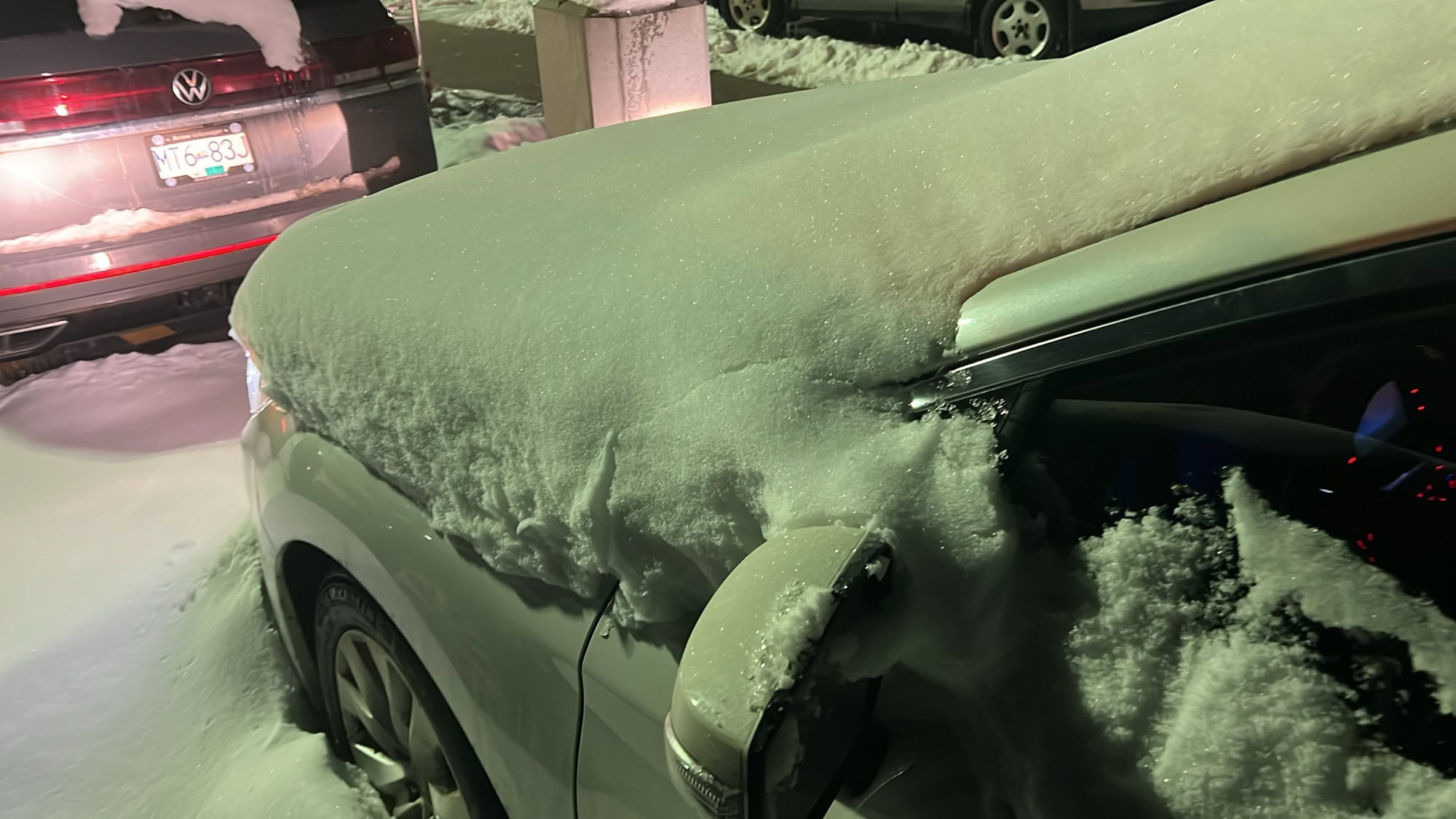
Imagine waking up to minus 30 degrees, scraping ice off your windshield for ten minutes and wondering why anyone would willingly live somewhere this cold.
Then, three days later, you’re walking outside in a light jacket because the temperature has climbed above freezing.
Welcome to winter in Calgary.
It’s cold enough to make you question your life choices, but unpredictable enough that you might be washing your car in January.
And that’s probably the strangest thing about living here.
Calgary doesn’t experience months of uninterrupted extreme cold every winter. Instead, the weather can swing dramatically between freezing temperatures, heavy snow and surprisingly warm afternoons.
One week, you’re dealing with icy roads and bitter wind. The next, the snow is melting, the sun is shining and people are enjoying the weather outside.
Then winter comes back.
So, how bad are Calgary winters? They’re cold, long and occasionally brutal, but the sunshine and frequent Chinook warmups make them more manageable than many people expect.
The hardest part isn’t always the temperature. It’s the unpredictability, the icy roads and the feeling that spring keeps arriving only to change its mind.
If you’re considering moving to Calgary from another Canadian city or a warmer country, here’s what winter is really like.
How Cold Does Calgary Actually Get in Winter?
Let’s start with the numbers.
According to Environment and Climate Change Canada’s historical climate normals for Calgary International Airport, January is typically the coldest month.
The average daily temperature in January is approximately minus 7.6°C.
That might not sound particularly terrible if you’ve heard stories about Calgary reaching minus 30 or even minus 40 degrees.
But averages don’t tell the whole story.
The average January daytime high is around minus 1.5°C, while overnight temperatures average approximately minus 13.5°C.
And during severe cold spells, temperatures can drop far below those averages.
What Are Calgary’s Winter Temperatures Month by Month?
October is when Calgary starts reminding everyone that winter is approaching. The average daily temperature is approximately 4.9°C, but early snowstorms and freezing nights are entirely possible.
November feels much more like the beginning of winter. The average daily temperature drops to around minus 1.7°C. Snow becomes more common, and many residents have already switched to winter tires.
December is properly cold, with an average daily temperature of approximately minus 6.3°C. Short daylight hours and freezing mornings make winter feel well established.
January is normally the coldest month, averaging around minus 7.6°C. This is when you should be prepared for the possibility of serious cold snaps.
February remains cold, with average daily temperatures near minus 5.9°C. The days are getting longer, but winter is nowhere near finished.
March starts showing signs of improvement, with average daily temperatures around minus 2.2°C. Unfortunately, warm afternoons can still be followed by heavy snowfall.
April finally begins feeling more like spring, averaging approximately 4.5°C. But snowstorms remain possible, sometimes just when everyone has started putting away their winter clothes.
These figures are historical averages, not predictions for a particular year. You can explore the full records through Environment and Climate Change Canada’s climate data.
The important thing is understanding that temperatures can vary enormously from day to day.
A winter month with an average temperature of minus 7°C can still include mild afternoons above freezing and cold mornings below minus 30°C.
That’s what makes Calgary’s winter so unusual.
Chinooks Make Calgary Winters Completely Different
If you’re moving to Calgary, you’ll hear people talking about Chinooks almost immediately.
At first, it sounds like some mysterious local weather phenomenon.
Then you experience one.
You wake up to snow everywhere.
By afternoon, the temperature has climbed above freezing.
Snow begins melting, sidewalks become wet and you start wondering whether winter is finally over.
It isn’t.
You’ve just experienced a Chinook.
A Chinook is a warm, dry wind that descends the eastern slopes of the Rocky Mountains.
As air moves over the mountains and down toward the foothills, it warms considerably.
The result can be a dramatic increase in temperature over a relatively short period.
Calgary’s location near the Rockies makes it particularly well known for these winter warmups.
Why People Love Chinooks
Imagine spending several days in freezing weather.
Everything is covered in snow.
Your vehicle feels like a refrigerator.
The sidewalks are icy.
Then the temperature rises to 8°C.
Suddenly, you’re comfortable walking outside in a lighter jacket.
Snow starts disappearing.
The streets begin drying.
And the whole city feels a little more cheerful.
These warm breaks are one reason some people find Calgary winters easier than those in other Prairie cities.
They don’t make winter disappear, but they give you a break from it.
And when you’ve been dealing with freezing temperatures for weeks, even a few pleasant afternoons can feel wonderful.
Chinooks Can Also Make Winter More Dangerous
There’s one problem a warm spell doesn’t automatically solve.
Ice.
In fact, Chinooks can make icy conditions worse.
When snow melts during the day and temperatures drop below freezing overnight, that water can turn into slippery ice.
A sidewalk that was perfectly safe at 3 PM can become hazardous the following morning.
Driveways develop frozen patches.
Parking lots become slippery.
Residential streets turn into an unpleasant mixture of snow, slush and ice.
The constant cycle of melting and freezing is one of Calgary’s biggest winter annoyances.
So while a Chinook might make the temperature feel amazing, it doesn’t always make getting around easier.
Some residents also report headaches when Chinooks arrive, although the connection between these winds and headaches is still being studied.
For most people, the everyday problem is simpler.
You never quite know whether tomorrow calls for winter boots or regular shoes.
Does Calgary Get a Lot of Snow?
Yes, but probably not in the way you’re imagining.
Calgary typically receives around 130 centimetres of snowfall annually, although actual totals vary considerably from year to year.
That sounds like a lot.
But it doesn’t mean there’s more than a metre of snow sitting on the ground all winter.
Snow accumulates during different storms throughout the year.
Some of it melts between snowfalls.
Chinooks can clear large amounts of snow during warmer periods.
And the depth of snow on the ground can change dramatically from one week to another.
You might experience a December when every neighbourhood looks like a Christmas postcard.
Another year, you might see exposed grass and dry pavement during part of the same month.
Then a big storm arrives and everything turns white overnight.
Calgary also receives snow outside the traditional winter months.
Snow in April isn’t particularly surprising.
May snow happens occasionally.
And an unusually early autumn storm can arrive before people have even finished enjoying September.
The important thing to understand is that Calgary doesn’t always have consistent snow cover throughout winter.
Sometimes everything remains white for weeks.
Other times, you can see brown grass in February.
That’s simply part of living here.
How Long Does Winter Last in Calgary?
This is where the answer gets a little depressing.
If you’re talking about the coldest part of winter, December through February is the main period.
But if you’re talking about months when snow, freezing temperatures and icy roads are possible, the season can feel much longer.
October can bring snow.
November usually starts feeling wintry.
December and January are cold.
February may bring more cold spells and snowstorms.
March can feel promising one day and miserable the next.
April often behaves as though it hasn’t heard that spring is supposed to arrive.
And even May occasionally has something unpleasant to contribute.
Of course, that doesn’t mean Calgary experiences continuous winter conditions for seven or eight months.
You can have warm, sunny days in October, March and April.
The problem is that winter keeps returning.
Calgary Spring Can Be Frustrating
In March, you might get a beautiful afternoon with temperatures above 10°C.
People start wearing lighter jackets.
Patios become tempting.
Someone decides it’s finally time to put away the winter boots.
Then it snows again.
A few weeks later, the same thing happens.
By April, everyone is ready for spring, whether the weather agrees or not.
This is one of the most frustrating parts of Calgary weather if you’re coming from somewhere with a more predictable transition between seasons.
Spring doesn’t always arrive gradually.
It seems to make several practice attempts before finally staying.
For newcomers, it’s worth keeping winter clothing accessible well into April.
Putting everything into storage after one warm weekend is asking for trouble.
Are Calgary Winters Sunny?
Yes, and this is one of the city’s most underrated advantages.
Calgary receives plenty of sunshine, including throughout winter.
You can wake up on a freezing January morning and see a beautiful blue sky.
The air is cold.
The sidewalks are covered in snow.
But the sun is shining.
That makes winter feel quite different from living somewhere that experiences long stretches of damp, cloudy weather.
A sunny day at minus 5°C can feel surprisingly pleasant if you’re dressed properly and the wind is calm.
People go for walks.
Children play outside.
Parks and pathways remain popular.
And the surrounding mountains can look spectacular under fresh snow.
However, sunshine doesn’t change the length of the day.
Around the December winter solstice, Calgary gets only about eight hours of daylight.
That means you might leave for work before sunrise and return home after sunset.
Even with clear skies, the short days can affect your mood and energy.
It’s something worth considering if you’re moving from a warmer country closer to the equator.
The sunshine helps.
The early darkness still takes some getting used to.
Calgary’s Dry Winter Air Is Another Surprise
Everybody talks about how cold Calgary gets.
Not enough people talk about how dry it feels.
Calgary has a relatively dry climate, and the combination of cold outdoor air and indoor heating can make winter uncomfortable for your skin.
Dry hands.
Chapped lips.
An irritated nose.
Static electricity.
That annoying moment when you touch a metal door handle and receive a tiny electric shock.
These are familiar winter complaints.
People moving from humid climates may notice the difference quickly.
A good moisturizer and lip balm can become everyday essentials.
Some households also use humidifiers during winter, although indoor humidity should be managed carefully to prevent excess condensation and moisture problems.
The dry air has one advantage.
Some people find Calgary’s cold more comfortable than damp winter weather in other regions.
But don’t assume dry cold is harmless.
At minus 25°C, you’re still going to be cold.
Very cold.
Is Minus 30 in Calgary Really That Bad?
Yes.
There’s no need to pretend otherwise.
Minus 30°C is seriously cold, especially if you’re standing outside waiting for a bus or walking across an exposed parking lot.
A short trip from your house to a warm car might be manageable.
Waiting outdoors for twenty minutes is another story.
Your face starts feeling the cold.
Your fingers become uncomfortable if your gloves aren’t warm enough.
And the wind can make everything worse.
You also need to think about your vehicle.
Older car batteries may struggle.
Windshield washer fluid needs to be suitable for freezing temperatures.
Tire pressure changes as temperatures drop.
And if your vehicle has been parked outside for hours, the interior may feel almost as cold as the air around it.
But here’s the important distinction.
Calgary doesn’t normally sit at minus 30°C for the entire winter.
Severe cold spells happen, and some can last several days or longer.
Other parts of the season can be considerably milder.
If you prepare properly and adjust your routine during extreme cold, winter becomes more manageable.
Still, if you’ve spent your entire life somewhere that rarely drops below 10°C, your first serious Calgary cold snap may be quite a shock.
Driving in Calgary During Winter Can Be Frustrating
For many people, this is the worst part of winter.
Not the temperature.
Not the snow itself.
The roads.
A major snowfall can turn an ordinary commute into a frustrating experience.
Traffic slows.
Visibility decreases.
Vehicles struggle for traction.
And minor collisions can create delays across major routes.
Even after the snow stops, some streets remain slippery.
The City of Calgary prioritizes major roads, important transit routes and other busy areas for snow clearing.
Residential streets receive a different level of service.
Unlike major roads, residential streets are not normally cleared down to bare pavement.
Instead, the city may level deep ruts and apply traction materials when necessary.
That means a major road might look reasonably clear while the street in front of your house remains covered in packed snow.
You can read more about the city’s approach on the official Calgary snow and ice control page.
Winter Tires Make a Big Difference
Alberta doesn’t generally require passenger vehicles to use winter tires.
But the provincial government strongly recommends them for winter driving.
Winter tires are designed to provide improved traction in cold conditions, snow and ice.
If you’re new to driving in Canada, they’re one of the most sensible purchases you can make.
A vehicle with all wheel drive can help you accelerate on slippery roads.
It doesn’t magically improve your braking traction.
You still need suitable tires and careful driving habits.
I’d also recommend leaving extra time for your commute during winter weather.
A trip that normally takes twenty minutes may take considerably longer after a snowstorm.
And before driving outside Calgary, check 511 Alberta for current highway conditions.
Do You Need a Garage to Survive Calgary Winter?
No, but having one is definitely convenient.
If you park inside a heated or insulated garage, you avoid many of winter’s most annoying routines.
No scraping thick ice off your windshield every morning.
Less time brushing snow off your car.
And a vehicle interior that may be much more comfortable when you first get inside.
People who park outside have to deal with all of that.
A remote starter can make cold mornings more convenient, provided you use it safely and never idle a vehicle inside a garage or other enclosed space.
A block heater may also be useful for some vehicles during extreme cold, depending on manufacturer recommendations.
But plenty of Calgarians park outdoors all winter.
It’s entirely possible.
You just need to give yourself more time in the morning and keep your vehicle in good condition.
If you’re comparing apartments or houses, don’t underestimate how nice indoor parking can be during January.
It might not seem worth paying extra for in July.
You’ll probably appreciate it much more during a severe cold spell.
Shovelling Snow Becomes Part of Your Routine
If you own or rent a detached house in Calgary, you may also have snow clearing responsibilities.
The City of Calgary requires property owners and occupants to clear public sidewalks bordering their property within 24 hours after snowfall ends.
The sidewalk needs to be cleared down to the bare surface.
Failure to comply can lead to enforcement and fines.
This doesn’t mean you’ll be shovelling every morning for six months.
Some weeks bring very little snow.
Other weeks seem determined to make you regret having a long driveway.
And here’s where the Chinook problem returns.
You clear the snow.
The temperature rises.
Everything starts melting.
Then it freezes overnight.
Now you’re dealing with ice instead.
Keeping a shovel, ice scraper and appropriate traction material available is simply part of winter home maintenance.
If you’re moving into a condominium or rental property, check who is responsible for clearing sidewalks, pathways and parking areas.
It’s much better to know before the first snowfall.
What Should You Wear During Calgary Winter?
You don’t need the most expensive outdoor clothing on the market.
But you do need clothing designed for cold weather.
A light jacket that works perfectly well during winter in Vancouver probably won’t be enough during a Calgary cold snap.
The trick is layering.
A warm winter coat is important, but what you wear underneath makes a difference too.
Start with a good insulated jacket that protects against wind.
Add warm winter boots with reliable traction, especially when sidewalks are icy.
You’ll also want gloves or mittens, a toque that covers your ears and something to protect your neck and face during colder weather.
Thermal clothing can make a big difference when temperatures drop well below freezing.
And don’t forget warm socks.
Winter footwear deserves particular attention.
You might be able to tolerate cold air for a short walk.
Slipping on an icy sidewalk is another matter.
Choose boots suitable for snow and ice, and consider additional traction devices when necessary.
The good news is that you won’t need your heaviest winter jacket every day.
Calgary’s temperature changes mean you’ll probably use several different jackets throughout the colder months.
There will be days when a light jacket is comfortable.
There will also be days when stepping outside without proper winter gear is a terrible idea.
Does Winter Make Everyday Life Difficult?
Sometimes.
Grocery shopping doesn’t stop because it’s snowing.
You still need to go to work.
Children still need to get to school.
Appointments still happen.
And unless conditions are especially severe, most of the city continues functioning.
But winter adds little inconveniences to everyday tasks.
You need to check the weather before getting dressed.
You need more time to prepare your vehicle.
You need to watch for ice when walking.
You might need to change plans because of a storm.
And outdoor activities require more preparation.
Even something as simple as taking out the garbage can become unpleasant when the temperature drops far below freezing.
For someone arriving from a warm climate, these routines can feel exhausting at first.
Over time, many people become used to them.
You learn to keep gloves in the car.
You start checking the forecast automatically.
You keep an ice scraper within reach.
And you discover that leaving home five minutes earlier can save you a lot of frustration.
Winter becomes less mysterious.
It’s still cold, but it’s no longer a surprise every morning.
Is Calgary Winter Worse Than Edmonton?
This is a popular debate in Alberta.
Both cities experience genuine Canadian winters.
Both get snow.
Both can experience severe cold.
And both require proper preparation.
But Calgary has one notable advantage.
Chinooks.
Edmonton doesn’t experience the same frequent and pronounced Chinook warmups as Calgary.
As a result, Calgary often enjoys more dramatic breaks from cold weather.
That can make winter feel easier for some people.
But the constant melting and freezing creates its own problems.
Edmonton may experience longer stretches of consistent winter conditions, while Calgary can alternate between frozen streets and springlike afternoons.
The difference isn’t that Calgary has no winter.
It’s that Calgary’s winter is often less predictable.
If you prefer occasional warm breaks and don’t mind sudden weather changes, Calgary may feel more appealing.
If you dislike repeated ice and melting cycles, the Chinook advantage might seem less impressive.
Either way, you’ll need a proper winter coat.
Is Calgary Colder Than Toronto or Vancouver?
Compared with Vancouver, Calgary is generally much colder during winter.
Vancouver has a milder coastal climate, with more winter rain and fewer prolonged periods of extreme cold.
Someone moving from Vancouver to Calgary should expect a major adjustment.
You’ll need warmer clothing and more preparation for snow and icy roads.
Toronto is a more complicated comparison.
Toronto has cold winters, but it generally experiences milder average temperatures than Calgary.
However, Toronto’s more humid conditions, wind and occasional heavy snowfall can make winter uncomfortable in different ways.
Calgary’s dry air, sunshine and Chinook warmups may make some winter days feel more pleasant than the temperature numbers suggest.
But Calgary also experiences colder extremes.
If you’re deciding whether to move from Toronto, I wouldn’t assume Calgary’s winter will be unbearable.
I also wouldn’t assume the two climates feel exactly the same.
Expect more temperature swings, drier air and the possibility of severe cold.
How Does Calgary Compare With Winnipeg?
Calgary is often considered more manageable than Winnipeg during winter, largely because of its Chinook warmups.
Winnipeg has a reputation for persistent cold and severe wind chill.
Calgary can experience similarly harsh conditions during cold spells, but warm periods often interrupt them.
That difference matters.
A few pleasant days in the middle of winter can make the season feel much shorter, even though the calendar hasn’t changed.
However, the severity of individual winters varies.
One unusually cold Calgary winter could feel much worse than a relatively mild Winnipeg winter.
There is no guarantee that every year will follow the typical pattern.
Is Winter Depressing in Calgary?
It can be, particularly if you dislike cold weather or spend most of your free time indoors.
The short days can be difficult.
The repeated snowfalls become frustrating.
And by March, many people are ready for winter to finish.
For someone who has moved away from friends and family, the colder months can also feel isolating.
It’s easier to stay inside when the temperature is unpleasant.
But that can make winter feel even longer.
One of the best things you can do is build a winter routine rather than simply waiting for summer.
Go for walks when conditions are safe.
Visit recreation centres.
Try skating or another winter activity.
Meet friends regularly.
And make use of those sunny afternoons when the weather is pleasant.
Calgary has beautiful winter scenery, especially when fresh snow covers the city.
You don’t need to love skiing or snowboarding to enjoy it.
Sometimes a sunny walk followed by a warm drink is enough.
The important thing is finding activities you genuinely enjoy.
If your entire winter plan involves staying indoors until May, the season is probably going to feel very long.
Winter Activities Are One of Calgary’s Biggest Advantages
Here’s something people sometimes overlook.
Living near the Rocky Mountains changes what winter can offer.
Instead of treating snow as nothing more than an inconvenience, you have access to skiing, snowshoeing, winter hiking and beautiful mountain scenery.
Banff and Canmore are close enough for day trips.
Kananaskis Country offers opportunities for winter recreation, depending on road and trail conditions.
And the mountains can look absolutely spectacular covered in snow.
Of course, not everybody wants to spend a weekend outdoors in freezing temperatures.
That’s perfectly reasonable.
But for people who enjoy winter sports, Calgary offers a lifestyle that’s difficult to match in many other Canadian cities.
Even within Calgary, there are skating opportunities, parks, recreation facilities and winter events.
The challenge is finding something that makes you look forward to the colder months.
Because if you enjoy winter activities, five months of cold weather can feel like an opportunity.
If you hate everything about snow, those same months can feel endless.
Is Calgary Winter Expensive?
It can be.
There are additional costs that people moving from warmer climates may not immediately consider.
Winter clothing is one.
A good jacket and proper boots can be expensive, especially when you’re buying everything at once.
Preparing your vehicle is another.
Winter tires, tire changes, maintenance, windshield washer fluid and possible battery replacement all add to the cost of owning a car.
Heating is another important household expense.
How much you spend depends on your home’s size, insulation, heating system and utility rates.
An older detached house may cost considerably more to heat than a well insulated apartment.
If you’re comparing the cost of living in Calgary with another city, don’t overlook these seasonal expenses.
It’s not necessary to buy everything new or choose the most expensive brands.
But it is worth setting aside some money before winter arrives.
Trying to prepare for minus 30°C after the temperature has already dropped isn’t particularly enjoyable.
When Does Calgary Finally Start Warming Up?
April is usually when the city begins moving more noticeably toward spring.
Environment Canada’s historical climate normals show an average daytime high of approximately 10.8°C in April.
May is warmer, with an average daytime high of around 16.4°C.
By late spring, longer daylight hours and greener surroundings make the city feel completely different.
But occasional late snowfalls can still happen.
That’s the frustrating part.
You may be enjoying a beautiful May afternoon in a light jacket, then wake up the next morning wondering why the grass is covered in snow.
Fortunately, late spring snow usually behaves differently from a major January cold spell.
Warmer ground and stronger sunshine can help it melt more quickly.
By June, Calgary generally feels much more like summer, although cool nights and unsettled weather are still possible.
After months of winter, those long summer evenings feel especially wonderful.
And perhaps that’s one of Calgary’s secrets.
The summer months seem even better when you’ve spent so much time waiting for them.
What Is the Worst Month for Winter in Calgary?
If you’re judging strictly by average temperature, January is normally the coldest month.
Environment Canada’s Calgary Airport climate normals put the January daily average at approximately minus 7.6°C.
December and February are also cold.
But the month people find most frustrating isn’t always the coldest.
For some, it’s January because of the extreme cold spells.
For others, it’s February because they’re getting tired of winter.
And plenty of people would nominate March or April simply because the season refuses to end.
After months of cold weather, another snowfall feels much more annoying than the first beautiful snow of November.
That psychological side of winter is real.
A snowstorm in December can feel festive.
The same storm in April can feel like a personal insult.
If you’re moving to Calgary, prepare for both.
Can You Survive Calgary Winter Without a Car?
Yes, particularly if you live in an area with good public transit access.
Calgary has buses and a CTrain network that connect many parts of the city.
You can use public transportation throughout winter.
But cold weather introduces challenges.
Waiting outside for a delayed bus is unpleasant during a severe cold snap.
Snow and ice can make walking to stops more difficult.
And winter storms can occasionally affect service.
If you’re planning to live without a car, pay close attention to your neighbourhood.
Look at how far you’ll need to walk to the nearest transit stop.
Check the frequency of service.
Consider how you’ll get groceries.
And think about whether your commute requires multiple transfers.
Living close to reliable transit can make winter considerably easier.
A cheap apartment with a long outdoor commute may not seem like such a bargain in January.
Do Newcomers Eventually Get Used to Calgary Winters?
Many do.
But getting used to winter doesn’t necessarily mean you start loving minus 30°C.
It means you learn how to manage it.
You buy better clothing.
You prepare your vehicle.
You learn when to leave extra time for your commute.
And you stop being surprised every time the temperature changes dramatically.
People coming from colder parts of Canada may adjust relatively quickly.
Someone moving from a tropical country may need more time.
Your experience also depends on your lifestyle.
If you work from home and have underground parking, winter may be relatively easy to manage.
If you work outdoors, commute by public transportation and spend long periods exposed to the weather, the same winter can feel much more demanding.
That’s why you’ll hear such different opinions from people living in Calgary.
One person says winter is nothing to worry about.
Another says it’s the worst part of living here.
Both may be describing their own experiences accurately.
Their daily routines are simply very different.
Should Calgary’s Winters Stop You From Moving Here?
I wouldn’t automatically rule out Calgary because of winter.
But I also wouldn’t dismiss the concern.
If you enjoy sunshine, outdoor activities and having access to the mountains, the city has a lot to offer throughout the year.
The Chinook warmups can make winter more pleasant than people expect.
And you may discover that sunny, dry cold is easier to tolerate than damp winter weather elsewhere.
However, if cold temperatures genuinely affect your quality of life, take that seriously.
Some people simply don’t enjoy spending several months dressing for freezing weather.
Others struggle with the shorter days or the daily inconvenience of snow and ice.
There’s no reason to pretend those concerns don’t matter.
If possible, visit Calgary during January or February before deciding to move.
Not during a beautiful July weekend.
Spend a few ordinary winter days here.
Go grocery shopping.
Walk around a neighbourhood.
Take public transportation.
See what an actual Calgary winter routine feels like.
That will tell you much more than a photograph of the mountains or a weather app showing average temperatures.
So, How Bad Are Winters in Calgary Really?
They’re not as terrible as some people imagine.
But they’re certainly not mild.
You can experience severe cold, snowstorms, dangerous wind chill and months when winter weather remains a possibility.
Driving can be frustrating.
The sidewalks can get icy.
And by April, you may be very tired of seeing snow.
At the same time, Calgary has some wonderful winter advantages.
There’s plenty of sunshine.
Chinooks provide opportunities for warmer weather.
The mountains are nearby.
And many winter days are perfectly enjoyable when you’re dressed appropriately.
The hardest thing about Calgary winter isn’t that every day is freezing. It’s that you never really know what kind of winter day you’re going to get.
Sometimes you’ll wake up to minus 30°C.
Sometimes you’ll be enjoying the sunshine in a light jacket.
Sometimes those two experiences will happen within the same week.
And after a while, you’ll probably stop finding that unusual.
You’ll simply check the weather forecast before leaving the house, keep your winter boots near the door and learn not to trust the first warm day in March.
Because in Calgary, spring has a habit of arriving several times before it actually stays.
