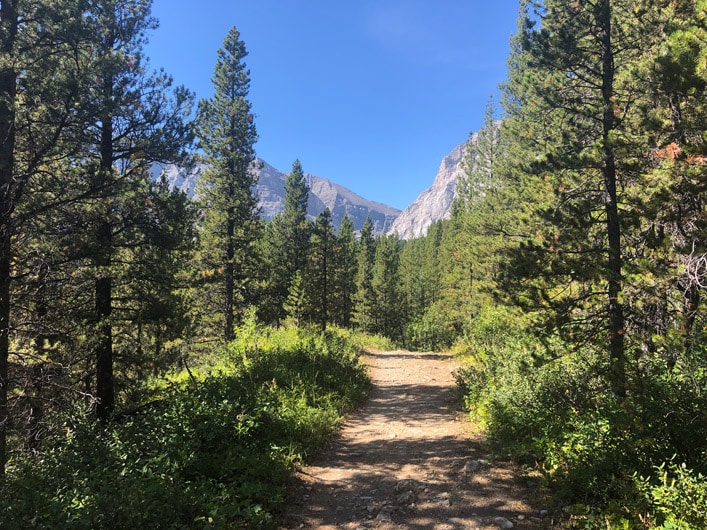
Somewhere west of Calgary, there is a person sitting outside a camper with a million dollar mountain view, a cold drink and absolutely no campground reservation.
Meanwhile, somebody else is paying $65 a night to park an RV between two strangers.
Naturally, this leads to a question that comes up every camping season in Alberta.
Can you really camp on Crown land for free?
The short answer is yes, in some areas. But not everywhere, and not always without paying for a permit.
Alberta has millions of acres of public land, including beautiful stretches of forest and foothills where random camping is permitted.
You can find places to pitch a tent, park a camper or spend a few nights away from organized campgrounds.
But there are rules.
And the biggest mistake people make is assuming that Crown land means they can camp wherever they like.
It does not.
Here is how camping on Crown land actually works in Alberta, including the fees, rules and places worth looking at if you are starting from Calgary.
First, what is Crown land camping?
Crown land is land owned by the government.
In Alberta, some provincial Crown land is available for public recreation, including camping.
You will often hear people call it random camping, dispersed camping or boondocking.
The basic idea is simple.
Instead of reserving a numbered campsite in a developed campground, you find a location where camping is legally permitted and bring everything you need.
There may be no picnic table.
No flush toilet.
No drinking water.
No garbage collection.
And certainly nobody delivering firewood to your campsite.
That is both the attraction and the inconvenience.
You gain privacy and flexibility, but you become responsible for almost everything a campground would normally provide.
Alberta officially recognizes several kinds of public land camping, including random camping, designated camping nodes and established campgrounds.
Those are not all the same thing, and understanding the difference will save you a lot of confusion.
Is Crown land camping actually free in Alberta?
Sometimes.
But if you are planning to camp along the eastern slopes of the Rocky Mountains, there is a good chance you will need a Public Lands Camping Pass.
Alberta requires adults to purchase this pass when random camping within its designated Eastern Slopes camping pass area.
That area stretches from around Grande Prairie south toward Waterton Lakes National Park. It also includes places such as the Porcupine Hills Public Land Use Zone and Willmore Wilderness Park.
The pass applies throughout the year.
As of 2026, the prices are:
- $20 per adult for a three day pass
- $30 per adult for an annual pass
- Free for children and teenagers under 18
The province also charges a transaction processing fee and GST. First time buyers who need a Wildlife Identification Number must obtain one through the AlbertaRELM system.
You can check the current prices, exemptions and pass boundaries on the Government of Alberta Public Lands Camping Pass page.
The important part is that the pass is charged per adult.
Not per vehicle.
Not per tent.
Not per campsite.
That surprises people who are used to paying one campground fee for an entire family.
Is the annual pass worth buying?
Usually, yes, if you plan to camp more than once.
The difference between a three day pass and an annual pass is only $10 per adult.
If you are doing one weekend trip and nothing else, the shorter pass makes sense.
If you think you might camp again later in the summer, the annual pass is the obvious choice.
For two adults, the annual passes cost $60 before transaction fees and any applicable first time registration costs.
That is still much cheaper than paying for multiple nights at many developed campgrounds.
And unlike an individual campsite reservation, the annual pass can be used for eligible random camping trips throughout its validity period.
Just remember that buying the pass does not reserve a camping spot.
It simply gives you the required authorization to camp where random camping is otherwise permitted.
You still need to find a legal location.
Can you camp on Crown land without a pass?
Yes, in some situations.
The Public Lands Camping Pass is not required for random camping on eligible public land outside the designated pass area.
You also do not need this particular pass when staying at an established campground where you are already paying the applicable camping fees.
There are additional exemptions for certain groups.
But do not confuse being exempt from the camping pass with having permission to camp anywhere.
A location can be public land and still prohibit overnight camping.
A provincial park can have perfectly good forest surrounding a lake and still require you to use an established campsite.
And land that appears publicly owned on a map may be subject to grazing leases or other access restrictions.
The pass is only one part of the equation.
Where can you camp on Crown land near Calgary?
If I were starting from Calgary and had never tried random camping before, I would look at two areas first.
Ghost Public Land Use Zone
The Ghost area west and northwest of Cochrane is one of the most obvious places to begin.
It has forest, rivers, gravel roads and beautiful foothills scenery.
More importantly, Alberta officially permits random camping in appropriate parts of the Ghost Public Land Use Zone.
There are also designated camping nodes.
The province has established these areas to reduce damage from people creating new campsites wherever they feel like stopping.
Along Stud Creek Road, for example, camping is restricted to designated nodes through a particular section of the zone.
That means you cannot simply drive down the road, see a nice clearing and assume you are allowed to camp there.
You need to check the map.
The official Ghost Public Land Use Zone page provides current maps, access directions and camping restrictions.
It is where I would begin planning, rather than relying on a random pin shared in a Facebook comment.
One more thing.
This area can get busy.
Ghost is popular with campers, off road vehicle users and people exploring the foothills.
Do not assume Crown land camping automatically means silence.
A beautiful clearing beside a popular recreation road can be louder than a provincial campground.
Livingstone Public Land Use Zone
For something farther south, look at the Livingstone area.
This is foothills country near the Livingstone Range, with rolling grassland, forest and impressive mountain scenery.
Random camping is permitted in appropriate parts of the zone with the required Public Lands Camping Pass.
But some locations have additional restrictions.
In the Willow Creek area, for example, camping is limited to designated nodes.
Those sites are basic and operate on a first come basis.
This is important because online recommendations often make the entire region sound like one enormous unrestricted campground.
It is not.
The Livingstone Public Land Use Zone page explains the camping rules and provides official maps.
If you are willing to drive farther than Ghost, the scenery makes this area worth researching.
I would especially consider it for a full weekend rather than a quick overnight trip.
How do you actually find a legal camping spot?
This is where most beginners get stuck.
Somebody online says there is plenty of free camping in Alberta.
Great.
Where?
Unfortunately, the answer is rarely as simple as typing a campground name into Google Maps.
Random camping locations are not always marked with signs.
Some established clearings are legal.
Others are not.
Some roads are public but pass through areas where camping is restricted.
And a location that worked last summer might be affected by a closure or updated management plan.
The best place to start is the Alberta public land camping website.
From there, open the province’s Interactive Recreation Map.
Public Land Use Zones are shown on the map, and the province provides more detailed documents for each area.
Before leaving home, I would check four things.
- Is the land actually public land where recreational access is permitted?
- Does the specific zone allow random camping at that location?
- Do you need a Public Lands Camping Pass?
- Are there current road closures, fire restrictions or other advisories?
If all four answers look good, you are much closer to having a proper camping plan.
If something is unclear, call 310 LAND and ask.
That is far better than arriving somewhere remote and discovering that the campsite you found online is not legal.
The rule people forget about Crown land
You cannot camp right beside every road.
This is particularly important around Kananaskis and certain other Public Land Use Zones.
Alberta prohibits random camping within one kilometre of roads in the Kananaskis, McLean Creek Off Highway Vehicle, Sibbald Snow Vehicle and Cataract Creek Snow Vehicle Public Land Use Zones.
There are also restrictions on random camping near provincial parks, provincial recreation areas and public land recreation areas.
In Public Land Use Zones, random camping is generally prohibited within one kilometre of these recreation areas.
That means a beautiful clearing beside a road is not automatically a campsite.
It might be in a restricted zone.
It might be too close to a recreation area.
Or it might be somewhere camping is specifically prohibited.
The province explains these rules on its camping on public land page.
Check the regulations for the exact zone instead of applying one rule to all of Alberta.
Do you need both a Kananaskis Conservation Pass and a camping pass?
This is one of the more confusing parts of camping around Calgary.
The two passes are different.
The Kananaskis Conservation Pass generally applies when parking a vehicle in designated areas of Kananaskis Country and the Bow Valley.
The Public Lands Camping Pass applies to eligible random camping within its own designated boundary.
The province says the Public Lands Camping Pass is not needed in the Kananaskis Conservation Pass area.
The Kananaskis Conservation Pass is also not required in certain areas such as the Ghost area and McLean Creek.
But neither pass overrides restrictions on where you can camp.
Buying a Kananaskis Conservation Pass does not give you permission to park your camper at any trailhead overnight.
And buying a Public Lands Camping Pass does not give you permission to camp inside Banff National Park.
They are separate systems serving different purposes.
If you are not sure which one applies, use the official boundary maps on the Kananaskis Conservation Pass website.
Can you stay in the same Crown land campsite all summer?
No.
Alberta limits random camping on public land to 14 days in the same location.
After 14 days, you need to move your camping unit at least one kilometre away for a minimum of 72 hours.
That prevents people from essentially turning public land into their private seasonal campsite.
And it gives the ground a chance to recover.
You cannot reserve a nice spot in May, leave your camper there for three months and treat it like a summer cabin.
Crown land camping is supposed to be temporary.
Can you camp in an RV on Crown land?
Yes, where random camping and vehicle access are legally permitted.
But there is a big difference between saying an RV is allowed and saying every Crown land road is suitable for an RV.
Some roads are narrow.
Some are rough.
Some become muddy after rain.
Others have very little room to turn around.
If you are towing a long trailer, I would research access carefully before leaving the main road.
Getting a truck and trailer stuck on a remote gravel track is an expensive way to save campground fees.
There are also no guarantees of level ground, hookups or enough space for your camping unit.
For your first attempt, look for a designated camping node with suitable access rather than trying to discover a secret campsite deep in the forest.
It will be less adventurous.
That is not necessarily a bad thing when you are towing several thousand kilograms behind your vehicle.
Can you sleep in your car on Crown land?
Sleeping in a car does not create an exception to camping regulations.
If you are staying overnight for recreation, the camping rules for the location still apply.
Where vehicle based random camping is allowed, sleeping inside your vehicle may be a practical option.
But you still need to use a legal location and follow parking and access restrictions.
Do not assume that every roadside pullout is available for overnight stays.
And do not treat a provincial park day use parking lot like a free campground.
If the area has designated overnight camping locations, use them.
Can you have a campfire?
Sometimes.
This is another thing you need to check close to your trip.
A location may normally allow campfires but be subject to a temporary fire restriction or ban.
Those rules change with weather and wildfire risk.
The fact that somebody built a rock fire ring in a clearing does not mean you are automatically allowed to light a fire there.
Before leaving Calgary, check Alberta’s current fire bans.
Bring a camping stove as a backup.
That way dinner does not depend entirely on whether wood fires are permitted.
If you do have a legal campfire, keep it small, supervise it and make sure it is completely extinguished before leaving.
A free campsite becomes considerably less appealing when it is on fire.
How close can you camp to a river or lake?
Alberta recommends camping at least 30 metres from lakes, streams and ponds to protect water quality and surrounding vegetation.
It also recommends staying at least 100 metres away from oil and gas facilities.
Choose durable ground that has already been disturbed where possible.
Avoid digging up plants or driving over vegetation to create a more convenient campsite.
A riverbank might look like the perfect place for your tent, but moving back a little protects the shoreline and reduces the chance of waking up somewhere wet if water levels change.
The province outlines these practices in its public land recreation guidance.
What about toilets?
This is the less glamorous side of random camping.
There might not be one.
Some designated camping nodes have outhouses.
A completely undeveloped location may have nothing.
Plan accordingly.
Bring toilet paper and proper supplies for managing waste responsibly.
Follow the local guidance for human waste disposal and keep waste well away from water sources.
Pack out toilet paper and hygiene products.
Do not leave garbage, food scraps or other waste behind.
And if you are camping in an RV, do not dump sewage or greywater onto public land.
Use a proper dump station.
A campsite is only free and enjoyable for the next person if the last person leaves it in decent condition.
You need to think about bears too
Alberta’s eastern slopes are bear country.
That does not mean every camping trip turns into a wildlife documentary.
But it does mean food storage matters.
Keep food, cooking equipment, garbage and anything strongly scented secured away from your sleeping area.
Do not leave snacks scattered around camp.
Do not keep food inside a tent.
If you are camping in an area where bears are present, carry bear spray and know how to use it.
You also need to think about other wildlife, including moose, elk and smaller animals that are very good at finding unattended food.
The solution is not complicated.
Keep a clean camp.
Store food properly.
Give animals space.
Is Crown land camping safe for beginners?
It can be, if you choose the right place.
I would not recommend somebody with no camping experience start by driving three hours down an unfamiliar forest road without cell service.
There is simply no need.
Begin with a legal designated camping node or an easily accessible public land camping area.
Go in good weather.
Bring enough water.
Make sure you have a way to navigate without internet.
Tell somebody where you are going.
And arrive with enough daylight to assess the area and set up camp.
The more comfortable you become, the more adventurous you can make future trips.
There is no award for choosing the most inconvenient campsite on your first weekend.
What should you bring?
You need the usual camping equipment, but random camping adds a few extra considerations.
Think about what you normally rely on a campground to provide.
Now imagine none of it is there.
That means bringing enough drinking water, extra food, garbage bags, toilet supplies and a reliable way to cook.
I would also bring a paper or offline map, a first aid kit, a shovel where appropriate and equipment for changing a tire.
Warm clothing matters even in summer.
Foothills nights can become cold surprisingly quickly.
If you are camping beyond reliable cell service, a satellite communication device is worth considering.
And remember that you may need to drive back to town to buy something.
That trip feels much longer when you discover the missing item after sunset.
Why I would not share exact campsite coordinates
Whenever somebody posts photographs of a beautiful Crown land campsite, the comments usually begin immediately.
“Location?”
“Coordinates?”
“Can you send me the pin?”
Sometimes people are simply trying to plan a camping trip.
Other times, one social media post can send hundreds of vehicles toward a fragile location that was never designed for that kind of traffic.
That is how campsites become damaged, littered and eventually closed.
There are also cases where an old camping pin points to land with access restrictions.
I would rather use the official maps and find a legal spot than follow coordinates from a stranger who last visited four years ago.
It takes more effort.
But it also keeps the experience enjoyable.
Is random camping cheaper than a regular campground?
It can be dramatically cheaper, particularly if you camp several times per year.
An annual Public Lands Camping Pass costs $30 per adult before applicable fees.
Compare that with paying nightly campsite rates throughout the summer.
The savings add up quickly.
But money is not the only difference.
Developed campgrounds provide convenience.
You may get drinking water, washrooms, garbage facilities, maintained access roads and a reserved place to park.
Random camping gives you flexibility, privacy and the possibility of more space.
You also take on more responsibility.
For somebody who loves that independence, Crown land camping is fantastic.
For somebody who wants a hot shower, electricity and a guaranteed campsite, a regular campground may be money well spent.
Neither choice makes you a better camper.
What I would do for my first Crown land camping trip from Calgary
I would keep things uncomplicated.
Pick a good weather weekend.
Look at the Ghost Public Land Use Zone.
Download its official map.
Identify a legal designated camping node that suits my vehicle.
Buy the required Public Lands Camping Pass.
Check fire restrictions and road conditions.
Pack water, food and camping supplies.
Then leave Calgary early enough to arrive in daylight.
I would not spend the first trip searching for the most remote spot in Alberta.
I would focus on getting comfortable with the experience.
Set up camp.
Have dinner.
Sit outside.
Enjoy the fact that nobody has scheduled a checkout appointment for the following morning.
If it goes well, great.
Next time you can explore farther.
So can you really camp for free in Alberta?
Yes, but you need to pay attention to the details.
Eligible random camping outside the Public Lands Camping Pass boundary can be free.
Inside the designated Eastern Slopes pass area, most adults need to pay for the pass.
There are also designated camping nodes that do not charge nightly campsite fees but still require the pass.
And there are plenty of places where camping is not permitted at all.
The important thing is understanding that public land is not automatically an unrestricted campground.
Once you know the rules, though, Crown land camping opens up an entirely different way to explore Alberta.
You no longer need to spend every summer weekend chasing campground reservations.
You can find a legal spot, bring your own supplies and spend a few nights surrounded by forest and foothills.
Maybe the view will be spectacular.
Maybe the road will be dusty.
Maybe your campsite will be nothing more than a clearing surrounded by spruce trees.
But when the evening gets quiet, the fire is going, and the stars begin appearing above camp, you probably will not be thinking about the campground reservation you never made.
You will just be glad you came.
