
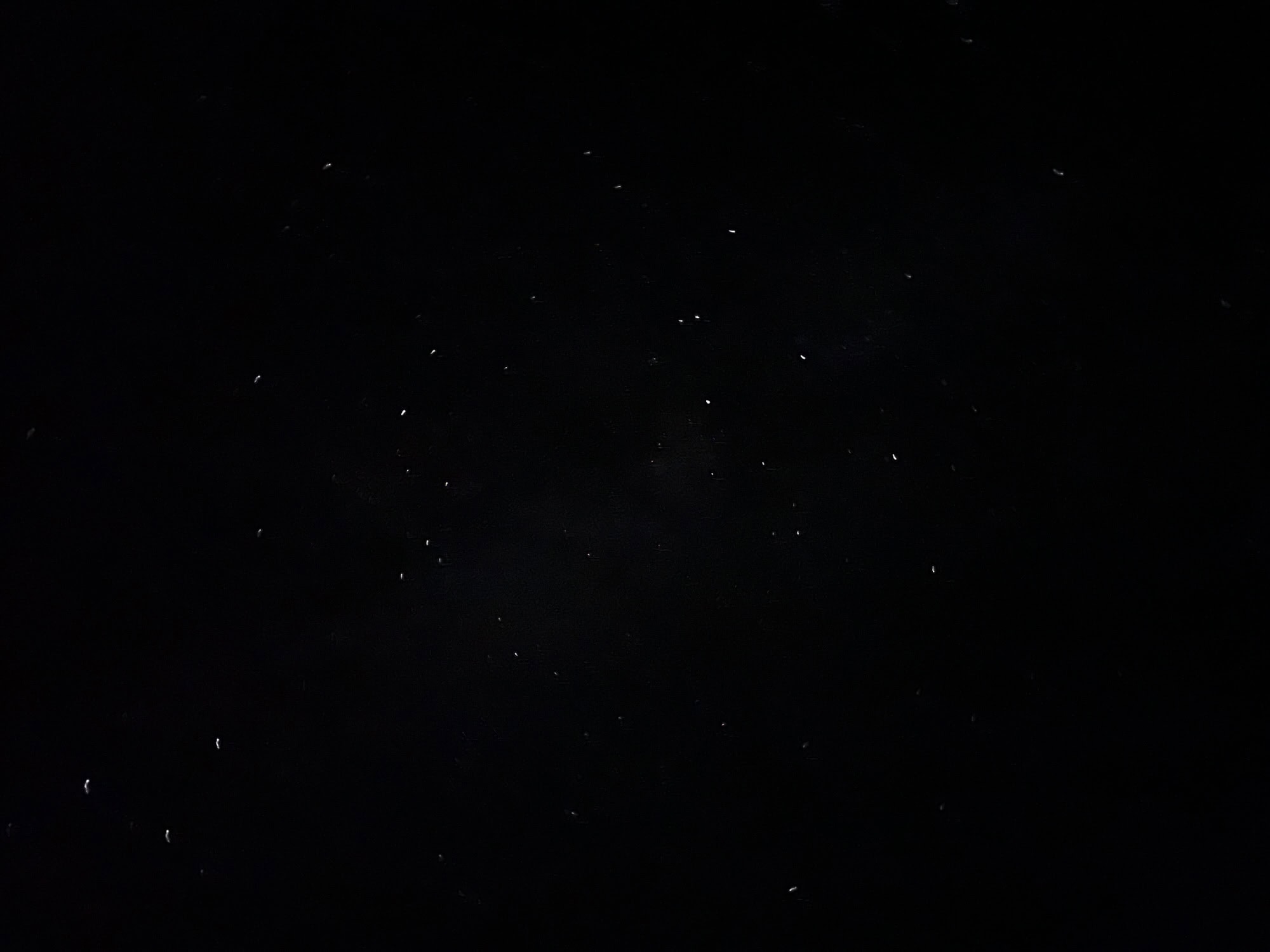
Calgary has a funny relationship with the night sky.
Drive 30 or 40 minutes in the right direction and the city glow begins fading behind you. Drive another hour and suddenly the sky looks nothing like the one above your backyard.
There are more stars.
A lot more stars.
On the right night, the Milky Way becomes visible as a pale band stretching across the sky. Meteor showers stop looking like an exercise in staring at nothing. Even familiar constellations become harder to recognize because there are suddenly thousands of extra stars around them.
The good news is that you do not need to drive to Jasper every time you want a proper dark sky.
There are several good stargazing options near Calgary, ranging from a hill inside the city to genuinely dark foothills about 90 minutes away.
The best one depends on how late you want to stay out.
If you want the easiest possible option, try Nose Hill
Nose Hill is obviously not a dark sky destination.
You are still inside a city of more than a million people.
Downtown glows to the south. Residential neighbourhoods surround the park. Streetlights do not magically disappear because you walked uphill.
But Nose Hill has two advantages.
It is huge and it is easy.
The park covers more than 11 square kilometres, with large open grassland areas and broad views of the sky. (calgary.ca)
On a clear night, especially when the moon is not too bright, you can see considerably more than you will from a brightly lit street downtown.
It is a good place for casual stargazing, watching a strong meteor shower or showing children a few constellations without turning the evening into a road trip.
There is one important catch.
Nose Hill is open from 5 in the morning until 11 at night. (calgary.ca)
That makes it much more useful in fall and winter, when darkness arrives early.
In June and July, Calgary stays bright so late that the park can be approaching closing time before the sky becomes properly dark.
For a summer Milky Way night, I would leave the city instead.
The foothills southwest of Calgary are where things get interesting
Head toward Priddis and the amount of artificial light drops quickly.
There is a reason the University of Calgary built the Rothney Astrophysical Observatory out there.
The observatory sits in Foothills County south of Highway 22X and is used for astronomical research, education and public programs. (science.ucalgary.ca)
The surrounding countryside is one of the closest places to Calgary where the difference in the night sky becomes obvious.
You start seeing why light pollution matters.
The problem is that Rothney is not a public parking lot where you can show up whenever you feel like looking at Saturn.
It is a working research facility.
Go to Rothney during a public Space Night
If you have never looked through a proper telescope, this is probably the most interesting way to start.
Rothney runs ticketed public events where University of Calgary astronomers and members of the Royal Astronomical Society of Canada set up telescopes and help visitors explore the night sky. (science.ucalgary.ca)
Current tickets are $10 per person, and visitors need to purchase them in advance. The observatory does not sell tickets at the door. (science.ucalgary.ca)
You do not need to own a telescope.
You do not need to know anything about astronomy.
That is the point.
You show up, listen to people who actually know what they are looking at, and hopefully get to see planets, star clusters and other objects through serious equipment.
Some events sell out.
If one interests you, do not wait until that afternoon to think about tickets.
Do not show up at the observatory without a ticket
This deserves saying because people regularly treat observatories like scenic viewpoints.
Rothney explicitly states that it is only open to the public during scheduled events.
The gates open shortly before event times, and the University warns people not to arrive early or park along the highway. (science.ucalgary.ca)
So if you search Google Maps, see a dark area around the observatory and think you have discovered a secret stargazing parking lot, you have not.
The surrounding foothills are useful.
The observatory itself requires an event ticket.
Ghost country is a good compromise
If driving south does not make sense from your part of Calgary, the Ghost area west and northwest of Cochrane is another popular choice.
Calgary stargazers regularly mention Ghost Lake and the wider Ghost area because it gets you away from the biggest concentration of city lights without requiring an enormous drive. (reddit.com)
One practical option is the Ghost Air Strip Day Use Area.
Alberta Parks lists Ghost Air Strip as a year round day use location in the Ghost and Waiparous area. (albertaparks.ca)
The landscape out here feels much darker than Calgary.
There are fewer houses.
There are fewer businesses lighting the horizon.
And once your eyes adjust, you begin seeing stars that were completely invisible in the city.
Keep in mind that Alberta Parks day use areas are generally available from 7 in the morning until 11 at night. (albertaparks.ca)
That makes Ghost useful for evening stargazing, but it is not somewhere to assume you can remain until 2 in the morning.
Ghost Lake itself can work too
Ghost Reservoir is another obvious option because the water gives you a wide open view of the sky.
You also get the mountains sitting low on the western horizon.
For photography, that can make a much more interesting foreground than an empty field.
The problem is wind.
Anyone who has spent time around Ghost Lake already knows this.
A calm evening can be beautiful.
A windy evening can make standing beside the water with a tripod feel much less romantic.
Check the forecast before driving out.
And remember that provincial day use hours still apply unless you are staying in a registered campground.
Chain Lakes is worth the longer drive
If you want a noticeably darker sky and do not mind driving farther south, Chain Lakes Provincial Park is one of the more practical options.
The park sits about 38 kilometres southwest of Nanton along Highway 22, around 90 minutes from Calgary depending on where you start. (albertaparks.ca)
The setting is excellent for night sky watching.
You have open water, relatively little development and the Livingstone Range sitting to the west.
Calgary stargazers regularly recommend the broader Chain Lakes area when people ask where they can find darker skies within a manageable drive. (reddit.com)
This is where the number of visible stars really begins to become impressive.
On a clear moonless night, you can simply put down a chair and spend an hour looking up.
You do not need a telescope.
Your eyes are enough.
Camping at Chain Lakes solves the 11 pm problem
This is the smarter way to do a proper summer stargazing trip.
Alberta Parks day use areas close at 11 at night.
Summer darkness around Calgary arrives frustratingly late.
Chain Lakes, however, has a campground.
The park has more than 90 campsites, and official park information describes camping as available year round, with winter camping continuing on a more limited basis. (albertaparks.ca)
Book a campsite and suddenly you do not have to spend the evening checking the clock.
Set up camp.
Have dinner.
Wait for darkness.
Watch the sky.
Go to sleep when you are finished.
That is much more relaxing than driving 90 minutes, watching stars for 35 minutes and realizing you need to leave.
Summer stargazing around Calgary requires patience
July sounds like it should be perfect.
Warm nights.
No frozen fingers.
Easy roads.
Then you remember how far north Calgary is.
Around the beginning of July, sunset is close to 10 at night. Calgary does not even reach true astronomical darkness during part of midsummer because twilight lingers through the night. (timeanddate.com)
You can still see stars.
You can still photograph the Milky Way.
But you have to stay up late and accept that the sky never gets as dark as it does in spring or fall.
For casual stargazing, September and October are much easier.
You get proper darkness without needing to wait until midnight.
Fall may be the best season
September is hard to beat.
Nights become noticeably longer.
Roads are usually still easy.
Temperatures are cool but not brutal.
Mosquitoes have mostly admitted defeat.
By October, darkness comes early enough that you can drive out after dinner, spend a couple of hours looking at the sky and still get home at a reasonable time.
The downside is weather.
Clear nights can become cold very quickly.
Bring more clothing than you think you need.
Standing still while looking upward feels much colder than walking around.
Winter skies can be fantastic
Cold air can produce incredibly clear nights.
Winter also gives you darkness before dinner, which is very convenient if you want to bring children.
The price is obvious.
It is winter in Alberta.
You might be standing outside at minus 20 wondering why astronomy could not have developed as an indoor hobby.
Dress properly.
Wear warm boots.
Bring mittens.
Keep a blanket in the vehicle.
A thermos suddenly becomes valuable scientific equipment.
Also pay attention to road conditions before heading onto rural or foothills roads.
Stars will still be there next weekend.
Spring is underrated
March and April can be excellent for stargazing.
You get longer evenings than winter without the ridiculously late sunsets of June.
Milky Way season is also beginning.
The main challenge is unpredictable Alberta weather.
One evening feels like summer.
The next morning you are shovelling snow.
That is normal.
Check cloud cover more carefully than temperature.
A cold clear sky is useful.
A warm overcast sky is not.
The moon matters more than beginners expect
If your goal is simply seeing bright stars or planets, moonlight is not the end of the world.
If your goal is seeing the Milky Way, a bright moon can ruin the show.
The moon acts like an enormous natural streetlight.
During a full moon, faint stars and the Milky Way become much harder to see.
For the darkest possible sky, plan around the new moon.
The Rothney Observatory even asks participants in its citizen science work to record the moon phase because moonlight affects measurements of sky brightness. (science.ucalgary.ca)
You do not need to become an astronomer.
Just check the moon before you drive 90 minutes expecting a black sky.
Clouds matter even more
This sounds embarrassingly obvious.
It still ruins a lot of stargazing trips.
The forecast says clear in Calgary.
You drive west.
The foothills are completely covered in clouds.
Good night.
Mountain and foothills weather can be different from the city.
Check more than one location.
If you are driving to Chain Lakes, look at the forecast around Nanton and the foothills.
If you are heading toward Ghost, check Cochrane and the Ghost area.
Sometimes the best stargazing location is simply the place without clouds.
What does the Milky Way actually look like?
Not like Instagram.
At least not to your eyes.
Long exposure photographs collect light over several seconds, revealing colour and detail that human eyes cannot see as strongly in real time.
To your eyes, the Milky Way often appears as a pale cloudy band across the sky.
Under darker conditions, it becomes much more obvious.
You can begin seeing patches, dark lanes and structure.
Then take a photograph.
Suddenly your phone or camera shows far more colour and detail.
That does not mean the photograph is fake.
The camera simply sees faint light differently than you do.
Can a phone photograph the Milky Way?
Modern phones are surprisingly good at this.
Use night mode.
Keep the phone completely still.
A small tripod is much better than trying to hold it by hand.
If the phone allows a longer night exposure when stationary, let it work.
Turn the flash off.
The Milky Way is roughly 100,000 light years across.
Your phone flash is not going to help.
You can also use a timer so pressing the shutter does not shake the phone.
Once you get a sharp photograph, you may be surprised how much the camera picked up.
Do you need a telescope?
No.
A telescope is fantastic for looking at planets, the moon and particular deep sky objects.
It is not required for enjoying a dark night.
For a beginner, binoculars are often more fun.
Point them toward the Milky Way and suddenly the apparently empty spaces fill with stars.
Look at the moon.
Find a bright star cluster.
Scan slowly.
There is almost no setup and you do not need to understand how to align anything.
If you become obsessed later, then buy the telescope.
Bring a red flashlight
Bright white light ruins your night vision.
Your eyes need time to adjust to darkness.
Then somebody unlocks their phone at maximum brightness and suddenly everyone can see absolutely nothing again.
A red flashlight helps because red light interferes less with dark adapted vision.
Rothney recommends red lights at public observing events for exactly this reason. (science.ucalgary.ca)
If you do not own one, many headlamps already have a red setting.
Turn your phone brightness down too.
Give your eyes time
You do not step out of a bright car and immediately see the best version of the sky.
Wait.
Put the phone away.
Turn off interior vehicle lights if practical.
After ten minutes, you start noticing more stars.
After twenty minutes, the sky looks different again.
This is one of the rare activities where doing absolutely nothing for a while genuinely improves the experience.
Meteor showers are easier than hunting for the Milky Way
If you are new to stargazing, a good meteor shower is a fun excuse to start.
You do not need a telescope.
In fact, a telescope makes meteor watching worse because it narrows your field of view.
Bring a reclining chair or blanket.
Look at as much sky as possible.
Then wait.
The Perseids in August are popular because the weather is usually comfortable.
The Geminids in December can be spectacular, although comfortable is no longer the word I would use.
Moon phase and cloud cover can make either shower amazing or disappointing.
There are no guarantees.
What about aurora and stargazing on the same night?
That can happen.
And when it does, nobody complains.
A dark location that works well for stars will generally improve your view of faint aurora too.
The big difference is direction.
For Milky Way photography, you care about where the galactic core is located at that season and time.
For moderate aurora activity around Calgary, you usually begin by looking north.
A location can be fantastic for one and have a terrible horizon for the other.
If the northern lights suddenly appear while you are stargazing, however, forget the plan.
Turn around and enjoy the free upgrade.
Do not park randomly on rural roads
Dark roads look empty until a vehicle appears around the corner.
Do not park on the driving surface.
Do not stop over a hill where approaching drivers cannot see you.
Do not enter private property because the field looked perfect on Google Maps.
Do not block farm entrances.
And please do not turn off every light on your vehicle while you are still parked somewhere traffic needs to see you.
Use proper public areas whenever possible.
Darkness is the goal.
Being invisible to drivers is not.
My easiest stargazing plan from Calgary
For something spontaneous, I would choose based on how much effort the evening deserves.
If I only had an hour or two and darkness arrived early, I would try Nose Hill.
If I wanted to actually learn something, I would buy a ticket to a Rothney Space Night.
If I wanted darker skies without making it an overnight trip, I would head toward Ghost country or the foothills southwest of Calgary.
And if I wanted to sit under the stars for half the night without watching the clock, I would book a campsite at Chain Lakes.
The best place is not necessarily the darkest point you can find on a light pollution map.
It is the place you will actually visit.
You do not need perfect conditions to start looking up.
Pick a clear evening.
Get away from the brightest lights.
Put the phone down for twenty minutes.
The first surprise is usually not how dark the countryside becomes.
It is how much of the sky Calgary has been hiding from you.
Did you know that your internet service provider can track your online activity? Want to hide your identity online and keep your browsing habits private? Try NordVPN!
*This post might contain affiliate links. If you click on a link, I might receive a small commission.
